
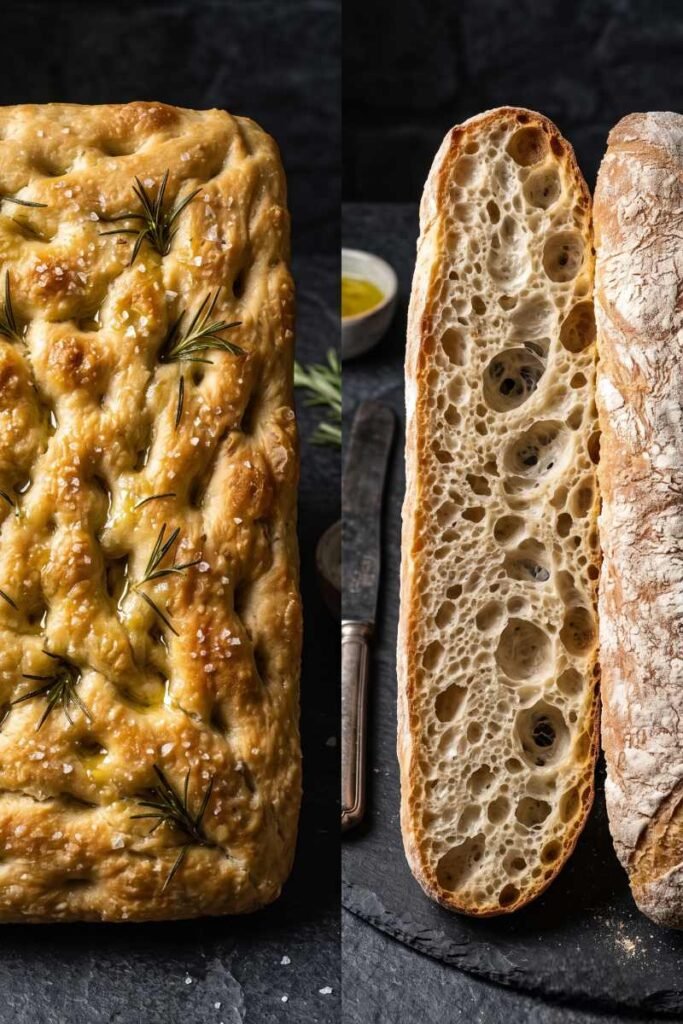
When I clear off my wooden kitchen bench to mix up a high-hydration baking project for the weekend, balancing the exact formulas of Focaccia vs. Ciabatta is the absolute core step required to separate a soft, dimpled snacking bread from a crisp, hollow sandwich slipper. Over my years of regulating live yeast thresholds and shaping wet cell walls, I have treated the water ratios, fat inclusions, and proofing vessels of different Italian dough structures as serious structural engineering projects rather than everyday cooking tasks.
Whenever I see amateur home bakers use the exact same wet dough base for both styles, hoping that a simple change in baking pans will yield two entirely distinct crust textures, I notice how a lack of handling knowledge limits the bake. For me, delivering a true restaurant-quality Italian crumb structure requires dividing your processing steps, managing your oil emulsions, and controlling exactly how much gas you trap inside the wheat matrix during the final stretch.
How Olive Oil Enrichment Modifies Gluten Elasticity
To understand why a dimpled flatbread sheet carries a tender, cake-like crumb while an artisan slipper loaf bakes up with a chewy, rubbery bite, you have to analyze how lipids alter protein strands. Focaccia formulas demand a massive infusion of premium extra virgin olive oil mixed directly into the initial dough well alongside the flour and water phases.
These liquid vegetable fats wrap around the developing glutenin and gliadin protein chains, lubricating the structural matrix and preventing the gluten fibers from forming too tight or rigid of a bond. This lipid barrier limits the structural elasticity of the final dough sheet, ensuring the baked crumb remains soft, tender, and incredibly easy to bite through without fighting a tough chew.
Ciabatta completely bans the use of fat inside its main dough body, relying entirely on a minimalist mixture of flour, water, salt, and an overnight preferment to establish its structural frame. Without any oil molecules present to relax the protein networks, the gluten sheets develop an intensely strong, elastic snap that yields a chewy, toothsome interior capable of holding heavy sandwich moisture easily.
I monitor these precise fat-to-protein relaxation mechanics carefully across my entire dough station, maintaining these strict mixing parameters whenever I balance water volumes or find that my baseline Homemade Pasta Dough Is Too Elastic? My Easy Fixes require extended bench resting windows.
The Thermodynamic Limits of 85% Slipper Loaf Hydration
The next major variable that establishes the deep dividing line between these two classic flour structures comes down to water weight percentages and gas trapping capabilities. I follow the technical dough hydration curves, flour absorption limits, and structural temperature thresholds documented inside the official Serious Eats Master Pizza Guide Matrix to manage my wet fermentation chambers cleanly.
Ciabatta pushes the absolute limits of bakers’ percentages, forcing you to incorporate up to 85 grams of water for every 100 grams of strong bread flour. This extreme water volume turns the raw dough into a sloppy, sticky, and completely un-shapable slurry that resembles a thick cake batter rather than a traditional bread ball.
Bakers cannot use standard hand-kneading movements on this wet mass; instead, you must implement a series of aggressive coil folds inside a wet bowl to organize the gluten sheets without adding extra dry flour. When this wet mass slides into a hot oven, that immense volume of trapped water converts into intense internal steam bursts.
This steam expands the weak, wet protein cavities violently before they fully set, creating those iconic, giant open air holes and irregular interior tunnels that define the classic open crumb layout. Focaccia scales its hydration down to a highly manageable 70% window, which provides enough structural body to support deep finger dimpling without collapsing into a flat puddle.
Sheet Pan Containment vs. Free-Form Slipper Pulling
The final law for mastering your dough setups requires matching your shaping techniques directly to the specific structural containment vessels used during the final proofing clock. Focaccia is a product engineered for deep pan containment; after its initial bulk ferment, the wet mass is dumped straight into a heavy steel sheet pan flooded with olive oil.
The sides of the metal pan support the rising dough boundaries completely, forcing the gases to push upward uniformly to create a thick, plush, and pillowy mattress of air-filled dough. Before baking, you press your fingers deeply into the top crust layer, creating miniature craters that trap pools of seasoned oil and sea salt across the top of the flatbread.
Ciabatta completely rejects any metal pan boundaries, requiring an aggressive free-form handling routine executed on a heavily floured canvas cloth or wooden board. You flip the wet, bubbly mass onto a dry bench, slice it into rough rectangular shapes that look like old slippers, and gently stretch the edges outward right before sliding them onto a hot baking steel.
I know my dough setup is completely successful when the ciabatta loaf bakes into a feather-light hollow shell that makes a loud, hollow thud when tapped on the bottom crust. Taking the extra time to separate your fat ratios and regulate your water weights is the ultimate kitchen secret to delivering an elite artisan bake.