
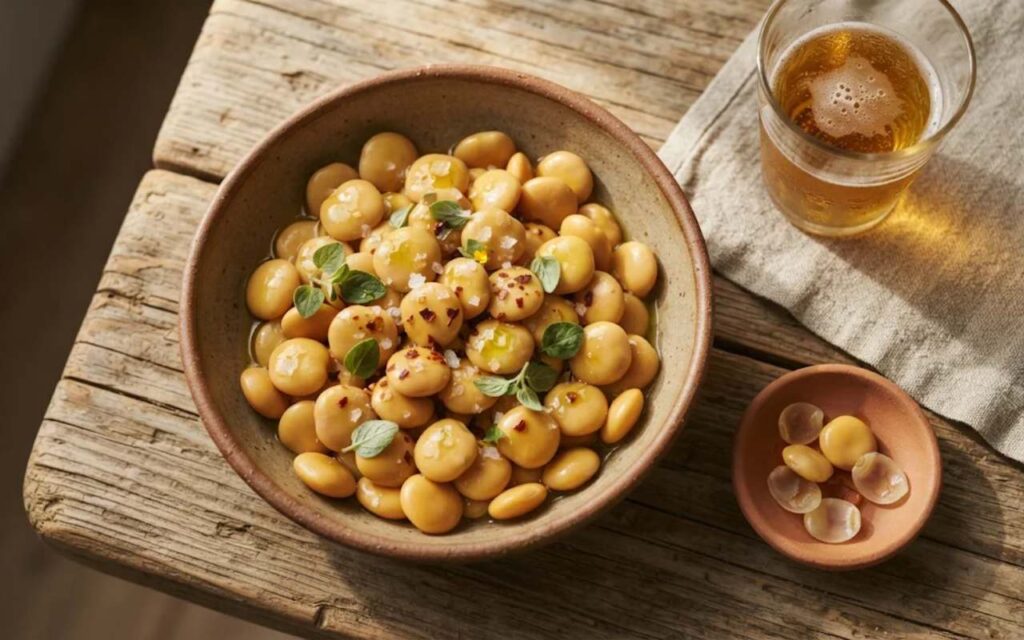
Lupini beans are flat, coin-shaped yellow legume seeds from the Lupinus albus plant, traditionally cured in brine and enjoyed across Italy, Spain, Portugal, and the Middle East as a crunchy, high-protein pub and street snack. Known in Italy as lupini, in Portugal as tremoços, in Spain as altramuces, and across the Levant as turmus, these ancient Mediterranean legumes deliver nearly double the plant protein of chickpeas alongside rich minerals and remarkably low digestible starch.
Because raw dried bitter lupini beans naturally contain toxic quinolizidine alkaloids, they cannot be boiled and eaten straight from a dry pantry bag like lentils or black beans. Mastering the traditional multi-day soaking and debittering workflow, learning the classic pop-and-peel eating technique, and knowing which ready-to-eat jarred or pre-debittered brands skip the weeklong prep lets you serve this authentic Italian antipasto safely at home.
Quick-Glance Lupini Beans Summary
Before opening a jar of pickled lupini or soaking a bag of dried yellow seeds, keep these core culinary and safety facts in mind:
- Botanical Family. Large, flat, bright-yellow seeds from the white lupin plant (Lupinus albus), a legume in the Fabaceae family alongside peanuts, soybeans, and chickpeas.
- Flavor and Texture. Firm, snappy, and meaty, offering a savory taste best described as a cross between a marinated green olive, fresh edamame, and a mildly salted boiled peanut.
- Nutritional Standout. 25.8 grams of complete plant protein and 4.6 grams of dietary fiber per cooked cup (166g), yielding just 10.8 grams of net carbohydrates.
- Mandatory Debittering Rule. Raw dried bitter lupini beans must be soaked, boiled, and leached in daily water changes for 4 to 7 days to flush out bitter, water-soluble alkaloids before eating (unless using pre-debittered brands).
- Severe Peanut Cross-Reactivity. Anyone with a peanut allergy faces a high risk of severe allergic cross-reactivity with lupin and should avoid lupini beans unless cleared by an allergist.
What Are Lupini Beans? History, Species, and Varieties
Archaeological evidence from ancient Egypt dates lupin cultivation back to the 22nd century BC—more than 4,000 years ago. Across the Mediterranean basin and the Nile Valley, white lupini beans (Lupinus albus) served as a vital source of portable, non-perishable protein for Roman legions and Mediterranean sailors.
In modern Italian households, bowls of salted lupini remain a staple holiday tradition around Christmas and Easter, as well as a ubiquitous bar snack served alongside cold beer or aperitivo cocktails.
Not all lupini beans sold in grocery stores belong to the same botanical species or require the same kitchen prep:
- Jarred Brined Lupini (Ready to Eat). Brands such as DeLallo Imported Lupini Beans, Vantia Lupini Beans, and Brami Italian Snacking Lupini Beans have already completed the traditional multi-day leaching process. They come packed in acidified saltwater brine and are ready to eat straight from the jar or pouch.
- Mediterranean Dried Bitter Lupini (Lupinus albus). Sold dry in Italian specialty markets and Middle Eastern grocers, raw bitter Lupinus albus seeds contain 0.5% to 8% quinolizidine alkaloids (primarily lupanine and sparteine) that protect the wild plant from pests. These compounds taste intensely bitter and cause anticholinergic poisoning if eaten raw or under-soaked.
- Andean Lupin / Chocho (Lupinus mutabilis). Native to the high Andean valleys of Peru and Ecuador—and sold in the U.S. by brands like SIMPLi Regenerative Organic Certified Lupini Beans—Andean lupin is a distinct New World species with slightly smaller, plumper seeds and higher natural lipid content than Mediterranean white lupin. While raw Andean lupini still require debittering, packaged products like SIMPLi’s are already pre-cooked, pre-debittered, and dehydrated, meaning they require only a quick rinse or brief rehydration soak rather than a 7-day alkaloid leach.
- Sweet Lupin Cultivars (Lupinus angustifolius). Selectively bred “sweet” lupin varieties (widely grown in Australia for keto baking flours like Kaizen Lupin Flour) contain less than 0.02% alkaloids and require no multi-day water leaching.
Nutritional Profile and Health Benefits
Lupini beans possess one of the most unique macronutrient ratios in the plant kingdom. Unlike chickpeas, black beans, or lentils—which store energy primarily as digestible starch—lupini beans store energy almost entirely as protein, structural fiber, and healthy fats.
According to USDA FoodData Central (via MyFoodData), a 1-cup serving (166g) of cooked, hydrated lupin beans provides:
- Calories. 193 kcal
- Protein. 25.8g (providing all nine essential amino acids)
- Total Fat. 4.8g (predominantly heart-healthy monounsaturated and polyunsaturated fats, with 0mg cholesterol)
- Total Carbohydrates. 15.4g
- Dietary Fiber. 4.6g per cooked cup (because cooked beans are roughly 71% water by weight; on a dry-weight basis, raw lupin seeds exceed 30% dietary fiber)
- Net Carbohydrates. 10.8g per cooked cup
- Key Minerals. 49% Daily Value (DV) for manganese, 43% DV for copper, 21% DV for magnesium, 21% DV for zinc, and 11% DV for iron.
Because lupini beans carry an exceptionally low glycemic load and high prebiotic oligosaccharide content, they promote steady post-meal blood glucose levels, support gut microbiome diversity, and deliver long-lasting satiety on low-carb, diabetic-friendly, and plant-forward diets.
Lupini Beans vs. Chickpeas and Edamame
| Legume (1 Cup Cooked) | Calories | Protein | Total Fat | Dietary Fiber | Net Carbs | Texture and Flavor |
|---|---|---|---|---|---|---|
| Lupini Beans (166g) | 193 kcal | 25.8g | 4.8g | 4.6g | 10.8g | Firm, snappy, olive-like, nutty |
| Chickpeas (164g) | 269 kcal | 14.5g | 4.2g | 12.5g | 32.5g | Creamy, starchy, mildly earthy |
| Shelled Edamame (155g) | 188 kcal | 18.5g | 8.0g | 8.1g | 6.0g | Tender, crisp-sweet, grassy |
How to Eat Lupini Beans (The Pop-and-Peel Technique)
Jarred and home-brined lupini beans sit submerged in saltwater brine with their translucent, slightly chewy outer seed coat still intact. While the skin is completely safe to eat and adds extra insoluble fiber, traditional Italian and Spanish etiquette calls for slipping the tender inner kernel out of its hull before eating.
- Nick the Outer Edge. Hold a single brined lupini bean between your thumb and index finger and gently bite or pinch a tiny tear along the curved outer edge of the yellow skin.
- Pop the Bean Into Your Mouth. Squeeze the bean gently from the opposite side so the smooth, bright-yellow inner seed pops cleanly out of its shell directly into your mouth.
- Discard the Empty Hull. Place the empty translucent skin into a separate discard bowl on the table, just as you would with pistachio shells, edamame pods, or olive pits.
(Tip: If you want to toss lupini beans straight into chopped salads, grain bowls, or pasta without peeling them one by one, look for pre-peeled jars like Cento Peeled Lupini Beans.)
How to Prepare Dried Bitter Lupini Beans From Scratch
If you purchase a bag of raw, un-debittered dried bitter lupini beans (such as Nuts.com Dried Lupini Beans or traditional Italian market bags), follow this four-stage debittering process. (Note: If your package specifies that the beans are pre-debittered and dehydrated—such as SIMPLi Andean lupini—skip the multi-day leaching below and simply rinse, soak briefly as directed on the bag, and brine or season to taste.)
Never rush raw bitter soaking days, and never add baking soda to the boiling water—unlike chickpeas, lupini beans are prized for their crisp, snappy bite, and alkaline baking soda breaks down pectin too aggressively, turning the beans mushy and splitting their skins.
Step 1: Initial 24-Hour Soak
Place 1 pound (450g) of dried lupini beans into a large glass or stainless-steel bowl. Cover them with at least 3 to 4 inches of cold tap water, as the dry coins will swell to more than double their original size. Soak at room temperature for 24 hours, then drain and rinse thoroughly.
Step 2: Simmer Until Tender-Firm
Transfer the swollen beans to a large stockpot and cover them with fresh, unsalted water by 3 inches. Bring to a rolling boil over high heat, then reduce to a gentle simmer for 45 to 60 minutes (older dried harvests may require up to 90 minutes). Do not add salt during boiling, as sodium toughens legume skins before the interior hydrates. The beans are done when they yield slightly to a bite without turning chalky or mushy. Drain and rinse under cold running water.
Step 3: Leach in Daily Water Changes (4 to 7 Days)
Transfer the cooled, cooked beans into a clean glass or food-grade container, submerge them completely in fresh cold water, and place them in the refrigerator. Drain, rinse, and replace with fresh cold water at least twice a day for 4 to 7 days.
- Visual Sensory Cue: During the first 48 hours, the soaking water will turn cloudy and distinctly yellow-tinted as bitter alkaloids and soluble pigments leach out. By day five or six, the water will remain completely crystal clear between changes.
- Taste Verification: Peel and bite a single bean on day four. If you detect any sharp, lingering bitterness at the back of your tongue, continue twice-daily water changes until the flavor is mild, clean, and nutty.
Step 4: Cure in Salt Brine
Once completely debittered, dissolve 2 tablespoons of kosher or sea salt into 4 cups of cold water (roughly a 3% to 4% brine solution). Submerge the beans in the brine, cover tightly, and refrigerate for 24 hours so the salt penetrates the kernels. Stored fully submerged in their brine in the refrigerator, homemade lupini beans stay crisp and fresh for 2 to 3 weeks.
Important Food Safety and Allergen Warnings
- Peanut Cross-Reactivity Risk. According to U.S. Food and Drug Administration (FDA) Consumer Advice on Lupin, lupin seed storage proteins (conglutins) share strong structural homology with peanut allergens. People with existing peanut allergies can experience severe, potentially life-threatening anaphylactic reactions to lupini beans, lupin flour, and lupin protein isolates. Unlike in the European Union—where lupin is a mandatory Top 14 labeled allergen—lupin is not part of the U.S. “Top 9” major allergens list, so peanut-allergic shoppers must inspect ingredient labels carefully.
- Alkaloid Toxicity Warning. Eating improperly soaked bitter lupini beans can trigger anticholinergic alkaloid poisoning, causing symptoms such as dry mouth, dilated pupils, dizziness, blurred vision, confusion, nausea, and rapid heart rate. Never consume raw dried bitter lupini beans without completing the full multi-day water leaching process.
Best Ways to Season and Serve Lupini Beans
Once drained from their basic salt brine, lupini beans act like a sponge for Mediterranean herbs, citrus, and olive oil:
- Classic Italian Marinated Lupini. Toss 2 cups of drained lupini beans with 2 tablespoons extra virgin olive oil, 2 smashed garlic cloves, 1 teaspoon dried oregano, a pinch of crushed red pepper flakes, and fresh lemon zest. Let marinate for 30 minutes before serving on an antipasto platter alongside Castelvetrano olives, aged provolone, and salami.
- Middle Eastern Street-Style Turmus. Warm drained lupini beans gently in a skillet or microwave, then toss with fresh lemon juice, ground cumin, sea salt, and a dusting of Aleppo pepper or paprika.
- Crispy Air-Fried Lupini Croutons. Pat 1 cup of peeled or unpeeled brined lupini beans completely dry with a clean kitchen towel. Toss with 1 teaspoon olive oil, smoked paprika, and garlic powder, then air-fry at 380°F to 400°F (193°C to 200°C) for 12 to 15 minutes, shaking halfway through, until golden and crunchy.
Frequently Asked Questions
Why do store-bought jarred lupini beans contain citric or lactic acid?
Commercial producers add citric or lactic acid to lower the brine pH below 4.6. This acidification prevents bacterial spoilage (such as Clostridium botulinum) at room temperature, gives jarred lupini their signature tangy, olive-like zip, and helps keep the outer skins crisp during shelf storage.
How long do opened jarred lupini beans last in the fridge?
Once opened, jarred lupini beans will last 3 to 4 weeks in the refrigerator, provided they remain completely submerged in their original brine. Always use a clean spoon rather than fingers to scoop beans out of the jar to avoid introducing bacteria that can cloud the brine.
Can I substitute lupin flour for whole lupini beans in recipes?
No—lupin flour and whole brined lupini beans serve completely different culinary roles. Lupin flour is finely milled from raw, unbrined sweet lupin seeds (Lupinus angustifolius) and behaves like a high-fiber, absorbent low-carb baking flour, whereas brined lupini beans are hydrated, salted whole legumes meant for snacking, salads, and roasting.