If you are wondering about the legal weight of DOP on Italian food labels, learning how to identify this official classification is the absolute ultimate step required to protect your kitchen from cheap grocery knockoffs. When you buy a wedge of hard cheese or a can of whole plum tomatoes, this bright stamp acts as a strict certification of regional purity.
If you grab standard, mass-produced jars that use misleading foreign maps and fancy cursive scripts to mimic real Mediterranean goods, you risk spending premium money on industrial fillers. Watching your expensive weeknight pasta sauces or tasting platters turn out flat, greasy, and completely lacking character shows how easily a careless shopping choice compromises your hard kitchen work.
For me, delivering a true restaurant-quality dinner simply requires turning the package over to verify the official legal seal before carrying the ingredients to your counter box. This strict shopping defense ensures your pantry elements deliver deep, authentic flavors, creating a beautiful regional foundation that showcases your primary herbs.
The Legal Blueprint of Regional Food Protection Laws
To understand why a simple red-and-yellow emblem changes the value and flavor profile of your pantry staples so thoroughly, you must look closely at international trade laws. The European Union established the protective system in the early 1990s to shield historic regional food cultures from industrial manufacturing fraud.
When a classic product like Parmigiano-Reggiano or Prosciutto di Parma carries this specific label, every single stage of production must follow a strict legal code. For example, cows producing milk for certified cheese cannot consume industrial silage; they must graze exclusively on local fields inside a tight geographic boundary.
The animal diets, regional climate lines, and soil minerals create a highly specific flavor profile that factories cannot duplicate inside a chemical laboratory space. This strict territorial tracking guarantees total authenticity across your dinner creations, a baseline quality metric I cover extensively inside my shopping guide on the 5 Essential Italian Pantry Staples for Fast Weeknight Dinners.
If a foreign producer sets up a high-volume factory elsewhere and copies the recipe, the legal protection blocks them from using the protected name. This strict barrier protects local farmers while giving shoppers an ironclad guarantee that they are buying true, unadulterated food heritage.
The Serious Eats Guideline for Identifying True Artisan Stamps
The shopping rule for avoiding counterfeit grocery products relies on checking your packaging text for official stamp layouts instead of listening to marketing claims. I follow the strict stamp tracking parameters, packaging checks, and certified food directories documented inside the official Serious Eats What Is a DOP Tomato? report to keep my kitchen assets completely authentic.
Banish generic name traps entirely. Never trust loose commercial phrases like “Italian Style Parmesan” or “San Marzano Style Canned Tomatoes” printed on cheap paper wrappers. These misleading labels are clever marketing tricks designed to bypass regulatory boundaries, hiding ordinary industrial crops grown far away from the true soil lines.
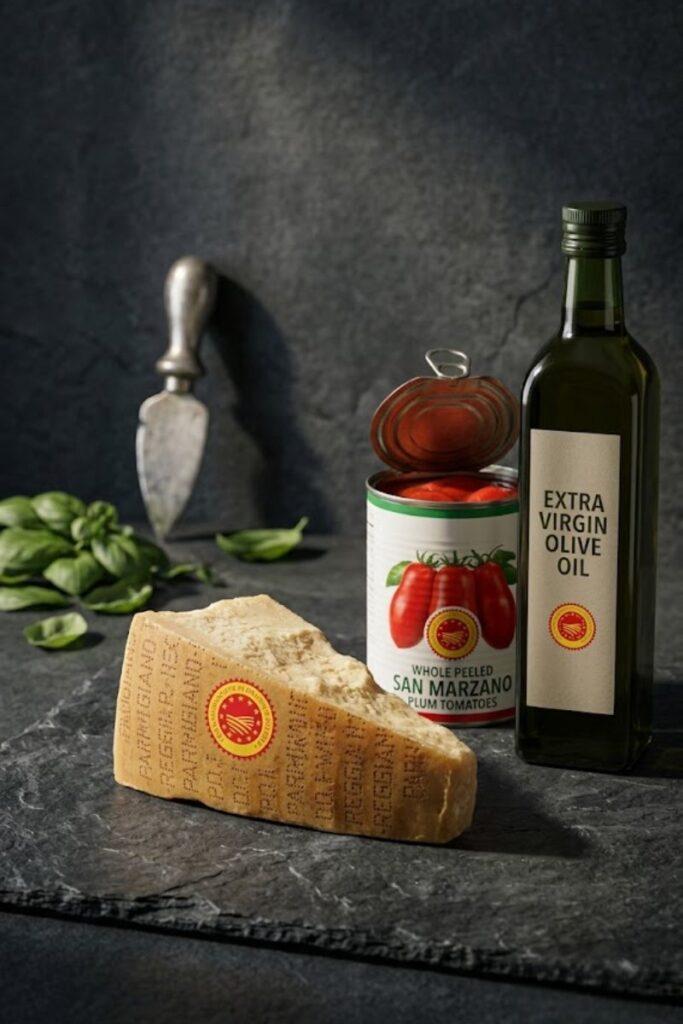
Utilize the red-and-yellow sunburst check. Look closely at the hard crust of your cheese or the metal seal of your olive oil bottle for the official round emblem. The legal seal features a distinct spiky sunburst perimeter with the words written clearly inside the circular boundary track.
Maintain numeric tracking codes. True certified items display a unique, factory-stamped serial number directly on the label print. This code allows regulatory agencies to trace your specific container back to the exact farm field, sorting room, and packaging floor where it was filled.
The moment you confirm these three verification markers are fully present, you can add the product to your basket with total confidence. This quick visual inspection shields your budget from overpaying for bulk industrial replacements, ensuring your home pantry remains stocked with elite regional assets.
Three Protected Classics You Should Always Buy Certified
Upgrading your home kitchen inventory does not require tracking down hundreds of separate specialty items across high-end gourmet shops. You can easily elevate your weekly menu by locking down three core culinary blocks that deliver massive flavor depth to your stovetop reductions.
- DOP San Marzano Tomatoes: These delicate plum crops grow exclusively inside the volcanic ash fields surrounding Mount Vesuvius. They feature remarkably low seed counts and sweet, low-acid flesh that melts into a thick glaze within ten minutes.
- DOP Parmigiano-Reggiano: Authentic wheels must age on wooden shelves for a minimum of twelve months inside specific northern provinces. This long resting window develops crunchy flavor crystals that add immense savory umami depth to pasta dishes.
- DOP Extra Virgin Olive Oil: Certified bottles pinpoint the exact hillside grove where the olives were harvested and pressed cold. This strict tracking ensures the liquid retains its natural, peppery green notes without any cheap filler blending.
I know my ingredient selection strategy is fully successful when a simple pan reduction delivers a complex, layered depth that matches fine-dining standards. The authentic juices blend with your hot cooking fats beautifully, creating a silky glaze that coats your noodles smoothly without any greasy separation lines. Taking an extra minute to turn the box over and read the label stamps keeps your everyday cooking simple, honest, and easy for everyone to enjoy.