
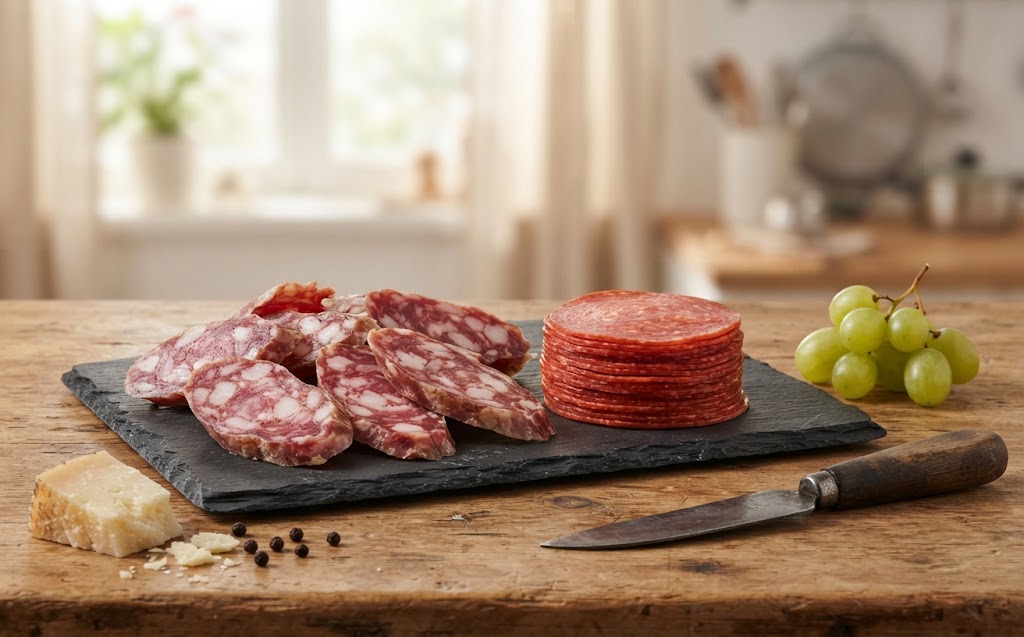
If you have ever stood at an Italian deli counter wondering what is soppressata, you are looking at one of Italy’s most storied dry-cured pork traditions. Unlike mass-market cold cuts, authentic soppressata relies on coarsely minced heritage pork cuts pressed during the curing process to create an uneven, rustic texture. It offers a savory profile driven by whole peppercorns, garlic, and regional spices rather than artificial smoke or heavy acid.
While American supermarket pepperoni evolved from Southern Italian curing methods, the two meats diverge wildly in grind size, fat distribution, and cellar fermentation. Learning these differences changes how you build charcuterie boards, assemble hot sandwiches, and top homemade pizza.
Quick-Glance Kitchen Summary
Soppressata is a coarse-ground, dry-cured Italian salume pressed flat during aging, whereas American pepperoni is a finely emulsified, heavily smoked, fast-fermented sausage seasoned with paprika. Slicing soppressata thick gives you rich pockets of unrendered lard, while thinly shaved pepperoni relies on high surface-area rendering to crisp into grease cups.
- Meat Base: 100 percent pork shoulder, ham trimmings, and firm back fat (lardello) for soppressata; pork and beef blend for commercial pepperoni
- Fat Texture: Coarsely hand-diced visible cubes versus fine industrial emulsion
- Regional Spices: Whole black peppercorns, garlic, and wild fennel in the north; crushed spicy peperoncino paste in Calabria
- Fermentation Acid: Mild natural lactic fermentation (pH roughly 5.2 to 5.6) versus sharp, rapid commercial fermentation (pH often below 5.0)
- Oven Cooking Behavior: Soppressata crisps around edge fat without pooling; pepperoni cups rapidly and releases loose orange grease
Why Real Soppressata Tastes Nothing Like Supermarket Pepperoni
The primary difference begins with the grind of the meat. Traditional soppressata makers hand-cut or run chilled pork shoulder through coarse grinder plates measuring at least 10 to 12 millimeters. This leaves distinct, marble-sized chunks of lean muscle and solid white back fat visible across every sliced cross-section.
American pepperoni uses fine grinder dies measuring 3 millimeters or smaller, creating a uniform meat emulsion. Industrial processors blend lean pork trimmings with cheap beef naval cuts and ice before extruding the paste into collagen casings. This paste traps the fat within an emulsion rather than keeping it separated into clean cubes of pure fatback.
The flavor profiles reflect completely different culinary philosophies. Southern soppressata, especially Soppressata di Calabria DOP, derives its heat from real Calabrian chili paste or dried peperoncino flake. Supermarket pepperoni leans on finely ground cayenne, oil-soluble paprika extracts for color, and heavy liquid smoke to mimic quick aging.
Soppressata vs Pepperoni Side-by-Side Breakdown
The table below breaks down the physical properties, ingredient lists, and curing benchmarks between traditional Italian soppressata and standard American pizza pepperoni.
| Feature | Artisanal Soppressata | Standard American Pepperoni |
|---|---|---|
| Meat Composition | Coarsely diced heritage pork shoulder and firm back fat. | Fine-ground pork trimmings and beef scraps. |
| Casing Style | Natural beef middles or hog bungs pressed flat with wooden boards. | Uniform collagen casings engineered for fast peeling. |
| Fat Distribution | Large, isolated white lard pockets that melt at body temperature. | Dispersed micro-droplets of fat suspended in meat paste. |
| Primary Spices | Peperoncino, whole black peppercorns, garlic, and wild fennel seeds. | Powdered cayenne, mustard flour, garlic powder, and paprika oleoresin. |
| Curing Timeline | Air-dried in cellars for 40 to 90 days. | Heated in smokehouses and dried for 14 to 21 days. |
| Moisture Loss | Loses roughly 30 to 40 percent of green weight during pressing. | Loses 20 to 25 percent green weight with added water binders. |
Pressing the sausage gives soppressata its name, derived from the Italian verb sopprimere, meaning to press down or crush. Traditional producers place the freshly stuffed casings under weighted wooden planks for several days before hanging them in curing cellars. This pressing eliminates trapped air pockets around coarse meat pieces and creates an oval, oblong shape that prevents case hardening.
Commercial pepperoni skips physical pressing entirely. It hangs straight down in climate-controlled smokehouses, preserving an exact circular cross-section built specifically for automated deli slicing blades. The resulting texture is rubbery and dense, whereas soppressata yields cleanly to the tooth.
What Happens When You Put Soppressata on Hot Pizza
Putting soppressata on a 500-degree baking stone yields a very different result than baking standard pepperoni. Because soppressata contains large chunks of solid back fat, that fat renders slowly without flooding the dough. The lean meat sections char along the natural ridges, producing delicate crispy edges with savory centers.
American pepperoni is engineered specifically to cup and char. Industrial pepperoni casings shrink faster than the inner meat emulsion when hit with intense heat, causing the edges to curl upward into small bowls that trap boiling orange grease. That released fat is stained deep red by paprika extracts, which often soaks down into your mozzarella cheese.
If you bake with hot soppressata, lay your slices flat across the cheese after pulling the pizza from the oven, or add them during the final 90 seconds of baking. This short exposure warms the pork fat to its melting point without scorching the delicate dried chili flakes. For Detroit or Sicilian thick-crust pies, rough-chopped soppressata holds up far better than thin supermarket rounds.
How to Pick the Right Salami at the Deli Counter
When buying cured meats, look closely at the fat patterns under the deli display lights. High-quality soppressata features clear, bright-white cubes of fat with sharp boundaries separating them from deep ruby-red meat. If the white fat looks smudged, cloudy, or yellowish, the salami was sliced warm with a dull blade or the fat has started to oxidize.
Pay attention to regional labels when selecting your link. Northern Italian styles, like Soprèssa Vicentina, highlight garlic, black pepper, and white wine with zero hot pepper heat. Southern varieties, such as Soppressata di Calabria, contain fiery chili flakes and deep red paste that stain the casing orange.
- Avoid commercial chubs that list sodium erythorbate, artificial smoke, or textured soy protein on the ingredient panel.
- Seek out artisan producers like Creminelli, Olli, or imported Italian brands carrying the authentic DOP seal on the outer skin.
- Ask the deli counter worker to slice your soppressata slightly thicker than prosciutto, targeting roughly the thickness of a playing card.
- Skip pre-sliced plastic vacuum packs when whole chubs are available, as sliced meat absorbs stale plastic volatiles over time.
Quality whole chubs will feature a dusty, powdery white bloom on the exterior casing. This is beneficial Penicillium nalgiovense mold, which shields the fermenting pork from bad bacteria and stops fat from turning rancid. You can peel the casing away before eating, but the presence of dry white mold indicates a slow cellar cure.
How to Store and Slice Cured Pork at Home
Never run cold soppressata through a slicer or cut it straight out of the refrigerator. Cold pork fat is brittle, which causes the coarse meat pieces to crumble apart into ragged shavings under your knife. Let your chub sit on the counter for 20 minutes so the pork fat softens to room temperature before taking your first cut.
Use a long, non-serrated slicing knife or a clean chef knife honed to a razor edge. Press firmly downward in a single smooth motion rather than sawing back and forth through the meat. Cutting on a slight bias gives you broader slices with an ideal balance of muscle and silky back fat across every bite.
- Wrap exposed cut ends tightly in butcher paper or parchment followed by loose plastic wrap to let moisture escape slowly.
- Store whole uncut dry chubs in a cool, dark pantry or the warmest vegetable crisper drawer of your refrigerator.
- Discard any cured meat that develops green fuzzy molds or gives off a sour, wet vinegar odor.
- Consume sliced charcuterie within four to five days before the delicate unsaturated fats oxidize and dry out.
Freezing cured salami destroys the cell structure of the meat and causes moisture to separate once thawed. Keep your whole chubs whole until the day you plan to serve them, slicing only what you need for that meal. Simple treatment preserves the rich, peppery fat that makes true soppressata worth seeking out.