
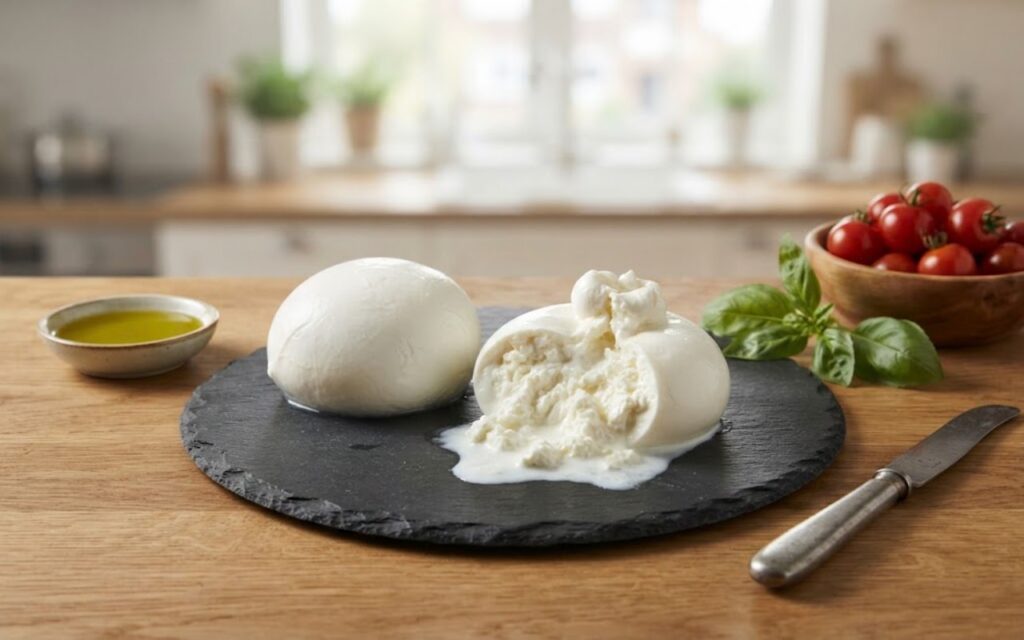
Deciding between burrata vs. fresh mozzarella comes down to how you plan to use fat and moisture in your dish. While both start from the same traditional Italian stretched curd, their internal architecture dictates entirely different cooking behaviors and plating rules.
Swapping one for the other without adjusting for moisture can ruin a crisp pizza crust or leave a cold salad feeling heavy and greasy. Knowing how these two cheeses handle heat, salt, and ambient temperature will instantly improve your kitchen results.
Quick-Glance Kitchen Summary
Fresh mozzarella is a solid sphere of stretched curd that holds its shape when sliced, while burrata is a thin mozzarella pouch filled with shredded curds and heavy cream. Use fresh mozzarella for light melting and structured slicing, but reserve burrata for unheated applications where its rich, fluid core can coat other ingredients.
- Fresh Mozzarella Moisture: 52 to 60 percent water content
- Burrata Moisture: 65 to 70 percent water content
- Fat Content in Dry Matter: Mozzarella averages 45 percent; Burrata averages 60 to 70 percent due to added cream
- Ideal Serving Temperature: 65°F to 68°F for both cheeses to loosen milk solids
- Oven Heat Tolerance: Mozzarella tolerates high heat if drained; Burrata curd breaks and weeps oily liquid under direct oven heat
What Makes Fresh Mozzarella Different From Burrata
Both cheeses begin their lives as pasta filata, the traditional hot-water pulled curd that creates flexible, elastic dairy strands. Fresh mozzarella forms when cheese makers knead these curds in hot water and shape them into solid rounds, ovals, or small bite-sized pearls. The resulting cheese yields a clean, milky bite with a definite springy resistance against your teeth.
Burrata takes that same stretched mozzarella sheet and turns it into a container. Cheesemakers stretch the warm curd into a hollow pouch, stuff the pocket with stracciatella, and pinch the top shut to seal it. Stracciatella consists of leftover torn mozzarella ribbons soaked in rich, fresh dairy cream.
When you slice into fresh mozzarella, the cheese stays completely intact and releases only a trace amount of milky whey onto the board. Slice open a ball of burrata, and the thin skin splits to spill a thick, velvety cream sauce across the plate. That textural difference means burrata functions as both a cheese and a sauce simultaneously.
| Cheese Class | Internal Structural Core | Taste and Lipid Profile | Optimal Cooking Heat Response |
|---|---|---|---|
| Fresh Mozzarella | 100% solid, uniform pulled pasta filata curd throughout. | Mild, clean, milky, and gently tangy with a classic springy chew. | Excellent for baking; melts into an elastic, gooey layer on pizzas and bakes. |
| Authentic Burrata | Hollow mozzarella shell packed with loose stracciatella curds and heavy cream. | Intensely rich, sweet, buttery, and decadent with a loose, oozing texture. | Do not cook; high heat breaks the cream emulsion, causing it to separate into a watery liquid. |
Comparing Texture, Fat Content, and Milk Bases
Let us look at how the physical characteristics of each cheese compare side by side.
| Metric | Fresh Mozzarella | Burrata |
|---|---|---|
| Core Composition | Pure stretched milk curd without fillers | Stretched curd shell stuffed with cream and shredded curds |
| Interior Texture | Elastic, firm, and easily sliced | Loose, buttery, and pourable |
| Fat Profile | Moderate fat level derived solely from whole milk | High fat level elevated by forty percent heavy cream |
| Primary Milk Source | Cow milk or water buffalo milk | Whole cow milk combined with cow cream |
| Best Cutting Tool | Sharp serrated knife to avoid crushing the sphere | Kitchen shears or gentle tearing by hand |
| Heat Stability | Melts into a stretchy, cohesive blanket | Separates rapidly into watery whey and butterfat |
Because burrata contains so much extra butterfat from heavy cream, its richness quickly overpowers subtle vegetables. Fresh mozzarella maintains a milder, clean lactic flavor that supports acid and herbs without coating the palate in heavy dairy fats.
Traditional mozzarella di bufala offers a punchier, tangier profile than standard cow milk fior di latte. If you buy commercial supermarket tubs from brands like BelGioioso or Galbani, you are almost always purchasing cow milk curd, which behaves more predictably under heat than wet buffalo curd.
Why You Should Never Bake Burrata in a Hot Oven
Home pizzaiolos frequently make the mistake of dropping a whole burrata ball onto raw pizza dough before sliding it into an oven. Inside a hot oven, burrata behaves like heavy cream rather than a melting cheese. The intense heat breaks the emulsion inside the stracciatella, releasing water while pooling raw butterfat across the surface.
This liquid flooding leaves you with a gummy, pale crust and an oily layer of yellow grease floating on top of your tomato sauce. Even if you use a high-temperature pizza steel or stone, the trapped moisture cools the dough surface and halts steam expansion. The cheese skin tightens into rubber while the rich filling vanishes into water.
The correct forum-tested method is to bake your pizza completely with a light base of drained mozzarella or tomato sauce first. Pull the hot pie out of the oven, slice it, and gently tear fresh, room-temperature burrata directly over the crust right before serving. The ambient heat from the baked dough softens the cream interior without splitting the delicate emulsion.
How to Prep and Drain Fresh Mozzarella for Cooking
Fresh mozzarella packed in brine or whey holds far too much surface liquid for hot-pan cooking or home pizza ovens. If you slice it straight out of the tub and place it on a Margherita pie, you will end up with an unappealing puddle in the center. Professional pizza makers dry their fresh curd thoroughly before it ever meets dough.
To prep fior di latte for baking, follow this draining routine two hours ahead of meal time:
- Slice the mozzarella ball into thick slabs or tear it into rough thumb-sized chunks
- Place the pieces in a single layer inside a wide colander set over a catch bowl
- Let gravity drain excess whey in the refrigerator for at least sixty minutes
- Press the drained chunks gently between double layers of heavy-duty paper towels
This drying step drops surface water while preserving the tender interior moisture of the cheese. When the dried pieces hit a blistering 500°F oven, they melt into creamy pools rather than boiling in their own juices. For skillet bakes or eggplant parmigiana, this simple prep keeps your tomato sauces thick and prevents soggy breadcrumbs.
The Best Ways to Serve Each Cheese at the Table
Serving either cheese straight from the refrigerator dulls its flavor and stiffens the fat molecules into a waxy texture. Cold temperatures mask the delicate sweetness of milk sugars and mute the grassy notes in high-grade curds. Remove both cheeses from the refrigerator thirty to forty-five minutes before serving so they settle around 65°F.
Fresh mozzarella excels in classic cold constructions where structural integrity matters. Layer it between ripe heirloom tomato slices for a Caprese salad, skewer it with basil leaves, or cube it for cold pasta salads. Because it holds its shape, it takes coarse flake salt and aggressive balsamic glazes without dissolving into sludge.
Burrata requires an edible platform that can catch and absorb its loose, runny center. Serve burrata whole in a shallow bowl surrounded by warm grilled sourdough, roasted stone fruit, or charred blistered cherry tomatoes. Once cut, the stracciatella will seep into the bread cracks, creating an instant sauce that transforms simple pantry ingredients into a complete dish.
Store leftovers carefully, but plan to consume burrata within twenty-four hours of opening the tub. The added cream accelerates bacterial activity and turns sour rapidly once exposed to air. Fresh mozzarella keeps slightly longer in fresh salted water, but both are fresh cheeses meant to be eaten immediately.