
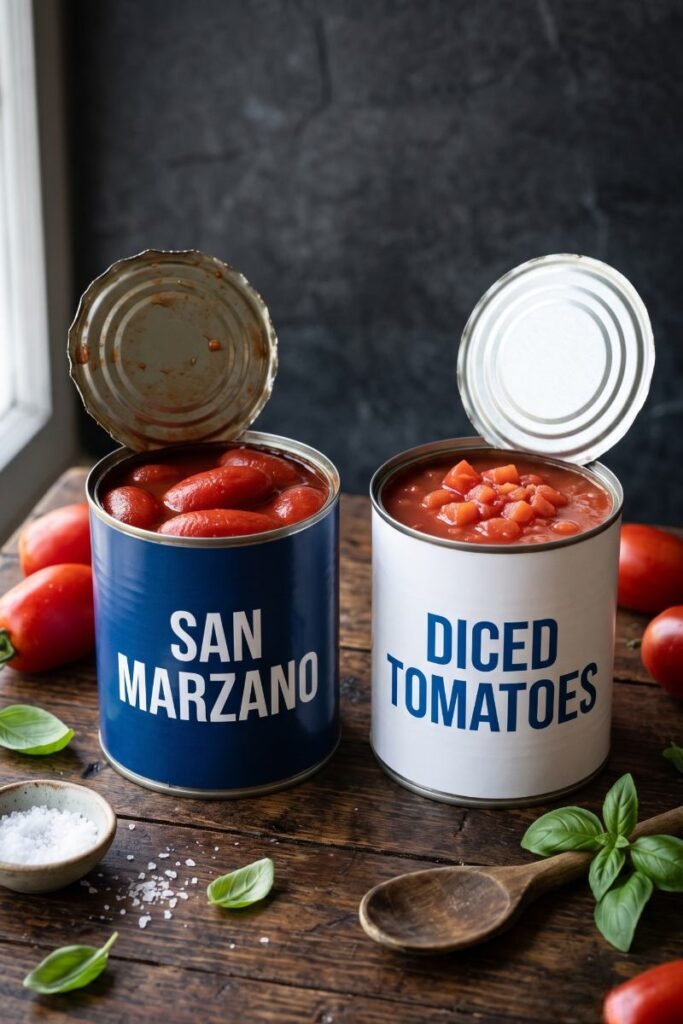
When comparing San Marzano vs regular tomatoes in the grocery store pasta aisle, you have likely noticed a massive difference in price. Tucked among the standard diced and crushed varieties are the sleek, often brightly colored cans labeled “San Marzano” that easily cost double or triple the price of ordinary store brands.
For home cooks trying to elevate their Italian cooking, it raises an immediate question: Is this just clever marketing, or do these tomatoes actually change the flavor of your food? Understanding the structural and chemical differences between these varieties is the secret to unlocking restaurant-quality sauces at home.
The Culinary Science: Why San Marzano Tomatoes Taste Better
To understand why these tomatoes dominate Italian cuisine, you have to look at geography and anatomy. True San Marzano tomatoes are a specific heirloom variety grown exclusively in the Sarno River valley near Naples, Italy.
This specific region features rich, volcanic soil created by ancient eruptions of Mount Vesuvius, combined with a unique Mediterranean microclimate and a high water table. This exact environmental combination strips the tomatoes of natural bitterness, resulting in a naturally low-acid fruit with a high concentration of natural sugars.
Anatomically, the San Marzano looks completely different from a standard plum or beefsteak tomato. They are elongated, pointed, and shaped almost like a thick pepper. Because they grow with incredibly thick flesh and very small seed cavities, you get far more usable, rich tomato solids per can and significantly less watery seed pulp.
Standard canned tomatoes, on the other hand, are bred for mass-machine harvesting. They are often picked before peak ripeness and chemically treated with citric acid to force a longer shelf life, which directly causes that sharp, metallic bitterness you often have to fix later with added sugar.
When You Absolute Must Use San Marzano
Because of their unique texture and sweetness, San Marzano tomatoes behave differently in the pan. While fresh, less acidic profiles shine beautifully raw in a raw Authentic Easy Caprese Salad Recipe, the canned variants are mandatory for cooked hot dishes:
- Quick-Cooked Marinara Sauces: If you are making a sauce that only simmers for 15 to 20 minutes, standard tomatoes will taste incredibly sharp and metallic. San Marzanos taste sweet and rich immediately upon opening the can.
- Authentic Neapolitan Pizza Sauce: True Italian pizza sauce should never be cooked before it hits the dough. It is simply crushed tomatoes mixed with sea salt. Standard grocery brands are far too watery, which will make your base soggy.
- Classic Roman Pastas: Roman culinary tradition relies completely on the natural synergy of clean fats, starch, and minimal clean ingredients. Much like how we use cooking water to bind the velvety profile of our Authentic Fettuccine Alfredo, a true Roman tomato sauce uses thick San Marzano starches to latch onto pasta without separating into grease. You can view these profiles across our complete collection of Main Dishes.
How to Spot Fake San Marzano Labels
Because these tomatoes are so valuable, counterfeit cans flood the grocery aisles. To ensure you are actually getting the real culinary benefits, look for these specific indicators on the packaging:
1. The D.O.P. Seal
Look for the circular red and yellow “Denominazione di Origine Protetta” seal. You can double-check standard European labeling protocols via the official European Commission Geographical Indications Register. If this official European Union stamp isn’t on the can, they are fake.
2. The Consortium Number
Real cans feature a unique tracking number assigned by the official San Marzano protection consortium. This number allows you to trace the exact batch back to its processing facility.
3. The Legal Production Name
The label must state “Pomodoro San Marzano dell’Agro Sarnese-Nocerino.” This specifies the exact legally protected valley where they were grown. Phrases like “San Marzano Style” mean they were grown elsewhere (often California) and will not have the signature volcanic flavor profile.
How to Substitute If You Can’t Find Them
If your local store doesn’t stock certified imports, do not buy generic diced tomatoes. Diced tomatoes are treated with calcium chloride to keep them firm, meaning they will never break down smoothly into a sauce. Instead, purchase whole peeled plum tomatoes from a premium brand like Muir Glen or Cento, and manually crush them with your hands before adding them to your pan.