
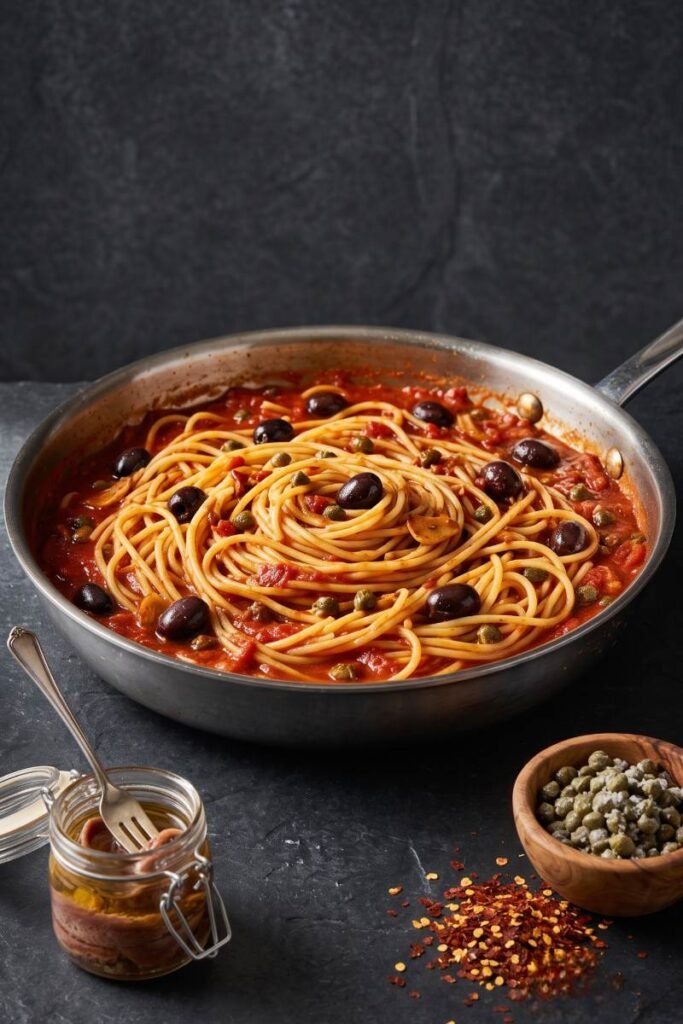
When I pull a row of jars from my cupboard to whip up a fast, aromatic meal, identifying the essential pantry ingredients that define puttanesca sauce is the absolute secret to recreating an authentic hit of old-school Italian comfort. Over my years of exploring classic regional methods, I have treated the intense briny profiles, sharp oils, and hot peppers of this base as a beautiful, synchronized orchestra of bold flavors.
Whenever I see un-trained home cooks treat this dish like a generic garden marinara by dumping raw onions, heavy sugar, or sweet green herbs into the skillet, I notice how it completely breaks the traditional character of the meal. For me, pulling off a technically perfect sugo alla puttanesca requires respecting a strict list of salt-cured stables that fuse together over high heat without needing any fresh meats.
Dissolving Anchovy Fillets into an Aromatic Oil Base
To understand why this sauce carries such an incredibly deep savory punch, you have to analyze how oil-packed anchovy fillets dissolve under high pan heat. When I drop a few salted fillets into a shimmering layer of extra virgin olive oil alongside crushed garlic cloves, I am not trying to keep the fish whole.
Instead, I use the back of my wooden spoon to aggressively mash the meat against the hot pan surface, watching the muscle fibers melt down into a smooth, uniform paste within minutes. This breakdown releases high concentrations of organic savory compounds directly into the cooking oil, creating a rich foundation that grounds the high acidity of the upcoming tomatoes.
I rely on this exact oil-browning phase to distribute deep savory properties evenly, a heat-management habit I practice when building clean fat matrices for my comparative San Marzano vs Regular Tomatoes guide. Once the fish base changes into a fragrant, bubbling foam, the remaining shelf-stable items can enter the skillet.
Balancing Cured Capers and Meaty Gaeta Olives
The core complexity of a true puttanesca depends entirely on the sharp contrast between two specific salt-cured pickling jars sitting in your cupboard. I drop a handful of whole, salt-packed capers into a strainer basket to wash away the harsh processing brine before throwing them into my hot skillet.
These tiny flower buds burst open under the heat, releasing a bright, mouth-watering punch that cuts cleanly through the heavy oils. Next, I slide in a cup of wrinkled, dark Gaeta or Kalamata olives that I have roughly torn with my thumbs to expose their meaty interior flesh.
I follow the regional variations and ingredient balance tracking documented inside the De Cecco Digital Magazine Traditional Puttanesca Profile to manage these sharp salt ratios. Mixing these two salty staples ensures your sauce achieves an authentic, gutsy character that hits every single corner of your palate.
Tossing Long Dried Spaghetti Strands in Real Time
Once my tomatoes have simmered alongside the olives and capers for a brief fifteen minutes, my workflow transitions immediately toward a high-heat pan finish. I never use soft, delicate fresh egg ribbons for this meal because the heavy oils and chunky solids would easily crush the fragile dough.
Instead, I drop long, rigid strands of dried semolina spaghetti into my boiling pot, pulling them out two minutes before they hit al dente to finish cooking inside the sauce. I transfer the stiff wheat straight into the bubbling red skillet using long tongs, bringing a healthy splash of starchy water along with them to emulsify the oils.
This fast, energetic tossing phase forces the hot fruit juices and anchovy oils to bind smoothly with the exterior wheat proteins. This rapid mechanical pan-emulsification is the exact step I use to create a velvety glaze without adding heavy dairy cream, a technique I master when throwing together my Authentic Fettuccine Alfredo (Al Burro).
Searing Dried Peperoncino for an Authentic Roman Finish
The final rule for setting up a bulletproof pantry reduction requires managing your dry spice heat levels with total precision. I avoid using fresh garden chilis or sweet bell peppers here; instead, I look exclusively for dried red pepper flakes (peperoncino) to provide a clean, fiery kick.
I drop the dry flakes straight into the hot garlic oil early in the process, allowing the fat-soluble heat elements to bloom and coat the entire base of the skillet. This initial blooming stage gives the sauce its signature warm, lingering spice profile that balances out the deep fruit sugars and briny caper juices beautifully.
I know my skillet is officially successful when the red juice achieves a deep, glistening crimson body that clings tightly to my pasta strands without pooling into separate oil lines. For me, keeping a well-stocked inventory of these six simple pantry items is the ultimate secret to pulling off an authentic Italian dinner at a moment’s notice.