
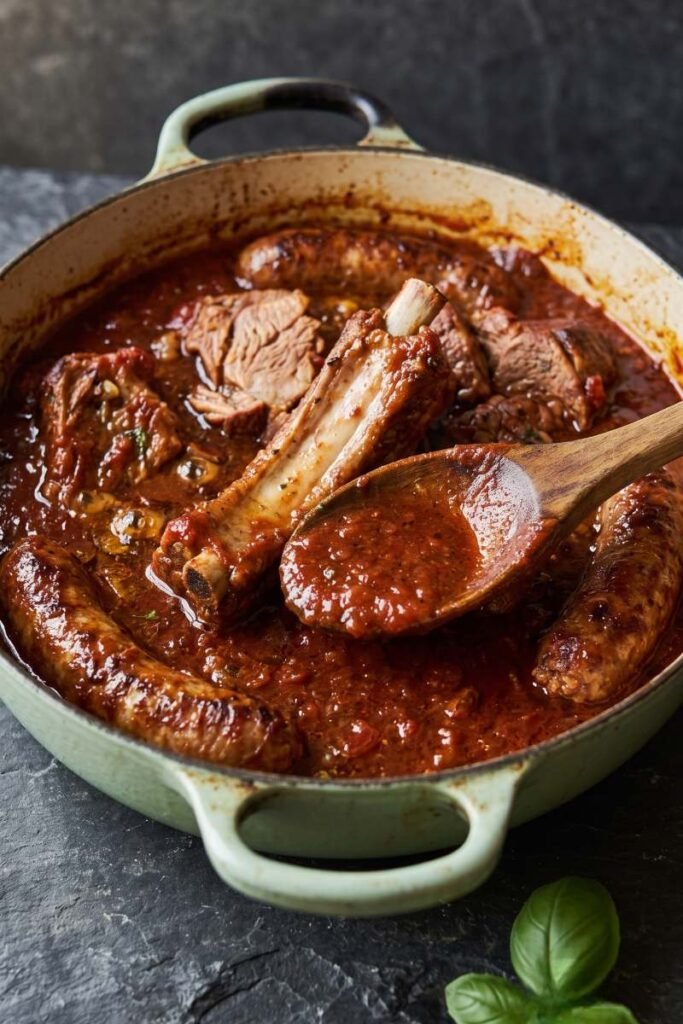
When I pull a heavy enameled Dutch oven onto my stove on a crisp morning to begin a multi-hour reduction, selecting the absolute best cuts of pork for italian sunday gravy is the single most important choice that determines the richness of my final red sauce. Over my years of exploring regional Italian techniques, I have treated the fat cap layers, bone structures, and connective tissues of the animal as critical structural design elements rather than a simple collection of random meats.
Whenever I watch untrained home cooks drop lean, boneless chops or dry loins into a simmering tomato puree, I notice how it leaves the pork tasting like dry cardboard while yielding a thin, watery sauce. For me, executing an authentic, old-school regional gravy requires sourcing tough, highly marbled cuts that rely on prolonged heat to melt their hidden collagen networks cleanly into the tomato acid.
How Slow Heat Melts Tough Muscle Fibers Into Gelatin
To understand why I explicitly demand heavy bone-in pieces for my slow-cooked pots, you have to analyze how tough muscle tissues respond to continuous boiling temperatures. Highly active muscle regions like the shoulder or rib cage are packed with dense sheets of a structural protein called collagen, which holds the meat fibers together in tight, rigid packages.
When I apply low, steady heat over a five-to-eight-hour window, that tough white collagen undergoes a magnificent physical transformation, breaking down completely into a smooth, liquid gelatin. This liquid gelatin flows directly out of the meat and into the surrounding tomato puree, coating the fruit pulp particles and changing the actual weight of the liquid phase.
I have watched this natural animal gelatin transform a sharp, watery reduction into a rich, glistening glaze that naturally clings to pasta without requiring heavy artificial thickeners or extra tomato paste. Leaving the bone structures intact during this simmer further enriches the pot, releasing deep minerals that round out the sharp fruit acids perfectly.
Sourcing the Holy Trinity of Regional Pork Extractions
When I lay out my raw ingredients on the counter, my baseline law is to build a complex flavor profile by combining three distinct cuts that each serve a unique structural purpose. First, I cut a thick bone-in pork shoulder into large, three-inch blocks because its incredible internal marbling yields massive mounds of fall-apart, shreddable meat that weaves beautifully through the sauce.
Second, I slide in a row of meaty pork spareribs or neck bones to serve as my primary source for bone-derived gelatin and deep savory marrow notes. Finally, I nestle a row of fresh, sweet Italian sausage links into the gaps to inject deep garlic, fennel seed, and black pepper oils straight into the bubbling base, mirroring the spice profiles I focus on when preparing my traditional Homemade Pizza with Sausage.
I follow the historical Southern Italian guidelines and regional meat registries preserved by the official Italian Academy of Cuisine Neapolitan Traditional Archive to ensure I respect these traditional structural balances. Using this specific trinity guarantees every single layer of your reduction carries an authentic, multi-dimensional complexity.
Sealing the Surface Layers Through Deep Pan Browning
Once my cuts are beautifully trimmed and seasoned with coarse salt, my workflow shifts toward an aggressive searing phase before a single drop of tomato enters the pan. I heat a thin layer of extra virgin olive oil inside my heavy pot until it shimmers, dropping the pork pieces in small batches to ensure I never crowd the surface.
I let each cut sit undisturbed against the hot metal for several minutes until it develops a thick, deeply caramelized, dark brown crust. This browning step triggers a magnificent chemical reaction that creates dozens of complex flavor compounds on the surface of the meat, locking the internal juices inside the fibers.
This searing technique leaves behind a rich layer of caramelized meat sugars and fats stuck to the bottom of the vessel, a deglazing process I utilize to build rich flavor foundations when blending ground pork fats with my comforting Ricotta Gnocchi with Sausage. This browning foundation is an essential step I rely on whenever I am extracting savory depth from pork fats.
The Italian Method for Separating the Sauce and the Meat
The final law for serving an authentic old-school Sunday meal requires respecting the traditional Italian separation of courses. I never leave the large, whole chunks of pork swimming inside the main pasta bowl; instead, I let them simmer until they are incredibly tender before carefully fishing them out with a slotted spoon.
The dark, ultra-rich tomato reduction that is left behind inside the Dutch oven carries a profound concentration of pork fat and gelatin, making it the perfect coat for large, hollow pasta tubes like rigatoni or paccheri. I serve this intensely savory, glistening red pasta first as the primo piatto to highlight the pure texture cohesion of the sauce.
Once the pasta plates are cleared, I present the slow-cooked pork blocks, ribs, and sausages on a separate large platter alongside fresh bread as the secondo piatto. For me, taking the time to select the right heavily marbled cuts and allowing them to lazily bubble over a slow flame is the ultimate secret to honoring my family heritage.