
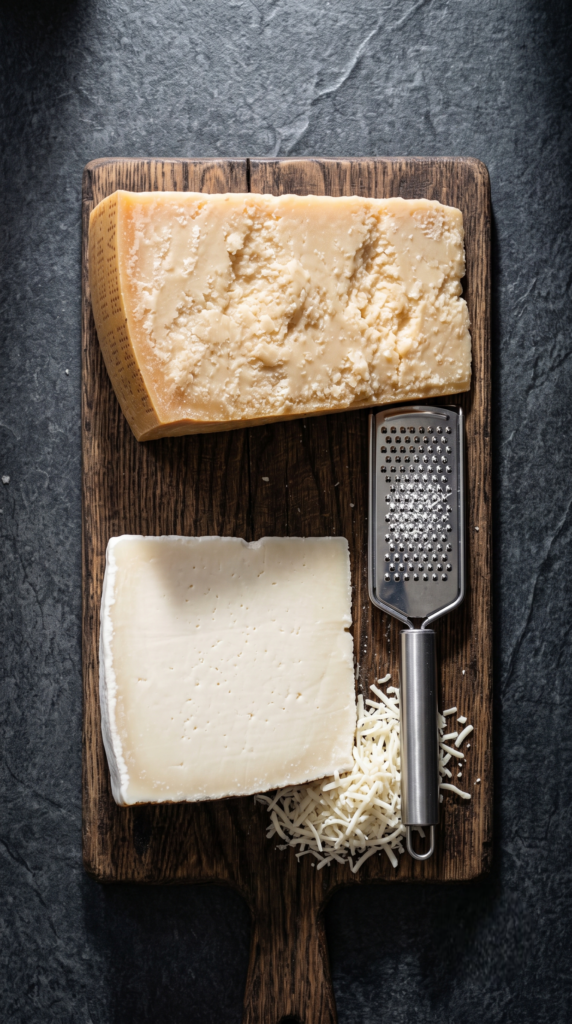
When I pull my heavy wood grating blocks out of the drawer to finish a simmering pan reduction, understanding the exact balance of Parmigiano Reggiano vs. Pecorino Romano is the absolute baseline key to managing your kitchen salt levels. Over my years of layering regional profiles, I have treated the animal milk fats, aging thresholds, and melt viscosities of these hard Italian grates as precise structural components rather than simple, interchangeable dairy dustings.
Whenever I see casual home cooks grab whatever wedge is cheapest at the local grocery store and shred it blindly over their plates, I notice how an incorrect pairing throws the entire dish out of balance. For me, delivering a true restaurant-quality flavor profile requires respecting the distinct animal sources and chemical properties that define these historic hard curds.
How Animal Breeds and Aging Regions Alter Your Salt Scale
To understand why these two legendary hard wedges behave so differently across your tongue, you have to look closely at the underlying animal physiology and regional salting laws. True Parmigiano is regulated by a strict northern consortium that uses raw cow’s milk from pasture-fed cattle, a base fluid that develops a naturally sweet, buttery, and deeply nutty profile as it rests in aging caves for two full years.
Pecorino traces its lineage to the central pastures of Lazio and Sardinia, where cheesemakers process 100% whole sheep’s milk treated with heavy applications of dry sea salt during the early curd press. Because sheep’s milk carries a significantly higher fat percentage and volatile fatty acid count than cow’s milk, the resulting block develops a fiery, sharp, and slightly acidic bite within just eight months of cellar resting.
Shaving the sheep’s curd delivers an immediate punch of sharp sodium that can easily drown out light summer garden reductions, a balancing error I avoid by saving it exclusively for high-fat foundations. I track these underlying fat profiles closely when setting up complex meat layers, a balance I analyze carefully inside my guide comparing Bolognese Ragu vs. Standard Meat Sauce: What Makes It Authentic?.
Melting the Cow Curd Into Rich Velvety Pan Glazes
When my stove is simmering a complex northern sauce that requires a smooth, luxurious finish without a harsh salty aftertaste, Parmigiano Reggiano is my non-negotiable choice. follow the strict historical tracking data, mineral composition tables, and raw macro-nutrient profiles documented inside the official USDA FoodData Central Registry to ensure my dairy components dissolve cleanly under heat.
Because cow’s milk contains a highly balanced ratio of casein proteins to natural moisture, a finely microplaned dusting of Parmigiano dissolves into warm pan liquids almost instantly without clumping into rubbery strings. The melting fat droplets combine with your starchy pasta water to form a tight, uniform cream that wraps around the wheat strands like a glossy jacket.
This gentle dairy insulation rounds out the sharp fruit acids of whole-peeled plum bases beautifully, adding a rich back-of-the-throat depth that lets the primary ingredients shine. Save this elegant, crystal-studded wedge for delicate poultry plates, slow-braised meats, and traditional butter reductions where you want to build depth smoothly.
Using Pungent Sheep Curds to Anchor Aggressive Roman Emulsions
When my dinner plans shift toward executing the intense, fat-heavy pasta pillars of classic Roman cooking, the bold profile of Pecorino Romano becomes completely irreplaceable. The fiery, gamey bite of aged sheep’s milk is the secret engine that cuts directly through the thick, rendering pork fats of cured hog jowl, preventing the plate from tasting unpleasantly greasy.
When you whip this highly acidic curd into hot cooking oils alongside a heavy dusting of cracked black pepper, the high fat content creates a stable, non-separating emulsion. This robust bonding ability is the exact structural secret I rely on to hold minimal-ingredient skillet glazes together on the stove, ensuring the cheese stays beautifully suspended in the fat.
If you try to substitute mild cow’s milk cheese into these specific pepper-heavy emulsions, the finished sauce lacks the necessary sharp salt bite to balance out the intense spice. Keep this rugged, white-bordered wedge reserved for rustic charcoal grills, rich game meats, and simple, high-fat noodle assemblies where the dairy must act as a main seasoning element.
Simple Kitchen Rules to Manage Your Cheese Inventory
The final law for managing your dairy inventory requires storing your wedges perfectly to protect their delicate moisture barriers from drying out on your refrigerator shelves. Never wrap your high-end cheese blocks in tight plastic cling film, as the non-porous plastic traps surface moisture against the rind, creating a humid microclimate that breeds white mold spores.
Instead, wrap the exposed faces tightly in breathable wax paper or specialized cheese sheets before sliding the bundles into a loose zip-top bag inside your vegetable crisper drawer. This smart storage strategy lets the curd breathe naturally without drying out, preserving those precious flavor crystals for up to six full months.
I know my ingredient storage is completely successful when the grated flakes fall away from the wheel in fluffy, feather-light mounds that dissolve the exact second they hit the hot pan. For me, taking the time to respect the biological differences between cow and sheep milk is the ultimate secret to delivering an elite meal to your family table.