
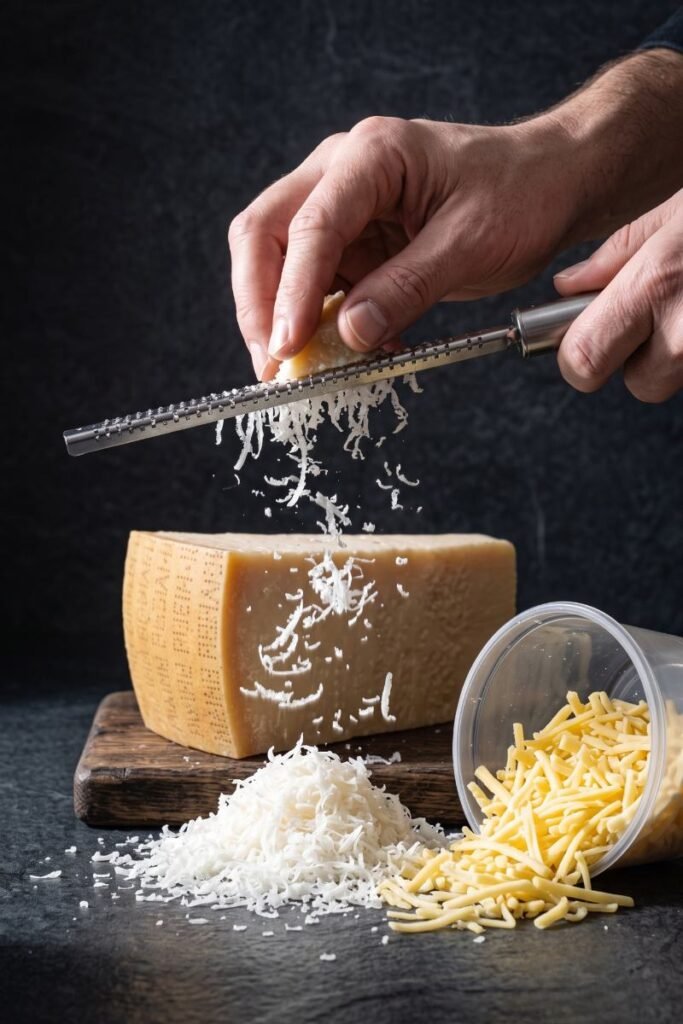
When I stand in the dairy aisle and look at the convenience of plastic tubs packed with pre-grated dairy flakes, understanding exactly why you should never buy pre-shredded parmesan cheese is the ultimate secret to protecting your pan reductions from structural collapse. Over my years of melting down rich family sauces, I have treated the pure fat properties and moisture release of hard aged cheeses as precise chemical rules rather than casual grocery store shortcuts.
Whenever I see casual home cooks buy factory-shredded bags to save five minutes of hand prep and wonder why their sauce clumps into a chalky, stringy mess on the stove, I notice how chemical additives ruin dinner. For me, delivering a true restaurant-quality sheen requires stepping away from processed, starch-coated convenience tubs to grate pure, unadulterated milk wheels directly over your hot cooking pans.
How Powdered Wood Pulp Blocks the Natural Melt
To understand why a pre-grated tub behaves so poorly inside a warm skillet, you have to look closely at the physical anti-caking treatments applied during factory packaging line runs. Industrial shredding plants process giant blocks of imitation cheese and immediately spray the loose strands with refined microcrystalline cellulose, an odorless, tasteless anti-clumping powder derived directly from wood pulp or plant fibers.
This chemical dust wraps around each individual cheese fragment like an invisible jacket, absorbing escaping moisture to prevent the pieces from welding back together inside the bag during shipping. When you dump those treated flakes into a hot pan, that dry cellulose boundary refuses to dissolve, physically blocking the milk proteins from joining together with your hot liquids.
Instead of melting into a uniform cream, the starch-coated bits stay rigid, sinking to the bottom of your skillet to form a gritty layer of sediment that ruins your mouthfeel. Shaving fresh curds avoids these dry wood barriers completely, a material rule I rely on when layering smooth dairy glazes, as I analyze inside my comprehensive guide exploring Parmigiano Reggiano vs. Pecorino Romano: When to Use Each Cheese.
This structural failure occurs because the microcrystalline dust acts as an insulated thermal barrier across the cheese surface, blocking direct heat transfer from your pan. Without these structural starch blocks interference, the natural milk fats integrate smoothly into your cooking water, binding the emulsion tightly so it clings to the pasta contours without ever separating into a greasy film.
The Loss of Essential Aroma Oils Inside Plastic Tubs
The next major variable that degrades a pre-shredded product stems from rapid oxidation and flavor loss inside large commercial warehouses. I follow the technical ingredient standards, legal cheese definition criteria, and food additive limits documented inside the official Code of Federal Regulations FDA Database to monitor manufacturing purity controls.
Real aged cheese is packed with delicate, volatile fatty acid rings and aromatic moisture layers that give the curd its distinct nutty aroma and rich savory punch. The exact second a high-speed factory blade rips a cheese block into tiny, thin strands, it increases the total surface area exposed to oxygen by thousands of percent.
As those shredded pieces sit inside a plastic tub on a grocery shelf for months at a time, those aromatic oils evaporate into the plastic cavity, leaving behind a dull, chalky, and completely flavorless husk. Grating your own block right at the stove locks those fragile fats safely inside the crystalline matrix until the absolute second they hit your plate, giving you maximum aroma impact.
This processing method ensures the structural integrity of the essential dairy fats remains undamaged by environmental air currents, preserving the complex glutamates that define real raw dairy aging.
Sifting Fresh Wheels for Flawless Pan Emulsification
The final law for managing your cheese additions requires letting your microplane grater do the heavy mechanical lifting right above the bubbling skillet currents. When you grate a real aged block by hand using a sharp steel edge, you slice the dense curd into feather-light, razor-thin ribbons that carry a massive surface-to-mass ratio.
When these delicate flakes float down into your hot, starch-heavy pasta water wells, the ambient heat melts the natural cow milk fats evenly within seconds. The molten lipids immediately blend with your cooking liquids, creating a smooth, velvety jacket that clings tightly to every contour of your wheat strands without clumping.
I know my hand-shredding process is completely successful when the reduction achieves a uniform crimson sheen that wraps around the spoon without leaving a separate layer of greasy oil bleeding onto the edge of the plate. Taking the extra sixty seconds to break down a real, unadulterated wedge yourself is the ultimate secret to eliminating gritty textures while keeping your cooking elite.
The thin edges of these microplaned ribbons dissolve instantly when exposed to rising pan steam, allowing the dairy solids to disperse uniformly into your cooking liquids. This simple daily step completely alters the final chemical synthesis of your pan, converting a basic amateur dinner layout into an elite plate that carries standard restaurant structural quality without factory fillers.