
When I scrape the final thick swirls of a vibrant green herb blend out of my mortar bowl, wondering can you freeze homemade pesto sauce without losing that bright summer color is a common concern for home cooks. Over my years of balancing raw, aromatic leaf oils and cold-pressed fats, I have treated oxidation and deep-freeze discoloration as basic material challenges with simple, logical fixes.
Whenever I see casual cooks dump a fresh batch of sauce directly into an open plastic tub and throw it into the freezer, watching the top layer turn into a dull, brown, and flavorless block within weeks breaks my heart. For me, delivering a true garden-fresh punch from a frozen batch simply requires blocking out ambient air currents by applying a heavy olive oil shield over the surface of the green paste.
Why Open Freezer Air Turns Green Herb Pastes Brown
To understand why an unprotected tub of fresh basil sauce degrades so aggressively inside a cold storage vault, you have to look closely at the chemical properties of open leaf tissue. Raw sweet basil leaves are packed with highly active polyphenol oxidase enzymes, sensitive compounds that trigger a rapid browning phase the exact second they make contact with oxygen molecules.
When you run these leaves through a food processor blade or rub them against a stone pestle, you rupture the plant’s internal cell walls, exposing these vulnerable enzymes to surrounding air currents. If you slide an unprotected container straight into a cold freezing chamber, the dry, moving air currents pull moisture out of the uncovered paste, accelerating the browning reaction across the top layer before the center can fully freeze solid.
This unchecked discoloration results in a bitter, oxidized crust that destroys the bright, peppery aroma of the underlying herb fats. I manage these exact atmospheric cellular shields constantly when preserving fresh herbal components on my station, an environmental air-control rule I prioritize when prepping raw green leaves inside my guide on How to Properly Store Fresh Basil So It Doesn’t Turn Black in 2 Days.
The Chemistry of Building a Liquid Extra Virgin Olive Oil Lock
My absolute baseline technical rule for preserving the vivid emerald color of an opened or stored batch relies on creating a continuous liquid oil barrier right across the top of the container. I follow the strict fat stabilization guidelines, low-temperature oxidation charts, and airtight storage mechanics documented inside the official Serious Eats Master Pesto Science Guide to keep my sauce foundations pristine.
When you scoop your blended sauce into a small glass jar or a heavy-duty storage bag, tap the vessel firmly against your counter space to force any trapped air pockets to rise to the top surface and escape. Use a clean spoon to level out the top of the green paste until it forms a flat, horizontal floor across the container.
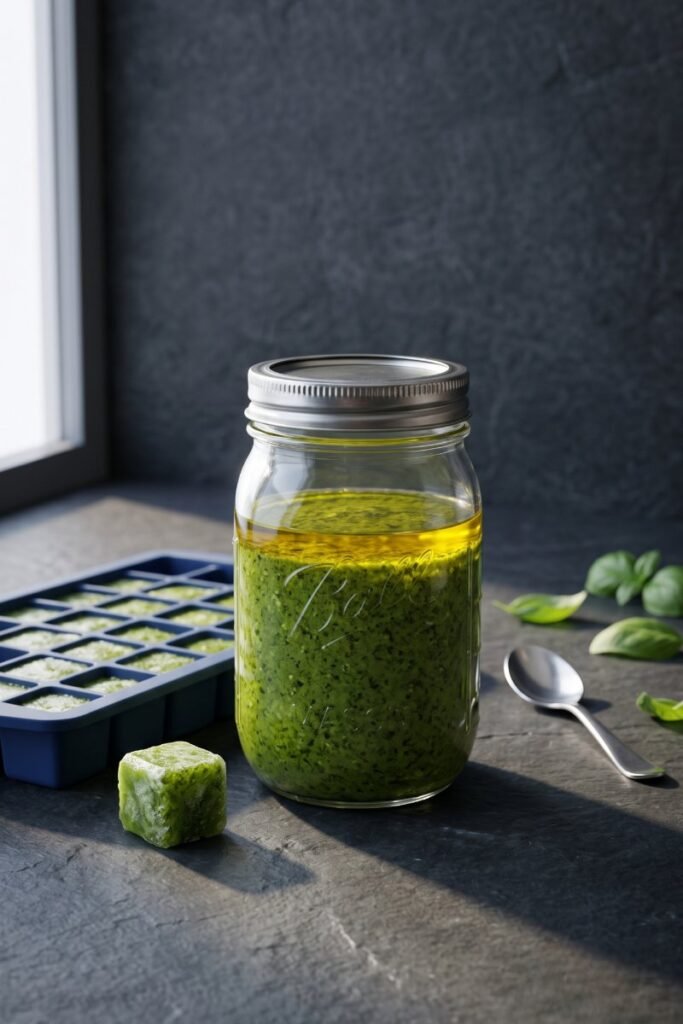
Slowly pour two tablespoons of fresh, everyday extra virgin olive oil directly over the top of the paste, letting the fluid flow into every corner to build a continuous quarter-inch deep liquid blanket. Because olive oil is an absolute lipid barrier, oxygen molecules cannot pass through the dense fat phase to touch the underlying herb cells, fully locking the bright color and raw garlic aromas inside the frozen matrix.
The Ice Cube Tray Trick for Fast Portion Scaling
The next major law for managing your long-term storage inventory requires portioning your raw herb blocks into individual serving sizes before committing them to a long freeze. Never dump a massive 16-ounce batch of sauce into a giant plastic container all at once, as you will be forced to thaw the entire solid block just to secure a single spoonful for a weeknight dinner.
Instead, spoon the fresh, un-cheesed green paste directly into the independent squares of a clean plastic ice cube tray, filling each well roughly three-quarters of the way up to the border. Pour a thin slick of olive oil over each independent square to seal out the air, then slide the entire plastic tray onto a flat shelf inside your freezer until the squares are completely solid.
Once the squares are completely frozen, pop the independent green blocks out of the plastic mold and transfer them into a heavy-duty zip-top storage bag for long-term inventory tracking. This smart portioning hack lets you pull exactly one or two frozen flavor cubes out of the bag at a time, allowing you to drop them straight into a warm pan of noodles without disrupting the remaining frozen stock.
Simple Stovetop Rules to Thaw and Reheat Without Separation
The final law for managing your frozen sauce inventory requires keeping your stove heat locked firmly below a gentle simmer window whenever you are ready to bring a stored cube back to life. Never drop a frozen block of herb sauce directly into a screaming hot skillet filled with boiling water or hot frying oil, as intense direct heat will instantly cook the delicate basil leaves, turning them black and bitter while forcing the emulsified fats to separate into a greasy puddle.
Instead, pull your frozen portion cubes out of the freezer and let them rest inside a small bowl on your kitchen counter for roughly thirty minutes to soften up naturally at room temperature. Once your pasta noodles are pulled out of their boiling pot, turn your burner dial completely off, slide the warm skillet onto a cool element, and drop the softened green paste directly into the hot noodles.
Use your kitchen tongs to continuously fold the paste over the warm wheat strands, allowing the residual steam of the noodles to melt the solid olive oil fats into a smooth, velvety jacket that clings tightly to the pasta. I know my thawing process is completely successful when the sauce achieves a uniform, glossy sheen that coats the wheat evenly without leaving pools of loose grease on the plate.
Taking the extra time to float an oil shield and manage your re-heating temperatures is the ultimate secret to delivering an elite meal to your family table.