
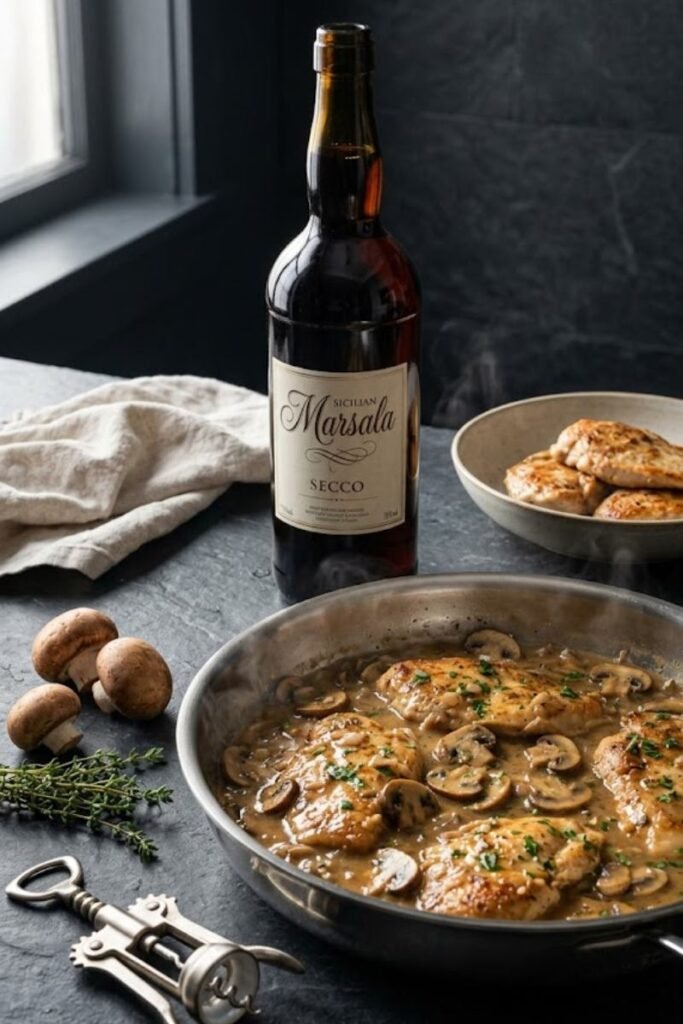
When I sear a thin chicken cutlet, mastering cooking with marsala wine is the ultimate baseline step required to balance rich grape sugars against savory elements. Over my years of reduction-building, I have treated fortified wine classifications, residual sugar tiers, and thermal evaporation arcs as strict chemical variables.
Whenever I see amateur home cooks reach for a bottle of sweet, syrupy dessert wine to deglaze their pan, it completely ruins the dinner. Watching your mushroom sauce turn unpleasantly cloying and taste like a thick pastry frosting shows how choosing the wrong bottle profile instantly compromises the meal.
For me, delivering an elite Italian finish requires locking down crisp, dry fortified bottles to build balanced skillet reductions. This continuous quality control ensures your pan lipids blend smoothly with the alcohol, a structural standard I maintain across my kitchen layout inside my guide on Red Wine vs. White Wine: How to Choose Cooking Wine.
Why Fortified Cooking Bases Concentrate Sugars Under Heat
To understand why a sweet bottle of fortified liquid fails so aggressively inside a hot sauté pan, you have to look closely at fermentation mechanics and liquid evaporation curves. Marsala is a historic Sicilian wine originating from the port of Marsala, made from local white grapes like Grillo, Inzolia, and Catarratto, and fortified with neutral grape spirits during production.
This fortification step stops the natural yeast fermentation early, locking a massive volume of unfermented residual grape sugars inside the bottle while driving the alcohol content up to a high 17% threshold. When you drop a splash of this liquid into hot skillet fats, the high thermal heat drives off the water and alcohol volumes rapidly.
If you use a sweet bottle, the intense evaporation concentrates those dense grape sugars exponentially within seconds, leaving behind a thick, cloying syrup that caramelizes into a heavy glaze against the pan floor.
This sugar overload completely masks your minced garlic and earthy mushrooms, turning a savory dinner into a dessert. Using a true dry bottle provides the exact same rich, oxidized oak notes and dried fruit undertones but with a lean sugar profile that stays clean and velvety.
This structural sugar control keeps your skillet proteins from burning over an open stove flame, ensuring the natural bird grease remains smooth. Balancing your pan temperatures prevents this rapid crystallization, allowing your minced shallots to soften evenly without acquiring a bitter, scorched skin.
The Serious Eats Guideline for Selecting Proper Sicilian Bottles
My absolute baseline technical rule for evaluating your fortified cooking options relies on reading the lower portion of the imported label to find official classification markers. I follow the strict aging definitions, sugar concentration scales, and regional pairing parameters documented inside the official Serious Eats Marsala Evaluation Guide to keep my pan emulsions flawless.
- Secco (Dry): This bottle contains a maximum of 40 grams of residual sugar per liter. It is the absolute chef-recommended standard for making Chicken Marsala, veal cutlets, and savory pan reductions because it provides complex acidity and wood notes.
- Semisecco (Semi-Dry): Running between 41 and 100 grams of sugar per liter, this mid-tier profile is highly volatile in a skillet. It can work in a pinch for heavy pork cuts but requires trimming any extra butter to prevent sugar overload.
- Dolce (Sweet): Carrying over 100 grams of sugar per liter, this style is strictly a dessert asset built to wrap around sweet pastries or blend into a rich egg sabayon.
Building a Velvet Pan Emulsion Without Supermarket Fillers
The final law for successfully identifying a stable cooking medium requires completely banning non-potable supermarket “Marsala cooking wines” found in the spice aisle. These cheap industrial solutions are packed with chemical preservatives and an immense sodium chloride salt concentration designed to give the bottle a long shelf life.
Dumping this salty solution into your pan well introduces an unpredictable, uncontrollable volume of sodium that will over-salt your chicken and break your sauce balance. Instead, purchase a genuine bottle of Sicilian DOC Marsala from a reputable wine merchant, looking for terms like Superiore or Vergine to guarantee traditional aging.
When your chicken cutlets are seared, remove them from the pan and drop in your sliced cremini mushrooms and shallots to absorb the remaining chicken lipids. Pour in your dry Marsala wine, using a wooden spoon to scrape up the caramelized bits from the bottom of the pan as the alcohol boils away.
I know my reduction strategy is fully successful when the liquid cooks down by half, turning into a glossy, dark mahogany jacket that coats the back of a spoon. Whisk in a pat of cold butter right at the end to create a smooth, velvety sauce that clings beautifully to the chicken.
Taking the extra minute to check for the Secco stamp on your label and avoiding salty cooking wines is the ultimate kitchen secret to keeping your cooking elite. This careful processing ensures your chicken cutlets maintain an exceptional bite, delivering a flawless restaurant-grade dinner to your family table.