
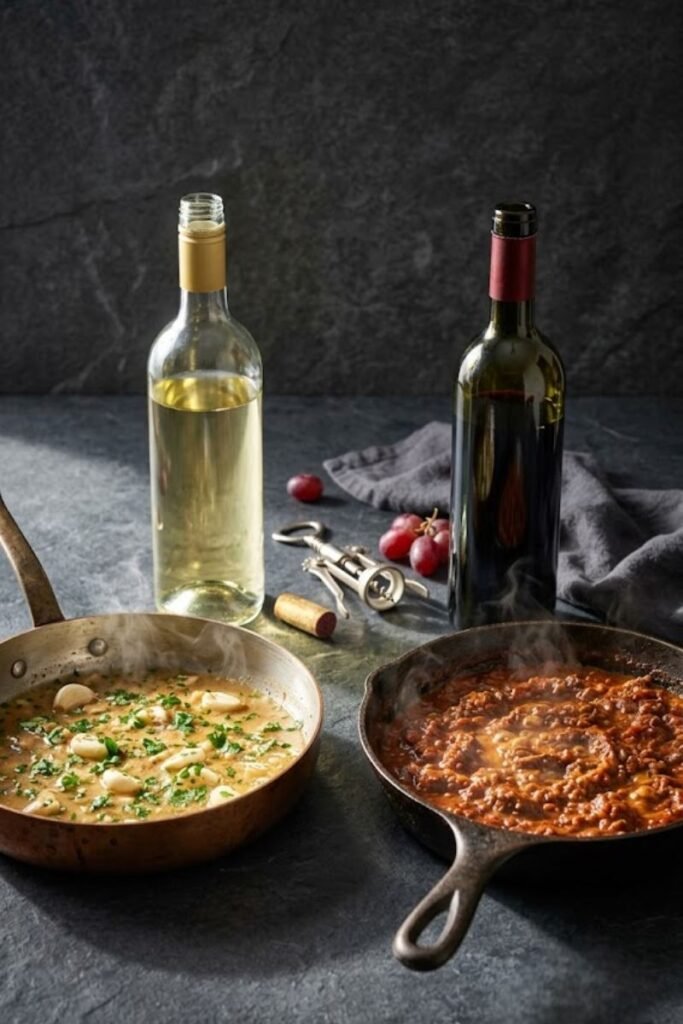
When I deglaze the caramelized brown bits off a heavy skillet, selecting the proper cooking wine for italian recipes is the ultimate structural rule required to balance flavors without ruining the dish. Over my years of balancing bright fruit pressings and simmering hot sauces, I have treated liquid alcohol reductions, volatile organic acids, and residual sugar thresholds as strict chemical variables.
Whenever I see amateur home cooks pour a flat, oxidized, half-empty bottle into a delicate garlic butter base, it completely hurts the meal. Watching a beautiful sauce turn unpleasantly sour or intensely bitter from bad alcohol integration shows how careless ingredient choices instantly limit the plate.
For me, delivering a true restaurant-quality Italian finish simply requires using crisp, un-oaked white wines for delicate seafood while saving dry, tannin-rich reds for heavy ragùs. This continuous structural mapping ensures your pan lipids blend smoothly so every single spoonful carries a clean, savory depth that flatters your herbs.
How Evaporation Curves Concentrate Acids and Oak Tannins
To understand why a specific bottle of wine completely changes the physical structure of your skillet pan reduction, you have to look closely at fluid thermodynamics and concentration mechanics. When you pour a splash of wine into a hot pan well, the liquid alcohol content evaporates away rapidly, leaving behind a highly concentrated essence of the grape’s natural tartaric acids and wood tannins.
If you make the mistake of cooking with a rich, wood-aged white wine like an oaked Chardonnay, the thermal reduction process concentrates the wood vanilla profiles aggressively. This heat concentration transforms a subtle vanilla aroma into a harsh, bitter, and dominant oak flavor that completely overpowers your delicate minced garlic and herbs.
Conversely, utilizing a lean, un-oaked white wine provides a clean spike of bright tartaric acid that cuts through heavy dairy lipids smoothly without leaving a bitter wood trace. This acid balancing act is a flavor standard I prioritize across my entire kitchen layout, a focus I maintain when separating heavy meat fats inside my guide on understanding What is Pancetta? (And How It Differs From Regular American Bacon).
Without matching these evaporation profiles correctly to your skillet base, the reducing liquid can easily split your emulsions, turning a smooth sauce into an unappealing, greasy puddle that breaks apart on the plate.
The Serious Eats Blueprint for Matching Color and Lipid Weight
My absolute baseline technical rule for picking your kitchen wine bottles relies on establishing perfect structural harmony between the weight of the wine and the density of your pan proteins. I follow the strict acid optimization scales, sugar boundaries, and regional food pairings documented inside the official Serious Eats Cooking Wine Evaluation Manual to keep my sauce foundations pristine.
When you are simmering a delicate pan of fresh bivalves or a light chicken breast cutlet, your skillet contents require high, bright acidity to lift the subtle protein cells without muddying their color. Pouring a dry, crisp Pinot Grigio into the hot pan provides an immediate burst of fresh citrus acid that acts exactly like a splash of fresh lemon juice, brightening the heavy olive oil without clouding the sauce.
When your menu transitions to heavy, slow-simmered beef roasts or rich ground pork toppings, those dense red muscle fibers demand a deeper, fruit-forward partner that can stand up to heavy fat layers. Deglazing a thick beef pan with a dry, ruby-red Chianti introduces dark fruit compounds and earthy undertones that bond chemically with the savory meat glutamates, building a rich, velvety glaze that clings tightly to your pasta.
Why Supermarket “Cooking Wines” Are Toxic to Pan Emulsions
The final law for managing your liquid inventory requires completely banning industrial, shelf-stable grocery store “cooking wines” from entering your kitchen pantry space entirely. These cheap, heavily processed commercial bottles are not true wines at all; instead, they are mass-produced alcohol solutions packed with heavy chemical preservatives, artificial food colorings, and massive concentrations of added sodium chloride salt.
Dumping a splash of this salty, chemical liquid into a hot skillet well introduces an unpredictable, uncontrollable volume of sodium that will instantly over-salt your base and ruin your flavor balances. Furthermore, because these shelf-stable options lack the natural, complex fruit esters of a true fermented table wine, they leave behind a flat, harsh, and medicinal flavor profile that tastes unpleasantly synthetic.
The most reliable rule to live by on your cooking station is remarkably simple: if you would not comfortably pour a sample of the wine into a glass to drink alongside your dinner, you should never pour it into your frying pan wells to feed your family.
I know my wine selection strategy is fully successful when the reducing liquid hits the hot oil with a clean, fruity, and aromatic hiss, melting the caramelized meat sugars into a glossy coat that shows zero dark bruising or artificial separation lines. Taking the extra two minutes to separate your grape profiles and manage your acid concentrations is the ultimate kitchen secret to keeping your Italian dinner line elite.