
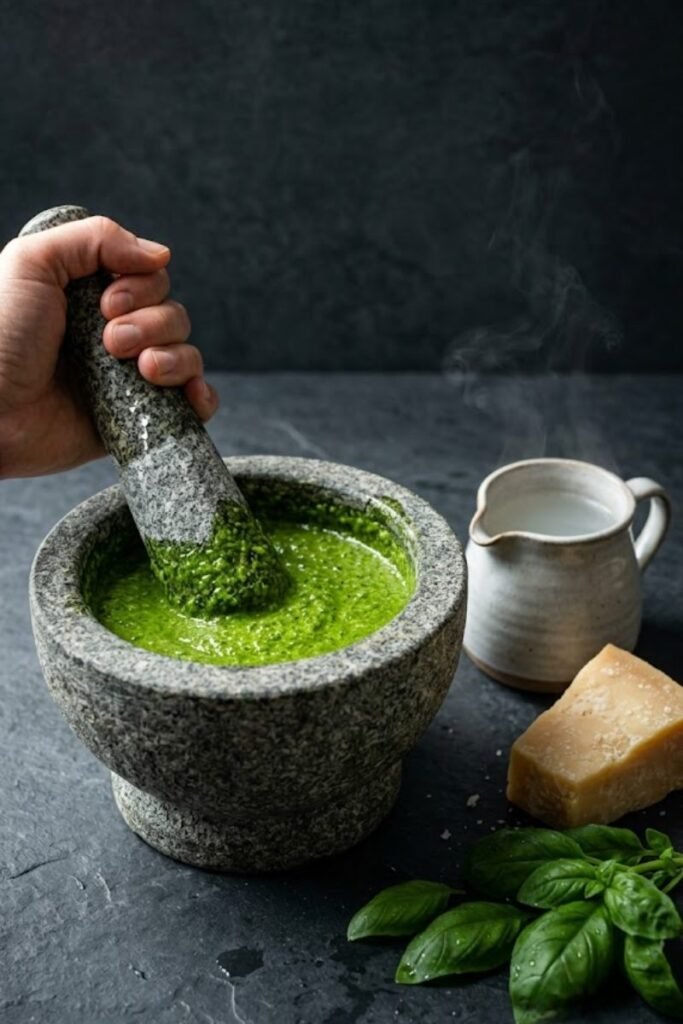
If you are wondering how to fix oily pesto, mastering a clean emulsification balance is the absolute ultimate step required to rescue your raw herb sauce. When you are pounding down a fresh batch of greens, the olive oil needs to blend into a creamy jacket that wraps smoothly around the nuts and cheese.
If you pour your fat pool in too quickly or blast the mixture under hot steel blades, you risk breaking the sauce completely. Watching your bright green paste separate into a dark pool of floating grease shows how poor mechanical blending habits instantly compromise your kitchen work.
For me, delivering an elite restaurant-quality plate simply requires binding those separate liquids using a cold mechanical friction method and a splash of starchy water. This continuous fluid defense ensures your herbs stay vibrant and bound, a rule I prioritize to keep my green sauces silky and uniform for the dinner table.
The Delicate Molecular Balance of Cold Herb Emulsions
To understand why a raw basil paste separates so quickly into a heavy grease pool, you have to look closely at cold blending mechanics and lipid suspension. Unlike a slow-simmered tomato reduction, an authentic Genoese pesto is entirely raw, relying on a fragile physical suspension of solids floating inside fruit fats.
When you crush fresh basil leaves, pine nuts, and hard cheese together, you are releasing natural moisture droplets and fine solids into the pan. To pull these separate elements into a single, creamy cream jacket, the olive oil must be broken down into microscopic droplets that hang suspended between the plant fibers.
If you use a high-speed food processor for too long, the friction from the spinning steel blades generates intense local heat. This thermal spike melts the delicate fats inside your Pecorino and Parmigiano cheeses prematurely, destroying their ability to trap the oil.
I manage these exact raw fat protections and green color shifts carefully whenever I preserve my batch leftovers, an ingredient storage routine I focus on closely inside my master guide on How to Freeze Homemade Pesto (And Keep It From Turning Black).
Once that cheese wall breaks down, the independent fat molecules run together immediately, forming a heavy, floating green slick that refuses to coat your pasta. The separate liquids collapse into an unappealing, greasy pool that ruins the visual look of your entire dish.
The Serious Eats Mortar and Pestle Pounding Method
The kitchen rule for keeping your herb fats perfectly bound relies on using gentle manual friction instead of high-heat mechanical blades. I follow the strict ingredient ordering systems, pounding steps, and water binding scales documented inside the official Serious Eats Pesto Emulsification Guide to keep my green sauces silky and uniform.
Banish direct pan heat completely. Never dump a bowl of fresh pesto into a sizzling hot frying pan over an open gas stove flame. High heat cooks the basil leaves instantly, turning them black while forcing the olive oil to separate completely from the curd.
Utilize raw mechanical mortar friction. Grind your garlic cloves and pine nuts into a smooth paste first before introducing your leafy green sheets. This heavy nut paste acts as a natural thickener that helps trap the oil droplets smoothly as they drip from your measuring cup.
Maintain a slow, steady stream. Drizzle your extra-virgin olive oil into the stone bowl in a tiny, hair-thin thread while turning your pestle in a steady circle. This gradual introduction gives the solid fibers plenty of time to absorb the fats before they can pool into a slick.
If you are mixing your sauce into hot noodles, ladle a single tablespoon of your cloudy, starchy pasta boiling water directly into your serving bowl. This starchy fluid serves as a powerful binding bridge, locking the loose oils and cheese solids into a rich, velvety glaze.
Three Quick Stovetop Rescues for a Separated Batch
If your storage container or mixing bowl already displays a deep layer of separated oil, do not throw the batch into your trash bin. You can easily bring the emulsion back together using simple, low-heat counter adjustments that restore the natural balance of the sauce.
- The Ice Cube Method: Drop a single small ice cube into your blender container with the broken pesto and pulse it for five seconds. The sudden drop in temperature firms up the melting cheese fats instantly, helping them grab the loose oil.
- The Extra Nut Paste Bridge: Finely grate two extra pine nuts or walnuts into a smooth paste and fold them into the broken sauce. These raw, unheated seed starches provide a fresh physical network that absorbs loose surface lipids immediately.
- The Hand Whisk Squeeze: Transfer the separated sauce to a cold bowl and add a single teaspoon of fresh lemon juice or cold water. Whisk the mixture aggressively by hand for thirty seconds, using raw mechanical speed to re-suspend the fat droplets.
I know my emulsion rescue strategy is fully successful when the pale green paste turns into a uniform, velvety coat that clings to your wooden spoon. The clean juices wrap around your trofie or spaghetti strands smoothly without leaving any dark pools or greasy streaks on the plate floor. Taking an extra minute to understand cold friction and use your pasta water keeps your Italian sauces simple, rich, and elite.