
If you are wondering why is my eggplant parmigiana bitter, learning how to salt and purge your vegetables is the absolute ultimate step required to save your dinner. When you are building a layered casserole, eggplant needs to deliver a mild, creamy, and buttery texture that melts into the tomato sauce.
If you slice the raw rounds and throw them straight into a frying pan without proper prep, you risk ruining the whole meal. Watching your beautiful dinner turn unpleasantly harsh, tough, and chemical-tasting shows how skipping a simple moisture check ruins your kitchen work.
For me, keeping your casserole sweet and tender simply requires drawing out the harsh vegetable juices with a quick salt purge before cooking. This easy kitchen defense guarantees your layers stay rich, pourable, and delicious for your family table.
The Bitter Truth Behind Eggplant Alkaloids and Aging Seeds
To understand why a purple vegetable transforms into a harsh, metallic dish, you have to look closely at plant biology and simple chemistry. Eggplants belong to the nightshade family, which means they naturally develop small chemical defense compounds called alkaloids inside their flesh.
These compounds give the raw vegetable a sharp, bitter edge designed to protect it from animals while it grows in the field. When you buy a fresh, young eggplant, the alkaloid levels are usually very low, leaving the vegetable tasting mild and sweet.
However, as an eggplant sits in storage or grows older, its seeds become large, hard, and packed with these bitter fluids. When you slice into an older vegetable and see dark green or black seeds, it is a clear warning sign.
Cooking the vegetable with those seeds intact seals the bitter juices straight into the flesh, overpowering your cheese and sweet marinara sauce. I manage these exact harsh chemical defenses and vegetable moisture levels constantly when working with aggressive garden greens on my station, a preparation rule I track closely inside my guide on What is Broccoli Rabe (Rapini)? (And How to Cut the Intense Bitterness).
The only way to save the flavor is to use a physical drawing method that pulls those fluids out before they hit the heat. Without a proper purge, those aging seeds will bleed their bitter traits into your olive oil, ruining the entire profile of your dish.
The Serious Eats Osmosis Method for Purging Spongy Flesh
The kitchen rule for removing bitter vegetable juices relies on using coarse salt to pull moisture out through simple osmosis. I follow the strict salting weights, purging times, and rinsing guidelines documented inside the official Serious Eats Eggplant Frying Guide to keep my casserole layers crisp and mild.
Banish fine table salt entirely. Never use powdery table salt to purge your vegetable rounds. Fine salt melts too quickly and sinks deep into the spongy pores of the flesh, making your finished dinner taste unpleasantly salty.
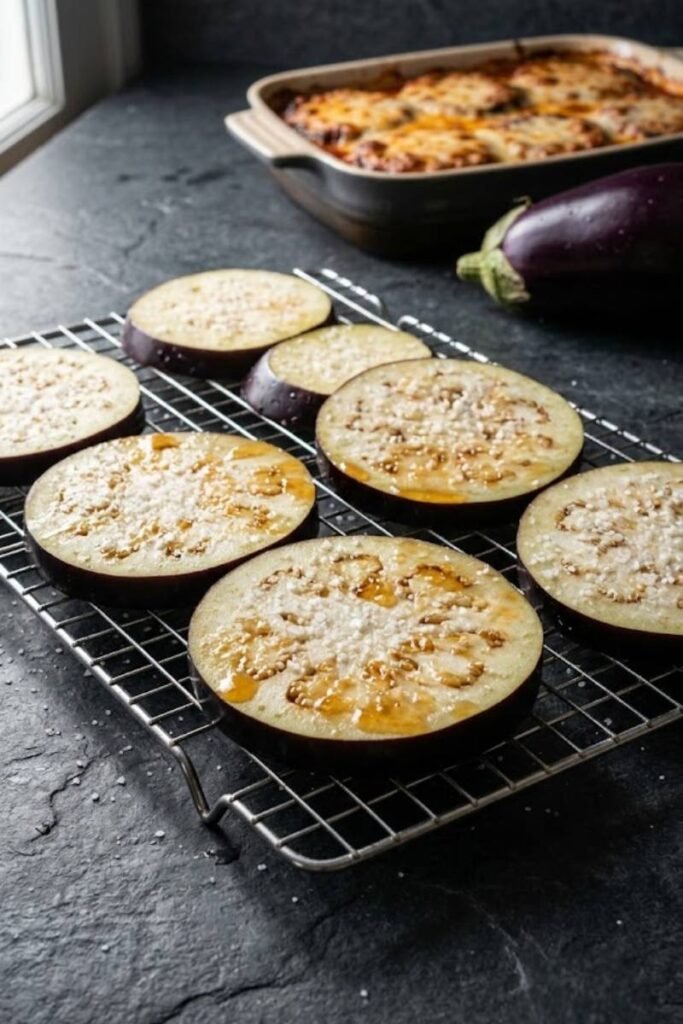
Utilize coarse kosher salt. Slice your eggplant into uniform half-inch rounds and lay them out inside a large colander or on wire racks. Dust both sides generously with coarse salt crystals and let them sit undisturbed on your counter.
Maintain a 30-minute clock. Within ten minutes, you will see tiny, dark amber droplets of liquid bead up across the white surface. This sweat is the bitter alkaloid fluid being drawn out by the salt crystals.
After a full half-hour, rinse the slices thoroughly under cold running water to wash away the dark juice and excess salt. Grab a clean kitchen towel or thick paper towels and press down firmly on each round to wring out the moisture.
This pressing step deflates the spongy air pockets inside the flesh completely, preventing the vegetable from soaking up excess oil when you fry it.
Layering Tricks to Ensure a Sweet and Velvety Casserole
The final law for successfully building your dinner requires managing your pan fats and cheese steps carefully right before baking. Once your eggplant slices are purged and bone-dry, dust them in a thin layer of flour and fry them quickly in hot olive oil.
- Thin Breading Boundary: Keep your flour coating light to prevent the vegetable from turning into a heavy, greasy paste inside the oven.
- Low-Moisture Mozzarella: Avoid fresh, water-packed cheese balls that dump loose liquid into your baking dish, making your layers soupy.
- Aged Parmesan Balance: Dust a handful of sharp Parmigiano-Reggiano between each layer to add a deep, savory balance that cuts through any leftover vegetable notes.
Assemble your layers tightly inside a heavy ceramic dish, starting with a thin smear of smooth tomato sauce on the bottom floor. Bake the casserole uncovered at 400°F until the top cheese layer turns into a bubbling, golden-brown crust.
Let the hot dish rest on your counter for twenty minutes before diving in with a sharp knife. This cooling window allows the starches and melted cheeses to set firmly, keeping your vertical slices clean and beautiful.
I know my moisture and bitter defense strategy is fully successful when the fork slides through the layers easily like soft butter. Taking the extra time to salt your eggplant rounds keeps your family bakes sweet, light, and perfectly delicious for everyone.