
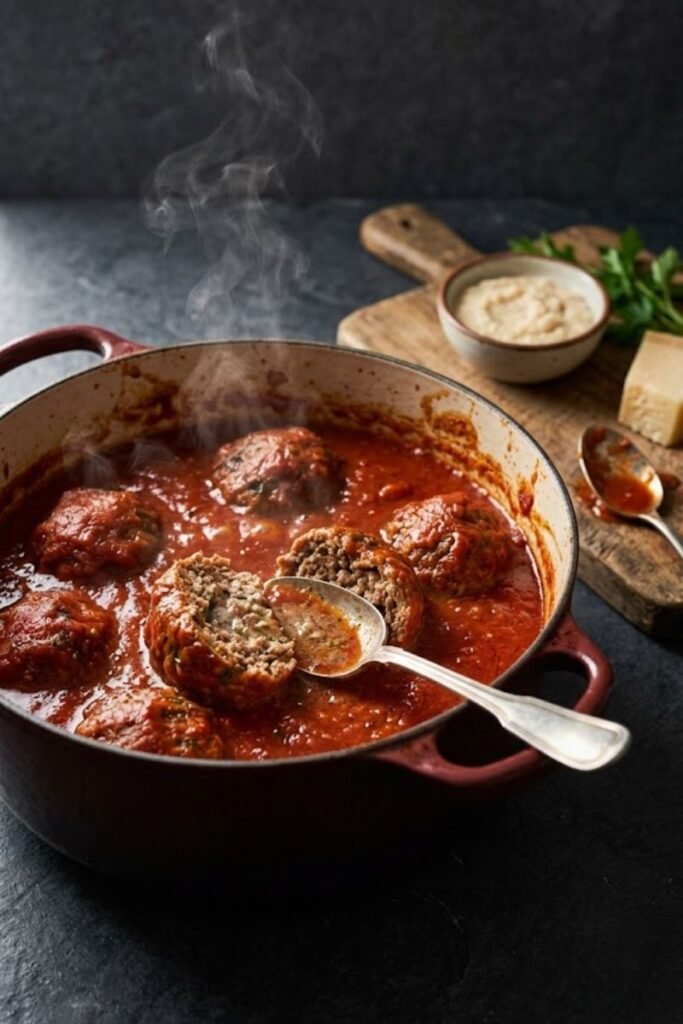
If you are wondering how to fix dry meatballs, learning how to loosen tight protein fibers is the absolute ultimate step required to rescue your Sunday gravy. When you are rolling out a fresh batch of meat, the ground pork and beef need to maintain a tender, juicy core that breaks apart easily with a fork.
If you leave the pan over a high flame for too long or forget to balance your binding ingredients, you risk drying out the blend completely. Watching your beautiful dinner turn unpleasantly tough, rubbery, and dense shows how easily a simple timing misstep can compromise your hard kitchen work.
For me, saving an overcooked batch simply requires using a low-heat braising method and a rich liquid bath to drive moisture back into the meat. This continuous moisture defense ensures every single bite stays soft, juicy, and delicious for your family table.
The Protein Lockdown of Aggressive Stove Heat
To understand why ground meat transforms into a tough, rubbery knot so quickly, you have to look closely at muscle fibers and heat translation. When ground beef, pork, or veal cooks over a hot flame, the long chains of protein molecules begin to twist and coil tightly together.
This natural tightening action is a standard part of cooking, but excessive heat forces the fibers to squeeze against each other like an industrial vise. As the muscle walls collapse under the pressure, they force all the natural juices and fat pools out of the core of the meat entirely.
If you keep frying the uncovered balls inside a dry skillet, that escaping moisture evaporates away into the air instantly, leaving the interior parched. Once those internal moisture pockets dry out, the protein strands lock together into a dense, non-porous structure that feels tough to chew.
This deep moisture loss requires a highly targeted liquid environment to protect the muscle cells from locking up permanently, a protein balancing protocol I prioritize when selecting my raw fat ratios inside my master guide on the Best Cuts of Pork for Italian Sunday Gravy. The only way to reverse this rubbery texture is to introduce a slow, wet heat environment that coaxes those tight protein knots to relax.
The Serious Eats Low-and-Slow Braising Recovery Method
The kitchen rule for softening overcooked meat relies on using a covered liquid bath to gently drive moisture back into the tight fiber structures. I follow the strict simmering temperatures, panade weights, and protein hydration guidelines documented inside the official Serious Eats Meatball Textural Guide to keep my Sunday bakes soft and tender.
Banish aggressive frying entirely. Never try to save a dry batch by cranking up the burner heat or frying the exterior crust even further in open oil. Adding more dry heat to an already over-extracted protein core will simply dry out the center completely, ruining any chance of recovery.
Utilize a deep sauce submerge. Drop your overcooked meatballs straight into a deep pot filled with warm marinara sauce, low-sodium beef stock, or simple bone broth. Ensure the liquid covers the top of the meat completely so every single pore can draw in the fluid.
Maintain a low, covered simmer. Pop a heavy lid onto your pot and drop the flame down to the absolute lowest setting on your stove grid. Let the mixture bubble gently for a full forty-five minutes without disturbing the vessel.
This slow, wet environment allows the hot sauce to sink deep into the tight channels between the protein fibers, loosening the knots gradually. The trapped steam inside the covered pan works continuously to break down the tough outer edges, turning a leathery round back into a juicy bite.
Preventive Steps to Guarantee a Melting Core Next Time
The final law for successfully managing your dinner assets requires adjusting your initial ingredient mixing routine before your raw meat ever touches the skillet fat. The most reliable shield against dry results is a traditional Italian kitchen secret known as a panade.
- The Milk and Bread Paste: Tear two slices of stale white bread into small bits and soak them in a half-cup of cold whole milk until it forms a thick paste.
- Gentle Manual Mixing: Fold this wet bread paste into your raw ground meat gently with your bare fingers, avoiding heavy machine blending.
- Fat Percentage Balance: Always select ground beef packages displaying an 80/20 lean-to-fat ratio to ensure your skillet retains plenty of natural lubrication.
This wet bread paste slips directly between the independent meat fibers, acting like a physical sponge that blocks the protein chains from locking together too tightly. When the oven heat hits the pan, the bread paste holds onto the moisture tightly, keeping the center of the ball soft, airy, and creamy.
I know my recovery strategy is fully successful when a spoon passes through the center of the round effortlessly with zero resistance. The rich tomato juices blend into a glossy coat that covers the meat smoothly, delivering a perfect restaurant-grade dinner that everyone can enjoy.