
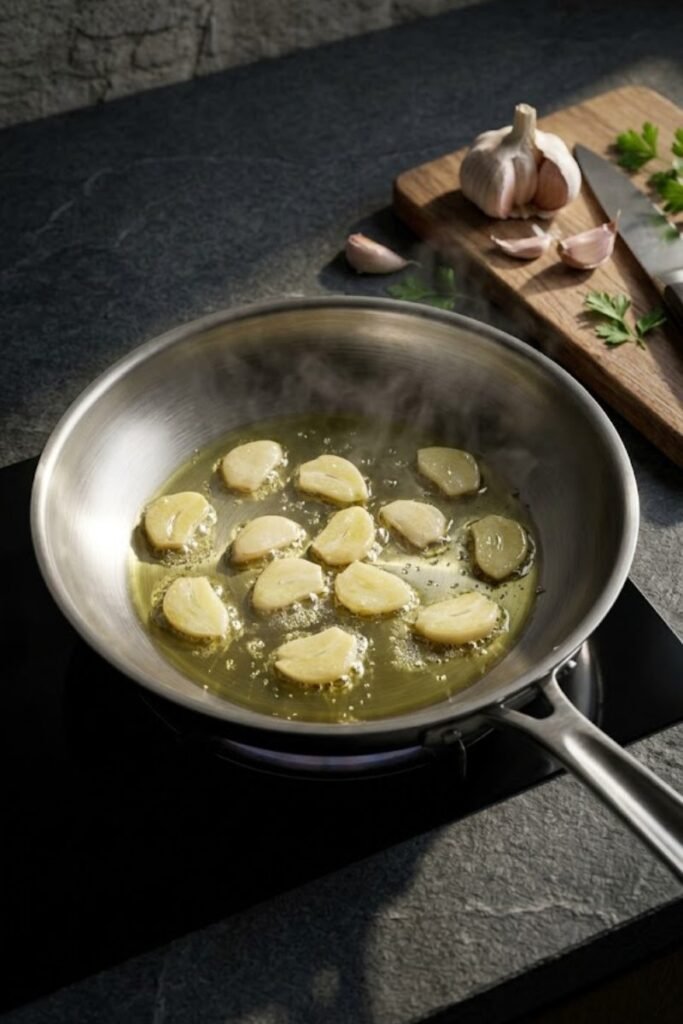
If you are wondering how to fix burnt garlic, learning how to manage your pan temperatures is the absolute ultimate step required to rescue your favorite pasta dinners. When you drop fresh aromatics into a skillet, the pale bits need to soften slowly to release their sweet, warm oils into the food.
If you let your stove flame spike too high or forget to watch the skillet floor for even a single minute, you risk scorching the pieces completely. Watching your beautiful dinner base turn unpleasantly bitter, dark, and acrid shows how easily a simple heat error can compromise your hard kitchen work.
For me, saving a scorched pan simply requires identifying the damage early, removing the bitter elements completely, and building a fresh base with controlled heat. This continuous temperature defense ensures your savory oil reductions remain sweet and aromatic, a seasoning rule I prioritize when building a fresh base for my family table.
The Sudden Carbon Breakdown of Delicate Root Sugars
To understand why a simple white clove transforms into a harsh, metallic ruin so quickly, you have to look closely at natural sugars and moisture content. Fresh garlic cloves are packed with an immense volume of natural fructose sugars and highly volatile organic sulfur compounds.
Unlike hearty root crops like large onions or carrots, these small minced fragments contain very little internal water to protect them from high frying temperatures. When you drop these delicate pieces into a screaming hot pool of oil, the lack of moisture causes them to cross the line from sweating to burning within seconds.
The intense heat triggers a rapid carbon breakdown, scorching the outer sugars instantly and turning the pale flesh a deep, dark brown color. This rapid carbonization destroys the warm, pleasant aromatics completely, leaving behind an incredibly aggressive bitterness that dissolves straight into your cooking oil.
Once that acrid flavor binds with your hot pan fats, it coats every single ingredient in your skillet, ruining the entire profile of your sauce. I manage these exact delicate herb traits and volatile heat boundaries carefully whenever I assemble raw green bases on my station, a preparation rule I track closely inside my guide on Flat-Leaf Italian Parsley vs. Curly Parsley.
Once that bitter coating takes hold of your ingredients, you cannot wash the trace elements away with common table salt. The ruined oil will continuously bleach a harsh carbon flavor across your tongue, making it impossible to showcase your fresh cheeses.
The Serious Eats Low-Heat Sweat Method for Skillet Fats
The kitchen rule for unlocking a deep, sweet aroma relies on using gentle thermal energy instead of aggressive high-heat frying. I follow the strict knife dicing boundaries, oil temperature limits, and quick cooling techniques documented inside the official Serious Eats Guide to Sautéing Garlic to keep my sauce foundations completely pristine.
Banish screaming hot skillets entirely. Never throw raw minced garlic into an empty pan that has been preheating over a roaring gas stove burner for several minutes. Dropping the fragile root bits into dry, overheated metal will scorch the flesh on impact, ruining your base before you can even reach for a spoon.
Utilize the cold-start oil technique. Place your sliced or minced pieces directly into a cold skillet along with a generous splash of extra virgin olive oil before turning on the flame. Set the burner to a low, gentle simmer, letting the pan fat and the aromatics warm up together gradually.
Maintain a pale golden window. Stir the pieces continuously for roughly two to three minutes as the oil begins to bubble softly around the edges. Watch the texture closely, looking for the exact second the flesh turns translucent or a very light, pale straw color.
The moment you see the edges take on a hint of tan color, pour your next liquid ingredient—like crushed tomatoes, white wine, or broth—straight into the pan. This sudden fluid addition drops the temperature of the oil instantly, halting the frying process completely and locking in the sweet, mellow flavors safely.
Three Immediate Counter Steps to Save Your Dinner Base
If you catch the heat spike a few seconds too late and notice your pan contents deepening into a dark tan color, do not panic. You can easily rescue your meal using simple, rapid steps that prevent the bitter compounds from spreading through the rest of your ingredients.
- The Direct Cold Flush: Pull the skillet completely off the active burner grid and dump a couple of ice cubes or a splash of ice-cold water into the oil. This sudden temperature drop cools the fat instantly, stopping the browning before the sugars turn to carbon.
- The Spoon Extraction Run: Use a small wire mesh skimmer or a metal spoon to scoop all the darkened garlic pieces out of the warm oil immediately. Throw the scorched bits into your trash bin, leaving only the lightly infused pan fats behind to build your sauce.
- The Heavy Tomato Mask: If the light bitter taint has already entered the fat, fold in a cup of unsalted tomato passata or a heavy splash of cream. These thick, high-solids ingredients coat the tongue, helping to soften and mask minor flavor spikes beautifully.
I know my temperature management strategy is fully successful when the pale aromatics melt into the cooking juices smoothly without leaving any dark spots. The sweet juices blend into a glossy coat that covers your pasta ribbons beautifully, delivering a perfect restaurant-grade dinner that contains zero harsh or metallic notes.
Taking an extra minute to cold-start your pan and manage your burner flame keeps your everyday cooking simple, delicious, and easy for everyone to enjoy.