
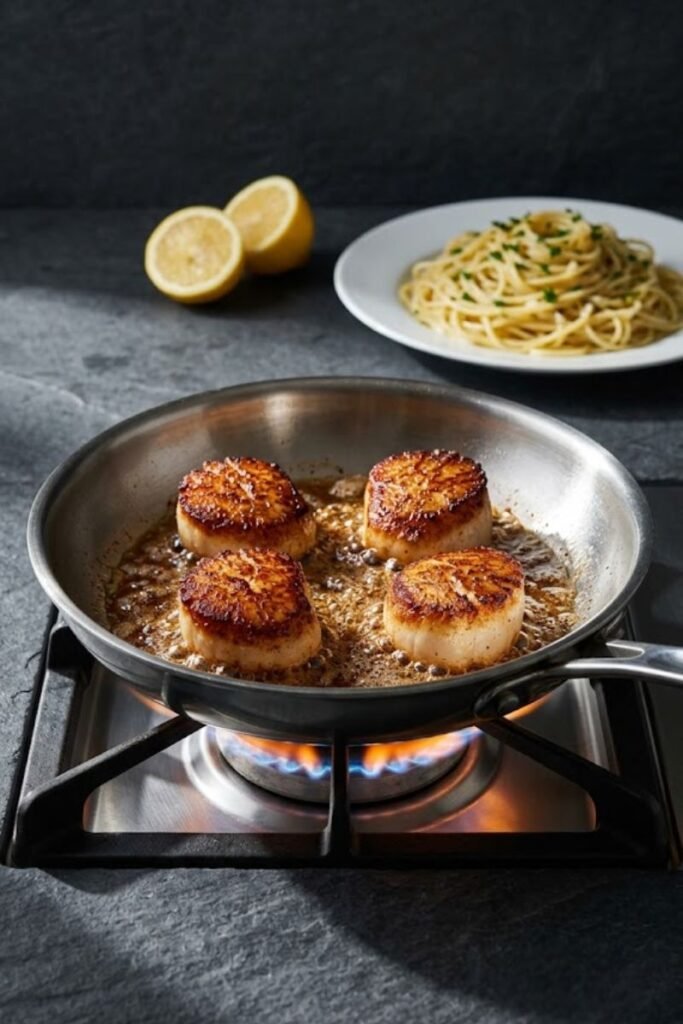
If you are wondering how to get a perfect golden sear on scallops, learning how to control moisture levels is the absolute ultimate step required to rescue your gourmet seafood pasta. When you drop fresh bivalves into a skillet, the pale muscles need high, dry heat to form a crisp caramel crust within minutes.
If you let water pool across the pan floor or use the wrong fat medium, you risk boiling the seafood inside its own juices instead of frying it. Watching your expensive ingredients turn rubbery, pale, and grey shows how easily a simple moisture error compromises your hard kitchen work.
For me, saving a delicate seafood plate simply requires extracting internal chemical liquids early, drying the exterior meat thoroughly, and using high-heat searing steps. This continuous surface protection ensures your pan juices remain light and sweet, a cooking rule I prioritize when building fresh seafood reductions for my table.
The Chemical Moisture Trap of Treated Wet Bivalves
To understand why a simple seafood muscle transforms into a tough, watery disappointment so quickly, you have to look closely at commercial packing styles. High-volume seafood factories often treat fresh catches with a chemical preservative called sodium tripolyphosphate before shipping them out to grocery retailers.
These common commercial options are known as “wet-packed” scallops, and they are engineered to absorb massive volumes of tap water weight. When you drop these treated pieces into a hot pool of oil, the intense thermal heat forces that trapped chemical water to leak straight out into the pan.
The sudden rush of chemical water drops the oil temperature instantly, turning your hot frying pan into an accidental steamer basket. The surface sugars cannot caramelize, leaving the meat looking pale grey while the interior cooks into a tough, leathery texture.
To bypass this trap completely, you must purchase untreated “dry-packed” seafood that contains zero added chemicals or artificial water weight. I manage these exact clean hydration lines and pristine pan balances carefully whenever I prep delicate bivalves on my station, a tracking focus I maintain closely inside my seafood tutorial explaining White Wine Mussels (Authentic Italian Style).
The Serious Eats High-Heat Agitation Rule for Searing Grains
The kitchen rule for unlocking a deep, sweet caramel crust relies on using high thermal energy combined with complete manual patience. I follow the strict oil smoking points, paper towel drying steps, and quick turning techniques documented inside the official Serious Eats Guide to Searing Scallops to keep my pan emulsions pristine.
Banish low-temperature non-stick pans entirely. Never try to sear fresh bivalves inside a cold, lightweight Teflon skillet over a weak stove flame. Low heat cannot break down the surface proteins fast enough, causing the delicate muscle juices to ooze out onto the pan floor and boil the meat.
Utilize heavy stainless steel or cast iron. Place your pan over a high gas flame and add a tablespoon of high-smoke-point neutral oil like canola or grapeseed. Heat the fat until you see thin wisps of white smoke rising across the metal surfaces, showing the skillet is ready.
Maintain total manual stillness. Dust your dry bivalves with sea salt and arrange them inside the smoking oil well, leaving a full inch of open space between each piece. Do not shake the handle or move the meat around with your tongs for two full minutes.
This complete stillness allows the natural amino acids and surface sugars to cross-link cleanly under the extreme heat, forming a deep golden shield. Flip each piece carefully using a thin offset spatula, searing the second side for just thirty seconds before sliding them out onto a clean warm plate.
Incorporating Seared Seafood Into Light Pasta Glazes
The final law for successfully building your dinner requires managing your pasta starch water and pan lipids carefully right before serving. Once your bivalves are seared and resting safely on your counter, drop the burner flame down to medium to protect your pan fats.
- Deglaze the Brown Bits: Pour a heavy splash of dry white wine or clam broth straight into the hot skillet, scraping up the caramelized sugars with a wooden spoon.
- Starchy Water Emulsion: Toss your al dente spaghetti ribbons into the reducing liquid, adding a small ladle of cloudy, starchy pasta boiling water to bind the fats.
- Off-Heat Butter Swirl: Remove the pan completely from the flame before folding in a cold pat of unsalted butter to create a smooth, glossy coat.
Arrange your golden-crusted bivalves gently over the top of the coated pasta noodles right before carrying the plates to your family table. This late introduction prevents the crispy surface armor from re-hydrating or softening inside the wet sauce columns, keeping your presentation clean and professional.
I know my searing strategy is fully successful when the edge of a fork cracks cleanly through the dark top crust with zero mushy drag. The sweet seafood juices blend into a velvety jacket that flavors your pasta strands beautifully, delivering a perfect restaurant-grade dinner that contains zero rubbery elements. Taking an extra minute to dry your seafood assets and trust your pan heat keeps your home cooking simple, delicious, and elite.