
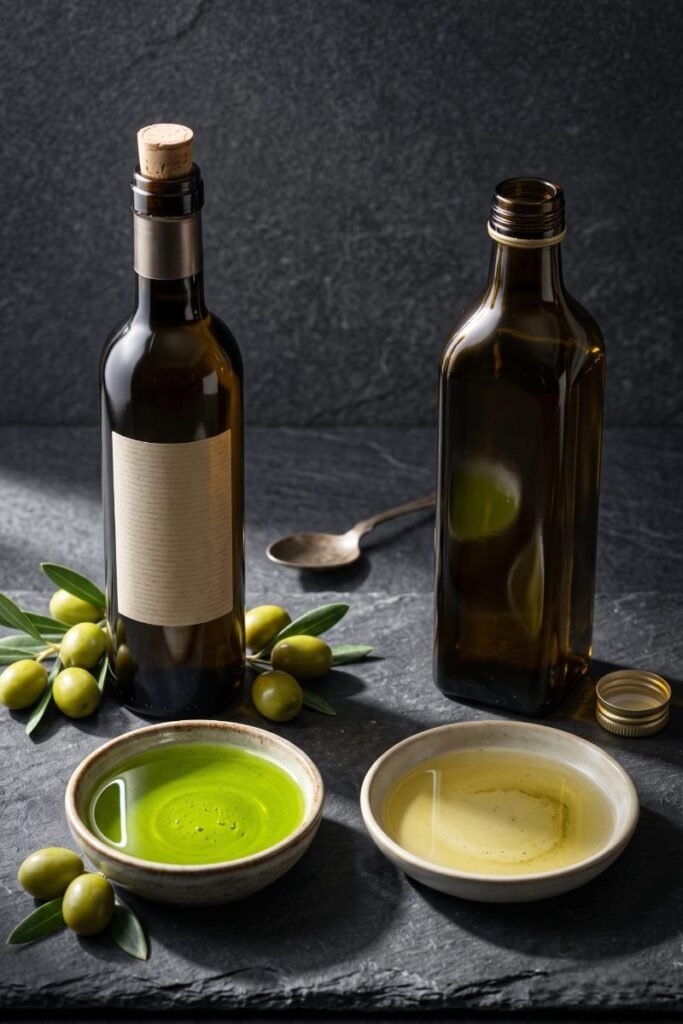
When I crack open a tinted bottle from my pantry shelf to dress a plate, knowing how to tell if your extra virgin olive oil has gone rancid is the absolute ultimate step required to protect your home-cooked reductions from tasting like stale wax. Over my years of drizzling rich regional pressings, I have treated lipid stability and the shelf life of unrefined fruit juices as precise chemical rules rather than casual grocery store assumptions.
Whenever I see untrained cooks pour a generous puddle of clear oil straight into a cold pan without smelling it first, wondering why their finished pasta carries a flat, metallic taste, I notice how spoiled fats ruin dinner. For me, keeping your skillet layers elite requires identifying the early warning signs of oxidative decay before the liquid contacts your stove.
How Light and Oxygen Break Down Weak Lipid Chains
To understand why a premium bottle of cold-pressed oil can spoil inside your pantry cabinet within a few months, you have to look closely at lipid chemistry. True extra virgin olive oil is an completely raw, unrefined fruit juice packed with volatile monounsaturated fatty acids and natural antioxidants.
When you leave a bottle sitting on a bright kitchen counter space exposed to constant ambient daylight or trapped air currents, you trigger photo-oxidation. This constant exposure breaks down the stable chlorophyll cells inside the green fluid, forcing the stable oleic acid chains to split apart into volatile aldehydes and ketones.
As these broken molecules multiply across the container, they systematically strip away the natural peppery polyphenols that shield the oil from spoiling. This internal chemical collapse creates a flat, greasy, and completely unstable base that burns rapidly when dropped onto a warm skillet surface.
I track these exact structural lipid shifts closely across my entire pantry inventory, a fluid breakdown habit I balance carefully when choosing stable fats inside my guide on matching the Best Type of Olive Oil for Cooking vs. Drizzling (EVOO Guidelines).
Without these structural antioxidant shields operating effectively inside the dark bottle, the delicate fat matrices fully dissolve, causing the original fruit flavors to deteriorate into a sharp, unpleasant finish that leaves an unappealing metallic film inside your mouth.
The Stripped-Down Sensory Panel Inspection Method
My absolute baseline rule for identifying a spoiled batch relies on a simple, three-step sensory test that mirrors professional laboratory evaluation boards. I follow the strict sensory criteria, aroma defect identifiers, and taste panel parameters documented inside the official Serious Eats Olive Oil Quality Assessment Directory to keep my ingredients clean.
Pour a small sample of the oil into a small wine glass and cup your palm around the bottom for sixty seconds to warm the fluid slightly. Swirl the glass to release the volatile aroma gasses, then bring the rim straight to your nose and take a deep, sharp breath.
If the liquid is healthy, you will instantly detect vibrant, punchy notes of freshly cut green grass, tomato leaves, or green apples. If your oil is rancid, that signature fruity brightness is completely absent, leaving behind a flat, greasy odor that smells remarkably like stale putty or wax.
Take a small sip of the oil, roll it across the back of your tongue, and draw in a brief breath of air to test the flavor profile. Fresh pressings provide a clean, bitter punch and a distinctive peppery scratch in the back of your throat, whereas oxidized batches feel heavy, greasy, and completely flat.
Simple Pantry Storage Rules to Block Radical Oxidation
The final law for protecting your high-end oil investments requires keeping your bottles locked inside an optimal storage climate from the day you purchase them. Never transfer your extra virgin olive oil into a clear glass countertop dispenser, as light waves pass through the transparent boundaries within seconds to destroy the vitamins.
Always look for brands packed inside dark amber or green glass bottles, which serve as protective filters that block up to 90% of damaging light wavelengths. Keep the cap twisted down tightly after every single splash to stop fresh room air currents from entering the neck and kicking off a secondary oxidation cycle.
Store your bottles inside a cool, dark kitchen pantry cabinet situated completely away from the hot exhaust currents of your oven or refrigerator compressor lines. I know my storage strategy is fully successful when I crack a three-month-old seal and get hit with a sharp, herbal punch that pours smoothly over pasta. Taking the extra minute to execute a fast smell test and manage your pantry placement is the ultimate secret to keeping your cooking elite.