
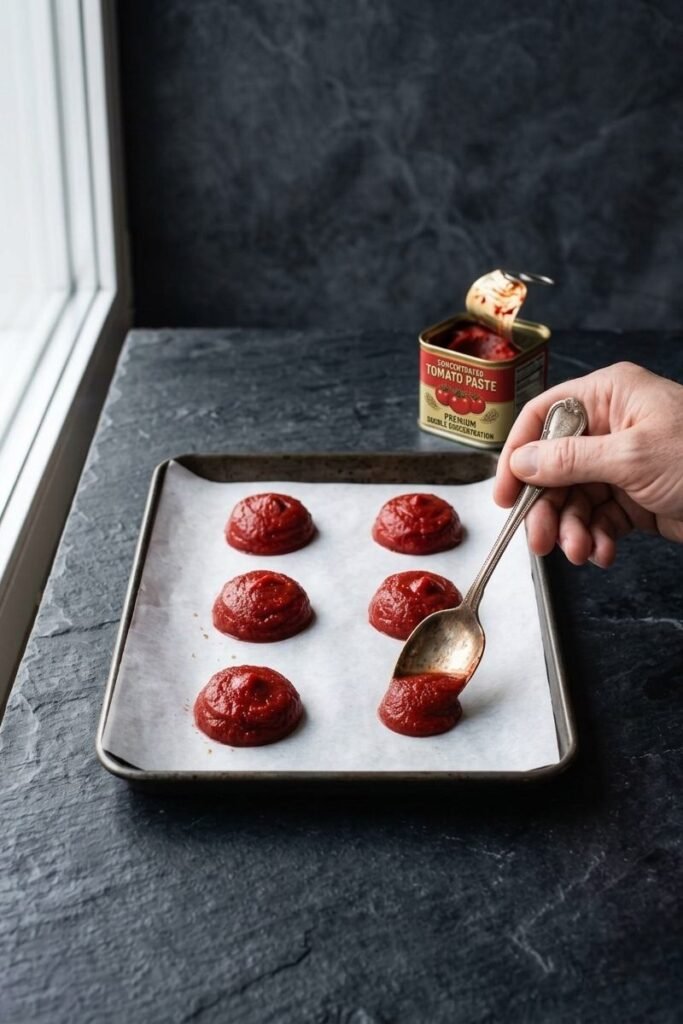
When I open a fresh tin of concentrated red paste to enrich a dish and realize my recipe only requires a single tablespoon, understanding the best methods for storing leftover tomato paste is the ultimate way to protect your ingredients from going to waste. Over my years of executing traditional regional Italian dinners, I have treated the high oxidation rates of concentrated fruit sugars as a serious kitchen timeline problem rather than a minor afterthought.
Whenever I see casual home cooks loosely wrap a half-empty aluminum can in plastic film and shove it into the back of their refrigerator, I notice how it sprouts fuzzy green mold or turns into a hard, metallic black crust within a single week. For me, preserving that intense savory depth requires completely extracting the paste from the factory packaging and locking it away inside the freezer using a strategic, pre-portioned approach.
Why Leaving Leftover Paste in the Can Destroys the Sugars
To understand why a half-empty tin degrades so rapidly inside a standard refrigerator, you have to look closely at how concentrated food sugars react to continuous oxygen exposure. Industrial tomato paste is reduced down under vacuum conditions until almost all its natural water volume is completely evaporated, leaving behind a highly dense network of natural glutamates and fruit acids.
The moment a can opener pierces that protective factory seal, oxygen rushes into the cavity and triggers an immediate chemical reaction that darkens the color and turns the sweet aroma bitter. Leaving the paste exposed against the raw, scratched aluminum walls of the open can further accelerates this breakdown, causing the acidic fruit juices to leach a harsh metallic taste straight into the food.
To stop this chemical spoilage before it starts, I make a strict rule to scrape the remaining contents out of the cylinder the exact second my primary cooking step finishes. This fast intervention prevents air pockets from clouding the red gloss, keeping the concentrate clean and vibrant for future sauce layers like the slow-simmered base needed for my comforting Lasagna with Mini Meatballs and Pork Sauce.
Preparing Your Portion Mounds with the Spoon Method
My absolute baseline technique for handling this extraction is a clever portioning method I call the parchment spoon scoop. I follow the beginner-friendly food preservation rules and kitchen longevity guidelines documented inside the official Serious Eats Canned Tomato Paste Storage Guide to manage my freezer timelines flawlessly.
I lay a small sheet of greaseproof parchment paper flat onto a compact baking tray that can slide easily into my freezer rack drawers. I take a vintage tablespoon and scoop out a rounded, uniform dollop of the deep red concentrate, dropping it gently onto the paper so it forms a neat, isolated mound.
I repeat this movement until the tin is completely scraped clean, ensuring I leave at least one inch of space between each red mound so they never run together. This pre-measured layout gives me a row of independent flavor bricks that match standard recipe instructions perfectly, removing any need to thaw a giant frozen block later.
Using Fast Freezer Sessions to Lock in Savory Density
Once my baking tray is fully populated with its red tablespoon mounds, my workflow shifts toward executing a rapid freezing cycle to trap the volatile fruit sugars in place. I slide the open tray completely level into the coldest zone of my freezer chest, leaving it undisturbed for roughly three to four hours until the mounds turn solid.
Freezing the dollops independently on a flat surface ensures the exterior moisture locks up instantly, preventing the concentrated sugars from forming large, destructive ice crystals that leak water when thawed. Once the red nuggets are as hard as rocks, I peel them off the parchment paper and slide them into a thick, double-zipper freezer storage bag.
I use a plastic straw to suck out any remaining air from the plastic bag before sealing it tightly, creating a home-made vacuum shield that stops freezer burn for up to six months. This careful preservation strategy ensures I always have a quick hit of rich, concentrated umami ready to melt straight into a warm pan coating, adding an elegant structural balance to the red sauce layer of my savory Ricotta and Mozzarella Cannelloni.
Dropping Frozen Flavor Bricks Directly Into Hot Pans
The ultimate beauty of maintaining a bag of pre-portioned frozen tomato nuggets is that you never need to remember to thaw them out in your refrigerator the night before a meal. Because tomato paste carries an incredibly low water percentage and a high concentration of natural sugars, the frozen blocks carry a low melting threshold on the stove.
When I am building a savory pan base for dinner, I pull a single frozen tablespoon cube straight from my freezer bag and drop it directly into my hot skillet alongside my sizzling aromatics. The ambient heat from the cooking fats melts the frozen nugget down into a smooth, bubbling glaze within sixty seconds without dropping any extra water into the pan.
This rapid melt allows the concentrated sugars to fry and brown cleanly against the bottom of the pan, developing a rich caramelized foundation that sets up my dinners perfectly. For me, taking the extra five minutes to portion and freeze your leftover can harvests is the ultimate secret to minimizing kitchen waste while keeping your cooking elite.