
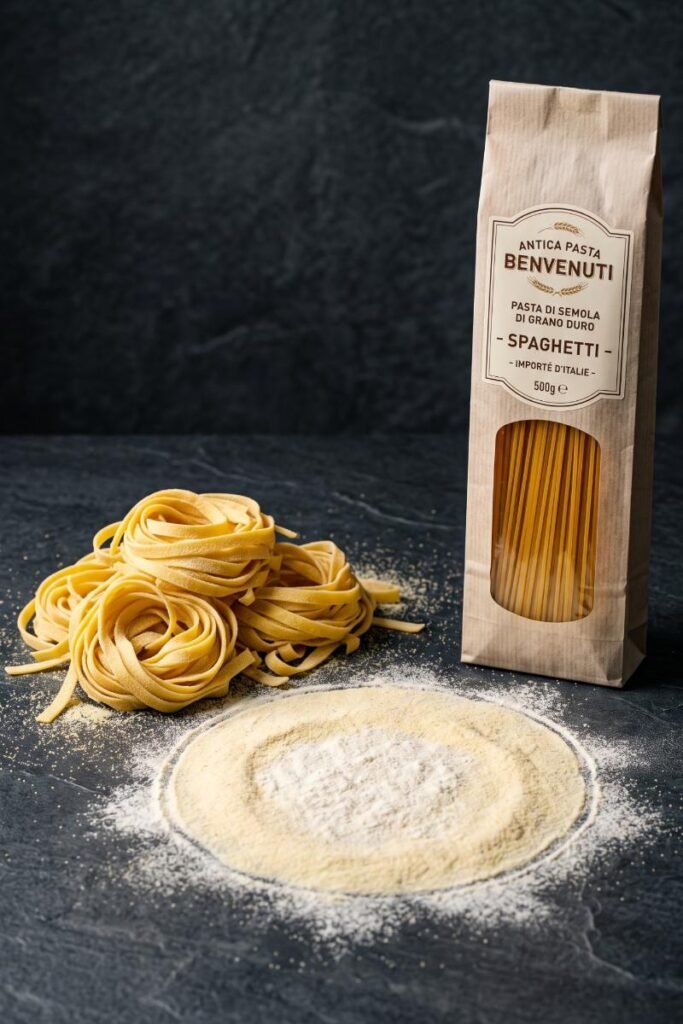
When mastering the balance of fresh pasta vs dried pasta for an authentic Italian dinner, you have likely realized that one variety is not universally superior to the other. In traditional Italian cuisine, these two options are treated as entirely different ingredients with distinct structural roles.
For home cooks trying to elevate their Italian cooking, choosing the wrong noodle type can easily ruin a carefully prepared meal. Replicating the authentic texture of a true regional dish requires understanding the biological differences in the dough and how specific shapes interact with different style sauces.
The Main Ingredients That Separate Fresh and Dried Dough
To understand why these varieties behave differently on the plate, you have to look at the chemistry of the flour. Fresh pasta (pasta fresca) relies on soft wheat flour, often labeled as Italian “00” flour, mixed with whole eggs. The addition of egg fat yields a highly pliable, tender dough that expands quickly when boiled. Because the lipids in the egg yolks break down the gluten sheets into delicate, velvety layers, the resulting pasta absorbs water at a rapid rate, allowing it to cook to perfection in a mere 90 to 120 seconds.
Dried pasta (pasta secca) contains absolutely zero egg. Instead, it is formed using strictly coarse durum wheat semolina—the hardest type of wheat grown—and cold water. According to strict production definitions maintained by the Italian Trade Agency (ITA) English Portal, authentic Italian dried pasta must be made exclusively from 100% durum wheat semolina to preserve its physical density. This dense mixture is packed under intense pressure through heavy metal molds and slowly dehydrated over several days.
This traditional processing method creates a highly resilient, interlocking gluten matrix. When boiled, this firm structure allows the noodle to maintain a dense, elastic core. This structural integrity is what allows it to achieve that coveted al dente bite that resists structural collapse even under heavy mechanical stirring in a hot pan.
When You Must Use Fresh Pasta
Because egg-based dough is highly delicate, porous, and absorbent, it acts like a sponge for liquid fat coatings. The soft edges release fine starches that bind directly with warm fats to create silky pan emulsions. You should strictly reach for fresh variants in these three culinary scenarios:
Delicate Butter and Cream Emulsions
Rich, velvet emulsions like melted butter, Parmigiano Reggiano, or reduction cream coatings cling beautifully to the tender texture of egg ribbons. The fat coats the porous dough cleanly without sliding off the noodle surface.
Filled Pastas and Dumplings
Any form of pocket pasta—including tortellini, ravioli, or agnolotti—requires the flexible stretching capabilities of fresh dough to safely seal fillings inside. A brittle dried dough would simply snap. You can see this specific structural rule executed flawlessly in our delicate Homemade Ricotta Ravioli.
Light, Fragrant Seafood Wines
Thin, aromatic reductions based on white wine, olive oil, and fresh herbs pair beautifully with soft egg noodles. The delicate dough absorbs the volatile aromatics cleanly without overpowering the natural sweetness of premium seafood.
When Dried Pasta is Mandatory
Do not look down on dried boxed pasta as a cheap alternative. In many traditional Italian dishes, using fresh egg noodles is considered a severe technical error. Sturdy semolina shapes release a specific type of rigid amylose starch into the water that is essential for binding heavier sauces. Sturdy semolina shapes are mandatory for:
Heavy, Slow-Cooked Meat Ragus
Thick, chunky meat sauces need a firm noodle that can hold its physical weight. A soft egg pasta will quickly shred into a mushy paste under the weight of a heavy pork or beef topping, destroying the balance of the plate.
Intense, Oil-Based Classics
Simple, minimalist Roman and Southern Italian oil dishes rely heavily on the starch released from dried semolina to thicken the pan juices. This dense, toothsome bite is exactly what anchors our traditional Spaghetti Aglio e Olio e Peperoncino.
Sturdy Family Comfort Foods
When tossing long strands into thick, hearty stews featuring robust elements like pan-seared meatballs, you need the resilient chew of boxed spaghetti to balance out the plate. This structural contrast is the exact reason dried semolina strands form the foundation of our signature Spaghetti and Meatballs Recipe.
How I Match the Right Sauce Weight to Your Pasta Type
If you are ever confused while standing in your pantry, look at the physical shape and weight of the pasta to guide your decision.
As a universal law of the Italian kitchen, long, flat ribbons made of fresh egg dough (like fettuccine or tagliatelle) belong with smooth, creamy, or velvety sauces. Because the flat surface area maximizes contact with the emulsion, it delivers a perfectly coated bite without drowning the wheat profiles.
Conversely, tubular, ridged, or thick dried shapes (like rigatoni, penne, or boxed spaghetti) belong with chunky vegetable compotes, heavy meats, and spicy oils. The hollow cavities and rough outer ridges act as physical traps, catching chunks of meat and pooling thick sauces inside the noodle itself.
Matching the material density of your noodle to the texture profile of your coating ensures your final dish maintains a clean, harmonious balance from the first bite to the last.