
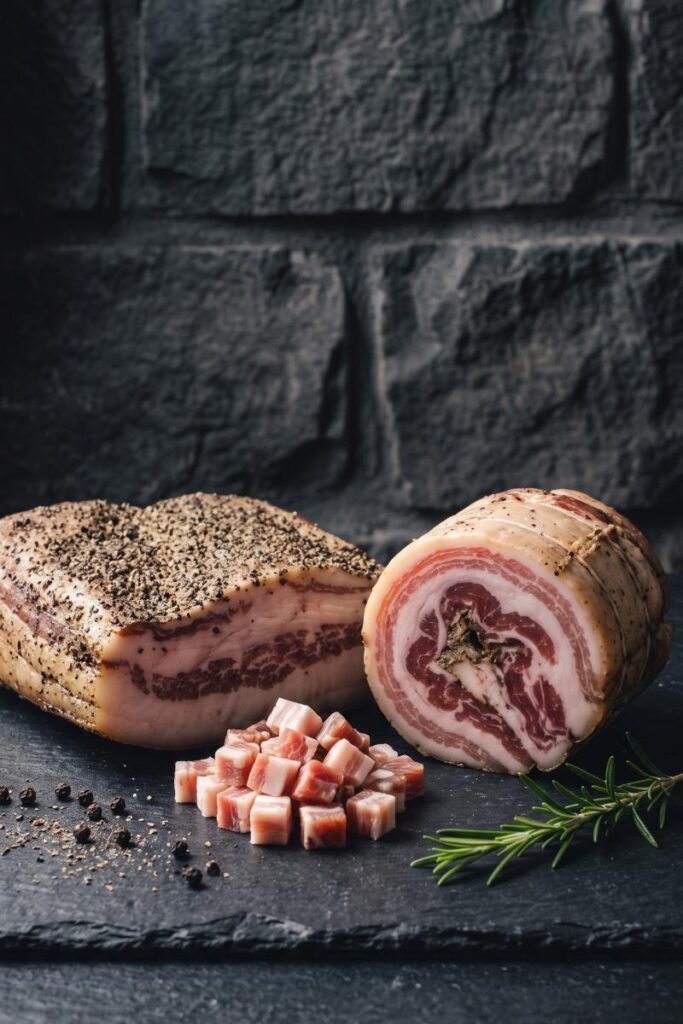
When hunting for an authentic substitute for guanciale to rescue your weekend dinner plans, you have likely realized how difficult it is to track down traditional Italian cured meats outside of specialized import markets. Guanciale is considered the holy grail of flavor enhancers across Italy, serving as the mandatory culinary backbone for Rome’s most iconic regional pasta dishes.
For home cooks striving to recreate a true Roman trattoria meal from a standard grocery store, finding an ingredient alternative can feel like a frustrating challenge. Replicating the rich texture and deep, peppery depth of this specialty pork cut requires understanding exactly how alternative options behave when rendered down in a hot skillet.
What Gives Guanciale Its Special Flavor and Texture
To understand why Roman chefs reject ordinary bacon, you have to look at the fat composition of the pork jowl (cheek). Unlike the soft belly meat used for standard bacon, pig cheek muscles are constantly worked throughout the animal’s life. This biological activity creates an incredibly firm, dense, and beautifully marbled fat structure.
When you slowly cook guanciale, this hard jowl fat melts differently than belly fat. It releases a velvety, clean liquid fat that emulsifies seamlessly with starchy pasta water and egg yolks, creating a naturally creamy gloss without needing a single drop of cream.
Furthermore, true guanciale is never smoked. It is heavily rubbed with sea salt, cracked black pepper, fresh rosemary, and sage before air-curing for three months. This creates a deeply concentrated savory funk that cuts through sharp cheeses perfectly.
The 3 Best Substitutes for Guanciale
If your local butcher doesn’t carry authentic imports, you can safely achieve a fantastic regional Italian result using these three readily available alternatives:
1. Pancetta (The Best Match)
Pancetta is cured pork belly, making it the closest historical match to guanciale. Because it undergoes a similar Italian salt-and-herb preservation process without smoke, it preserves the traditional flavor profile. Skip the thin, pre-packaged round slices and ask your deli counter to cut a solid slab into thick, quarter-inch cubes to mimic traditional Italian meat strips (lardons).
2. Thick-Cut Slab Bacon (The Grocery Store Savior)
Standard American bacon can step in, but with one major condition: it must be as unsmoked as possible. Heavy applewood or hickory smoke will completely overpower the delicate balance of an Italian sauce. To use it successfully, choose a premium thick-cut variety, slice it, and use it exactly like we do to build flavor in our smoky Pan-Seared Brussel Sprouts with Bacon.
3. Salt Pork or Fresh Pork Belly
If you can find uncured fresh pork belly, you can dice it up and heavily season it with sea salt and black pepper directly in your pan. While it lacks the deeper complexity of an aged cured meat, it provides the exact clean, unsmoked fat profile needed to emulsify traditional Roman sauces without breaking.
Understanding Rome’s Strict Regional Traditions
In the Lazio region of Italy, the choice of pork is a matter of fierce cultural pride. As outlined in the historical culinary registry by the Gambero Rosso International Food Academy, altering these foundational components directly impacts the structural integrity of ancient regional recipes. Guanciale forms the absolute baseline for Rome’s legendary culinary catalog, and altering the ingredients completely changes the historical identity of the dish:
- Pasta alla Gricia: The original blueprint, combining pasta, rendered guanciale, and Pecorino Romano cheese.
- Spaghetti alla Carbonara: A direct evolution of Gricia, adding tempered egg yolks to the rendered fat to form a creamy emulsion.
- Bucatini all’Amatriciana: Introducing sweet tomato solids to the rendered jowl fat to create a rich, red sauce.
Using a smoky alternative without prepping it correctly transforms an authentic Roman recipe into an American-style breakfast pasta. While fast, pan-rendered jowl fat defines the spirit of Central Italy, it contrasts sharply with the slow, milk-braised meat bases found in Northern regions, which you can master using our traditional Pasta Bolognese Recipe.
The Proper Way to Render Your Substitutes
Whether you are using real imported guanciale or a thick-cut slab of pancetta, the rendering technique is critical to your sauce’s success.
Always start your diced pork in a cold skillet without adding any extra olive oil or butter. Turn the heat to medium-low, forcing the fat to slowly melt out over 10 to 12 minutes. Forcing the heat high will crisp the outside too fast, leaving the inner fat raw and chewy.
Cook until the fat parts turn completely translucent and the edges become deeply golden and crispy. Remove the crispy bits from the pan, but never discard that liquid gold left in the skillet—that rendered fat is the foundational binder for your entire meal!