
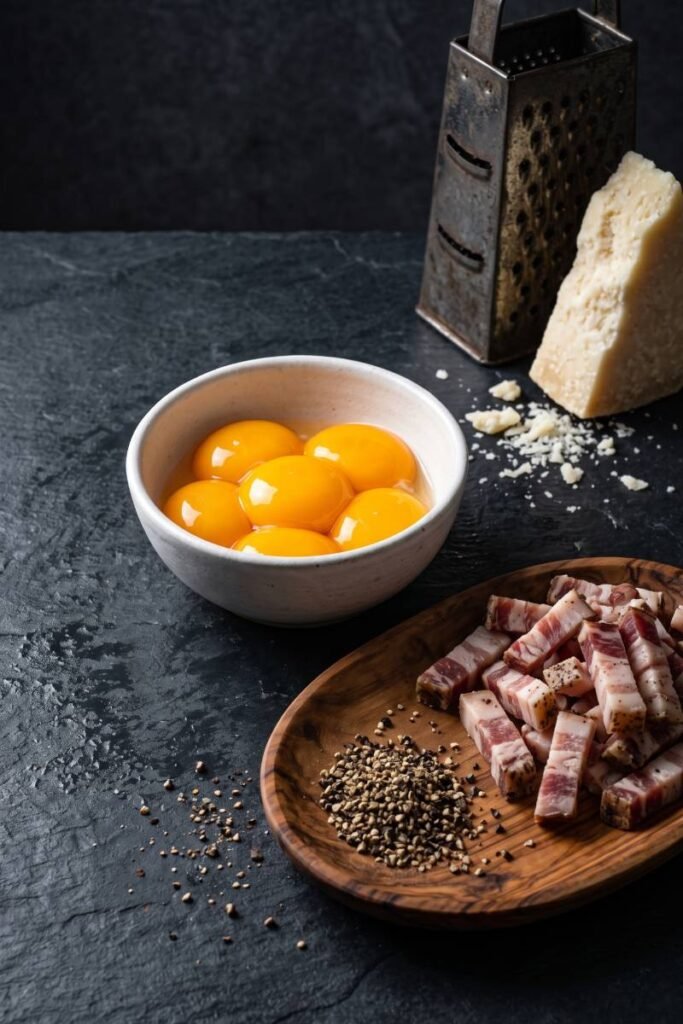
When analyzing why a traditional, authentic carbonara recipe cream exclusions are strictly enforced across Italy, you must look at how international adaptations have warped the dish over time. In a standard Western restaurant, you will almost universally receive a bowl of noodles swimming in a heavy, white garlic-and-cream reduction sauce.
In the strict culinary lexicon of Lazio, however, adding dairy cream to this historic dish is considered a severe technical failure that completely masks the regional identity of the meal. For home cooks striving to achieve true trattoria-level results, breaking free from international modifications requires understanding the chemical physics of a true egg emulsion.
Replicating the authentic, velvety glaze of Rome does not rely on commercial dairy cartons; it requires mastering how raw eggs and hot cooking starches bond together directly inside a warm skillet.
How Eggs and Cheese Create a Natural Creamy Sauce
To understand why dairy is rejected by Italian purists, you have to look at the molecular behavior of egg yolks under gentle heat. Liquid heavy cream is a static fat layer that simply coats food as it reduces.
An authentic Roman sauce, conversely, is a dynamic emulsion created by the home cook in real time. Egg yolks are exceptionally rich in lecithin, a natural phospholipid that acts as a powerful structural binding agent.
When raw yolks are vigorously whisked alongside finely grated cheese and then introduced to hot, starchy cooking water, the lecithin molecules act as bridges. This chemical reaction forces the water-based starch molecules and the oil-based rendered pork fats to lock together tightly.
This rapid mechanical whipping creates a completely natural, velvety cream matrix that clings tightly to long pasta strands. This technique prevents the sauce from pooling loosely at the bottom of the plate.
Adding commercial dairy completely shorts-circuits this delicate cellular binding process. The heavy fats in liquid dairy overwhelm the egg proteins, resulting in a thick, sticky sauce that separates into a broken, unappetizing pool of grease as it cools on the dinner table.
The Historical Origin of the Cream Myth
The inclusion of heavy cream into Western carbonara adaptations is largely a historical product of mid-century ingredient scarcity and mass-production shortcuts. According to the historical preservation archives maintained by the official Italian Academy of Cuisine, the traditional blueprint of Rome’s regional dishes relies strictly on clean fat extraction rather than foreign dairy stabilizers.
When the dish gained global popularity following World War II, cooks outside of Italy struggled to source the highly specialized, dry-salted regional components required to construct the baseline flavor profile. Because standard supermarket bacon lacks the dense, clean fat yield of imported cuts, early adaptation recipes suffered from an intense lack of moisture and body.
Home cooks and commercial kitchens began dumping heavy cream into their skillets as an artificial insurance policy to prevent the eggs from scrambling over high heat. While this shortcut successfully unified the dish for mass production, it permanently muffled the vibrant, sharp contrast that makes the traditional Roman profile so legendary.
The Five Canonical Italian Ingredients
A true Roman master relies strictly on five distinct components to execute a flawless dish. Altering these core items entirely changes the historical identity and physical behavior of the plate:
- 1. Guanciale: Cured pork jowl providing a firm, dense chew and clean, liquid fat foundation that melts beautifully at low temperatures.
- 2. Pecorino Romano: Sharp, aged sheep’s milk cheese delivering a pungent salt backbone that seasons the entire dish naturally.
- 3. Large Egg Yolks: The rich, fatty binder containing lecithin, essential for creating the glossy pan coating without dairy.
- 4. Whole Black Peppercorns: Coarsely toasted in a dry skillet and cracked to cut through the intense pork fat profiles cleanly.
- 5. Long Dried Pasta: Rigid semolina strands that release the structural amylose starch needed to lock the emulsion together permanently.
How to Adapt Your Kitchen Techniques
If you are cooking with alternative ingredients due to grocery store constraints, you must adjust your pan temperatures to compensate for the structural changes. For example, if you are utilizing common bacon strips instead of imported jowl cuts, your rendering pan will yield a higher moisture content and a less stable fat base.
To prevent this alternative fat from breaking your egg mixture, utilize the exact same low-and-slow rendering principles we use to develop crisp textures in our smoky Pan-Seared Brussel Sprouts with Bacon. Slowly coaxing out the fat ensures your liquid base carries enough clean volume to fuse with your egg yolks, allowing you to bypass the need for a cream carton entirely.
Once you master this delicate starch-and-fat binding technique, you can safely apply it across your entire pasta repertoire, from basic skillet bakes to our velvety, traditional Fettuccine Alfredo. Managing heat and timing is the ultimate secret to authentic Italian cooking.