
When tasting a simmering pot on my stove and realizing a harsh, metallic bite has taken over, figuring out how to fix bitter tomato sauce becomes my top priority. Over my years of home cooking, I have encountered this frustrating flavor imbalance multiple times, usually caused by under-ripe canned fruits or slightly scorched garlic bits at the bottom of my pan.
Whenever I see casual cooks panic and dump cups of white table sugar into their skillets to mask the sharpness, I notice how it completely ruins the authentic savory profile of the meal. For me, rescuing a flawed reduction requires applying a bit of kitchen science to neutralize the acids without turning my dinner into a dessert.
Why Canned Tomatoes Can Taste Bitter and Sharp
To understand why a sauce turns harsh in the first place, I always look closely at the chemical properties of the core ingredients inside my pot. The natural pH level of a tomato changes drastically depending on soil quality, weather conditions, and how long the fruit was allowed to ripen on the vine.
When I cook down mass-market canned varieties, I often find they contain high levels of citric acid and very few natural fruit sugars to balance out the profile. I have watched these acidic compounds concentrate heavily during a long simmer, multiplying the metallic punch until it overwhelms my tastebuds.
Rather than masking this issue with granulated sugar, I prefer to use ingredients that physically alter the chemical balance of my liquid base. This scientific approach ensures my sauce retains its bright, robust identity while eliminating the unpleasant back-of-the-throat sting.
Using a Whole Carrot to Absorb Acid Naturally
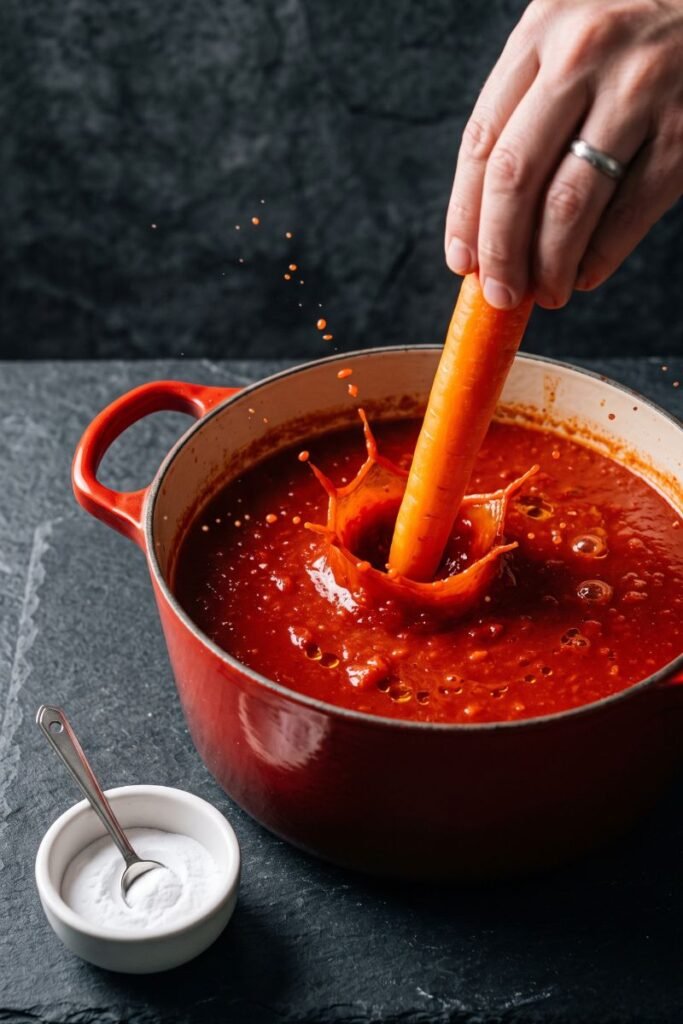
My absolute favorite method for smoothing out a sharp reduction is to wedge a large, peeled carrot straight into the center of my bubbling pot. I choose this root vegetable because it is packed with complex natural starches that slowly dissolve into my simmering tomatoes as they soften.
As the carrot cooks, it gently releases its mild sweetness into the surrounding juices, neutralizing the bitter compounds without altering the savory integrity of the meal. This natural infusion technique is my preferred safety net whenever I am slowly reducing the base for my smooth Classic Italian Tomato Sauce.
I let the carrot simmer whole for about 20 to 30 minutes, allowing it to do its job completely before fishing it out with a pair of tongs. This leaves me with a balanced, velvety glaze that coats my pasta beautifully without adding any chemical aftertaste.
The Quick Baking Soda Trick to Balance Your Sauce
If a carrot cannot completely rescue my pot due to an excessively low pH level, I pivot immediately to a powerful scientific shortcut sitting in my pantry. I reach for standard baking soda (sodium bicarbonate), which acts as a highly effective alkaline base to counteract aggressive food acids.
I follow strict molecular composition guidelines tracked by the official USDA FoodData Central Database to understand how raising the alkalinity impacts the structural texture of my vegetable compounds. I add a tiny pinch—never exceeding one-quarter of a teaspoon per large pot—and watch the surface of my sauce closely.
The liquid will immediately begin to foam and bubble rapidly, which is the visual proof of the sodium bicarbonate neutralizing the citric acid. I stir the foam back into the pot completely and let it simmer for another five minutes to ensure the chemical reaction finishes before my next taste test.
My Technique for Elevating the Final Plating
Once I have successfully balanced the core acidity of my pot, I focus on adding elements that naturally soften any remaining harsh notes on the palate. I have learned that introducing high-quality dairy fats or aromatic herbs can round out a sharp profile effortlessly at the very end of the cooking process.
I love to finish my hot pan with a generous swirl of extra virgin olive oil or a small pat of unsalted butter to create a rich, protective coating over the tongue. This creamy finish helps temper any lingering astringency, a flavor balancing trick I rely on when simmering complex, meat-heavy red sauces like my rich Oven Baked Rigatoni with Meatballs.
By focusing on physical pH adjustments rather than raw sugar overloads, I ensure my Italian creations maintain their authentic regional depth. Taking a scientific approach to flavor corrections is the ultimate secret to mastering my kitchen.