
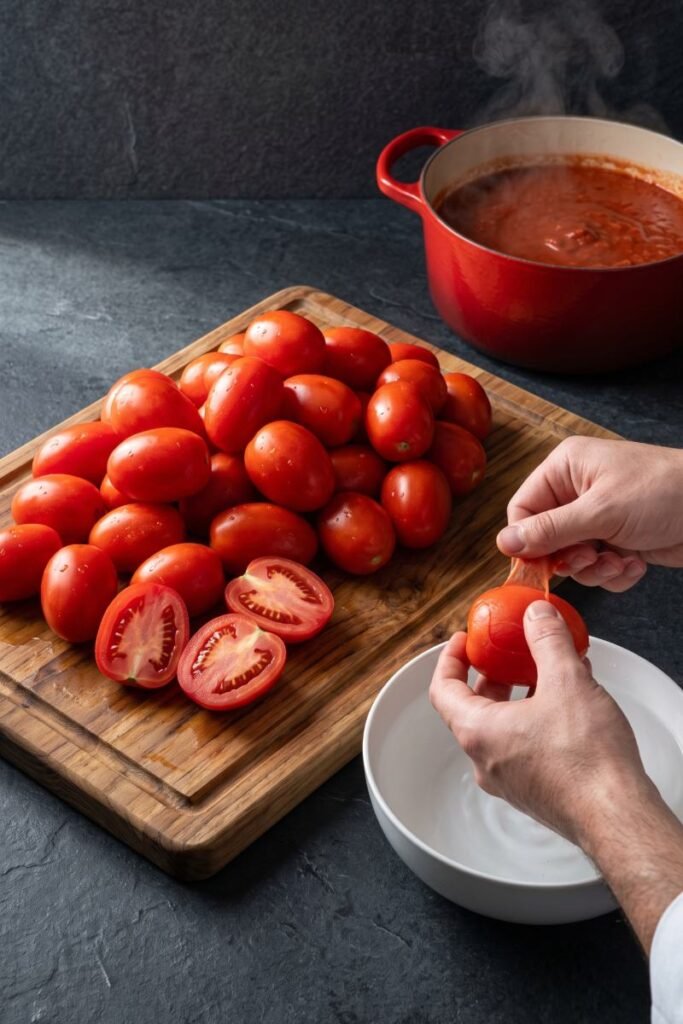
When I stand in my kitchen in the middle of summer looking at a basket of ripe garden fruits, deciding if I should use fresh tomatoes instead of canned for long-simmered sauces requires a deep look at my stovetop timeline. Over my years of boiling down red reductions, I have learned that swapping raw garden produce into a recipe built for preserved tins completely changes how moisture behaves in the pan.
Whenever I see casual cooks drop raw, unpeeled salad varieties straight into a heavy Dutch oven expecting a thick gravy within an hour, I notice how their sauce turns into a pale, watery soup. For me, executing an authentic regional sauce using raw vine picks requires specific physical steps to mirror the rich density and low moisture of a traditional commercial tin.
Why Unpeeled Garden Varieties Turn Into a Runny Soup
To understand why a raw vine tomato behaves so differently on the burner, I always look closely at the physical water retention inside the fresh fruit walls. A raw tomato picked straight from the garden is packed with volatile water pockets and active plant enzymes that haven’t been broken down by industrial steam canning.
When I drop fresh fruit into a hot pan, that massive surge of raw moisture releases all at once, diluting my cooking oils and turning my bright red sauce into a thin, orange liquid. I have watched raw reductions take upwards of two hours just to evaporate that initial water layer, requiring a significantly longer commitment than a quick twenty-minute tin prep.
Furthermore, if I leave the tough outer skins intact, the heat will cause them to shrivel up into hard, curly needles that separate from the pulp and ruin the mouthfeel of the dish. Slicing a small “X” into the bottom of each fruit and flash-boiling them for sixty seconds allows me to peel those skins off effortlessly before the real simmer begins.
Selecting Dense Plum Fruit Varieties Over Salad Slices
Because different tomato structures carry completely unique seed-to-flesh ratios, my baseline rule is to completely banish round beefsteak or slicing varieties from my slow-cooking pots. I save those watery, seed-heavy wheels exclusively for raw garden assemblies, preferring the concentrated body of preserved tins for everyday meals.
For a slow, multi-hour reduction, I look exclusively for dense, elongated plum tomatoes like Romas or fresh heirloom San Marzanos because their interior cavities are packed with thick meat and very few watery seed sacks. I make sure to cut each plum fruit in half and use my thumb to scoop out the gelatinous seed pockets completely before dicing the flesh.
This manual cleaning step removes the highest concentration of bitter fluids and excess water, leaving me with pure, meaty tomato walls that break down beautifully over the flame. The resulting reduction develops a naturally sweet flavor profile that locks onto pasta effortlessly, a dense texture I rely on when filling the hollow cavities of my traditional Conchiglie alla Ricotta con Sugo.
Managing the Extended Cooking Window for Velvety Textures
Once my fresh, peeled plum pieces are safely resting inside my wide skillet, my workflow shifts toward managing a slow, steady evaporation process. I follow the technical crop analysis and sugar-to-water ratio guidelines published by the official University of California Agriculture and Natural Resources Repository to understand exactly how processing cultivars differ from raw garden varieties.
Because fresh fruits lack the pre-cooked density of canned versions, I let my open pot bubble lazily on medium-low heat for at least 90 minutes to let the natural sugars caramelize smoothly. I watch the color shift from a light, frothy pinkish-red to a deep, glossy crimson, which is the visual proof that the raw moisture has finally escaped into my kitchen air.
This patient, slow-cooked approach yields a rich, elegant pan gravy that carries an incredibly vibrant, field-fresh aroma that canned goods can never fully replicate. I love using this velvety, home-cooked reduction to slick the surface of short noodles, allowing the concentrated tomato paste to grip the grooves of my savory Pasta with Broccoli and Sausage.
Fixing Sharp Acidic Profiles Without Adding Sugar Crystals
The final step in my fresh-tomato journey happens the exact moment I run my wooden spoon through the center of the reduced skillet. Raw garden fruits often carry a higher, brighter hit of volatile malic acid than vacuum-sealed factory tins, which can taste slightly sharp if the summer sun wasn’t hot enough during the growing week.
Instead of hiding that authentic tartness under a heavy layer of white table sugar, I prefer to soften the profile naturally by swirling a pat of cold butter or a splash of heavy cream into the pan right at the end. These rich dairy fats coat the tongue smoothly, neutralizing the sharp acidic bite while preserving the clean, sunny character of the fresh vine produce.
I know my pot is officially successful when the sauce achieves a uniform, glistening body that clings tightly to my wooden spoon without dropping separate streams of water. For me, taking the extra time to peel, seed, and slowly reduce raw summer harvests is the ultimate secret to elevating my family table.