
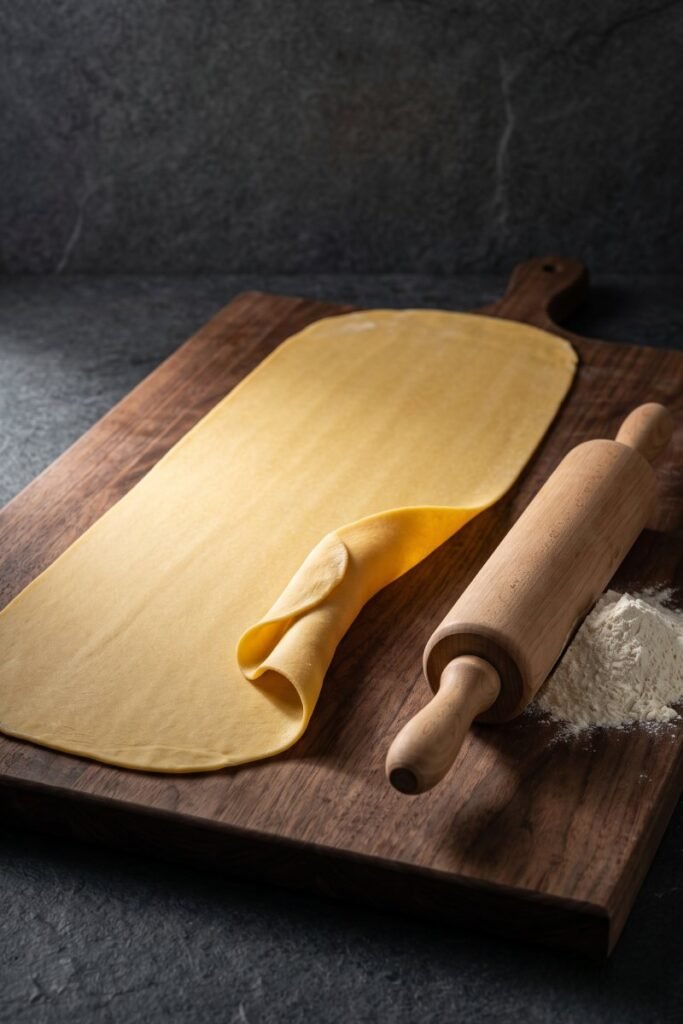
When I press my wooden rolling pin into a sheet of fresh wheat and watch it snap right back to its original shape like a giant rubber band, troubleshooting why my homemade pasta dough is too elastic becomes my immediate kitchen challenge. Over my years of mastering handmade Italian traditions, I have treated the springy resistance of my sheets as a basic protein management problem rather than a mystery.
Whenever I see casual cooks get frustrated by a stubborn, rubbery slab and aggressively force it through their manual roller cranks until the dough tears, I notice how a lack of patience ruins the texture. For me, shaping a delicate, paper-thin noodle requires understanding how to temporarily disable the tight gluten bonds inside the flour before rolling them thin.
How Overworked Gluten Chains Force the Wheat to Spring Back
To understand why a dough ball turns incredibly stubborn and rigid under your hands, you have to look closely at the chemical properties of wheat flour. When I mix raw eggs with fine flour, two key proteins known as gliadin and glutenin hydrate and link together to build a stretchy web called gluten.
Kneading pulls these protein strands into tightly wound chains. If the dough is rolled immediately after kneading, those chains are at peak structural stiffness. This tension can result in a crust that tastes dense or gummy. This same elastic behavior is monitored carefully when preparing a smooth base for a potato pizza recipe.
The Essential Rest Period to Calm Rigid Protein Networks
My absolute baseline rule when dealing with a rigid, springy slab of wheat is to immediately stop working it and let time do the heavy lifting. I follow the technical protein hydration rules and structural breakdowns documented inside the official Serious Eats What Is Gluten Guide to understand how gluten behaves under room temperatures.
When a dough ball is wrapped tightly in plastic wrap and left completely alone on the counter, those microscopic protein coils slowly begin to untangle and slide past one another. This resting phase allows the moisture from the eggs to finish absorbing evenly into the core of the flour, softening the entire sheet beautifully.
I ensure my dough rests for a minimum of 30 minutes, though an hour is even better if my kitchen air is running cold or dry. Once the rest period finishes, the rigid mass transforms into a silky, compliant disc that holds its shape the exact second it rolls through a pin.
Checking the Moisture Scale to Soften Rigid Flour Textures
Beyond a lack of resting time, an overly springy texture can easily be triggered by an incorrect balance of liquids inside your initial flour well. If your dough is too dry because you skipped an egg white or used extra flour on your counter, the gluten chains become packed too tightly together, making the mass stiff and impossible to stretch out.
Conversely, introducing rich fats from egg yolks acts as a natural structural weakener, coating the gluten strands to prevent them from locking together too aggressively. When I notice my mixture feeling uncomfortably firm early in the process, I wet my hands with warm water to inject a tiny hit of moisture straight into the core.
This added hydration breaks up the rigid bonds, yielding a pliable, supple texture that is incredibly easy to manage on mobile rolling boards. I rely on this soft, low-resistance moisture profile whenever I am kneading delicate, pillowy dough surfaces.
Easy Rolling Tricks to Manage Stubborn Sheet Tension
The final step in overcoming a stubborn sheet requires changing how you physically apply pressure with your rolling tools. Instead of pushing down aggressively on the center of the mass with a rolling pin, I prefer to use a gradual, directional rolling motion that glides from the middle outward to the edges.
If the dough still shows a slight hint of springy resistance after its counter rest, I roll it out as far as it will comfortably go, cover it with a dry towel, and let it rest for another five minutes right on the board. This brief secondary timeout allows the proteins to settle down mid-roll, preventing the wheat from snapping back or tearing under the wood.
I know my rolling process is officially a success when I can lift a thin sheet off the board and clearly see the grain of my wooden table shining straight through the translucent dough. For me, taking a calm, patient approach to managing your resting cycles and flour moisture is the ultimate secret to achieving a flawless Italian dinner.