
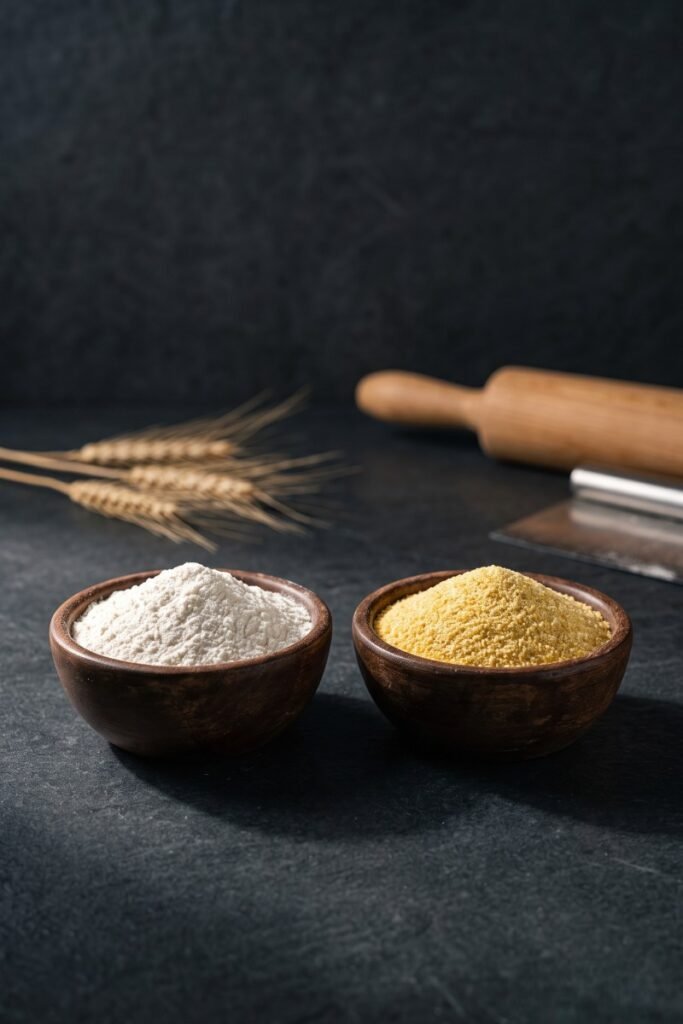
When I line up my baking canisters on the counter to prepare a fresh batch of dough, understanding the precise differences between Semolina Flour vs. 00 Flour is the absolute baseline key to achieving perfect dough elasticity. Over my years of kneading handmade crusts and shaping regional ribbons, I have treated grain grinds and protein behaviors as critical design elements rather than simple, interchangeable dry powders.
Whenever I see casual home cooks grab whatever white bag is sitting in their cupboard and wonder why their pizza crust turns out soggy or their noodles break apart in the boiling pot, I notice how a lack of milling knowledge limits the meal. For me, delivering a true restaurant-quality texture requires choosing specific wheat varieties that align perfectly with your rolling pin and oven temperatures.
How Milling Fineness Shapes Your Kitchen Dough Sheets
To understand why these two Italian staples feel so incredibly distinct between your fingertips, you have to look closely at European milling classification scales. The label “tipo 00” does not refer to protein percentages or gluten strength; instead, it is a strict measurement of how finely the factory machinery grinds the soft winter wheat kernels.
Double-zero represents the absolute finest grind available, yielding a powder as soft as talcum powder that hydrates instantly when it contacts raw egg whites or warm water. Semolina sits at the opposite end of the spectrum, consisting of coarsely cracked endosperm particles from hard durum wheat that feel like fine beach sand.
Because semolina carries this gritty, sand-like texture, it requires a slower hydration window to absorb water, but it provides a rugged surface area that helps rich ragùs cling to your fork.
Sifting this coarse yellow grain across your workspace is also an incredible trick to stop sticky sheets from bunching up on your rolling board, an essential texture fix to deploy if your mix feels uncomfortably firm, as I detail in my guide on how to Fix Dry Crumbly Homemade Pasta Dough: My Easy Rescue.
Choosing Powdered 00 Flour for Tender Pizza Frameworks
When my goal for the evening is to fire up a high-heat baking stone for pizza night, my primary rule is to reach for a bag of fine tipo 00 powder. The soft wheat structure allows you to build highly elastic gluten webs that can stretch out to translucent thicknesses without tearing under your knuckles.
When exposed to intense cooking flames, the fine powder expands into large, airy gas pockets that blister into a beautiful “leopard-spotted” crust that stays crispy on the outside while remaining light and tender inside. If you try to build a pizza dough using 100% coarse semolina, the heavy, gritty grains weigh down the rise, resulting in a dense, jaw-tiring chew.
However, introducing just a tiny ten-percent scoop of yellow semolina into your white powder mix introduces an incredible rustic crunch that elevates the bake. This small addition keeps the bottom of the crust firm and stable without changing the soft, airy bite of the main slice.
Sourcing Durum Semolina for Snappy Standalone Pastas
When my kitchen workflow shifts away from baking sheets and toward shaping firm standalone pasta shapes like orecchiette or rigatoni, durum semolina becomes my non-negotiable choice. Durum wheat carries an exceptionally high baseline protein concentration—often hitting up to 14%—which builds a rigid structural grid when mixed with plain warm water.
I follow the grain handling parameters and regional processing breakdowns detailed in the official Serious Eats Flour and Wheat Grain Guide to manage my dough properties accurately. This immense protein strength gives the cooked dough its signature al dente snap, ensuring the pasta holds its firm shape perfectly inside a boiling pot without turning mushy.
The rugged, textured exterior left behind by the coarse semolina grains acts like microscopic Velcro on your plate, gripping onto your cooking fats smoothly. This robust, high-bite grain structure stands up perfectly against intense pan friction, preventing your shapes from tearing apart when tossed over a high flame.
Simple Stovetop Rules to Manage Your Flour Inventory
The final law for mastering your flour inventory requires matching your bag choice to the presence of fats inside your liquid well. If you are preparing a rich, golden northern-style pasta dough packed with multiple raw egg yolks, stick exclusively to fine tipo 00 to achieve a silky finish.
If you are executing a southern-style vegan pasta using only water and salt, rely on coarse durum semolina to provide the structural muscle the dough needs to stay firm. Keeping both bags sealed tightly inside a cool, dry pantry ensures you always have the exact structural variables required to handle any shape.
I know my dough selection is completely successful when the rolled sheets glide through my cutter wheels cleanly without sticking or fraying at the borders. For me, taking the time to respect the hidden architecture of your grains is the ultimate secret to delivering an elite meal to your family table.