
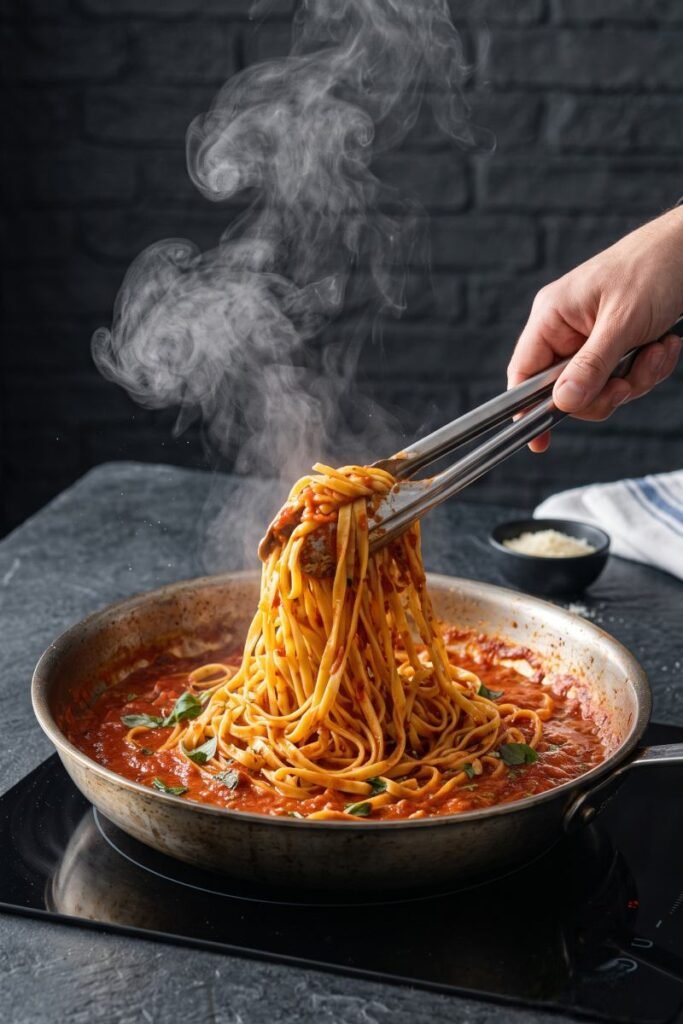
When I pull a steaming batch of wheat out of a boiling pot, understanding exactly why you should finish cooking pasta in the sauce is the absolute dividing line between a watery home-cooked meal and an elite, restaurant-quality plate. Over my years of executing traditional regional Italian dinners, I have treated the final tossing phase inside the skillet as a mandatory structural bonding step rather than a quick presentation choice.
Whenever I see untrained home cooks drain their noodles dry inside a colander, dump them naked onto a serving plate, and spoon a cold glob of tomato paste right on top, I notice how a lack of blending technique ruins the dinner. For me, delivering a cohesive culinary masterpiece requires letting the porous wheat tissue slowly simmer directly inside your warm pan so the starches can knit seamlessly with your cooking fats.
How the Porous Wheat Core Acts Like a Flavor Sponge
To understand why a simple naked noodle struggles to hold flavor on your plate, you have to look closely at how hot water alters the plant’s internal cellular matrix. When raw durum wheat expands inside a boiling pot, the tightly wound gluten protein strands naturally loosen and separate, leaving behind thousands of microscopic channels along the outer walls.
If you leave the pasta inside the water until it is completely soft and fully cooked, those inner spaces fill up entirely with plain, un-seasoned boiling liquid. Dropping that water-logged noodle into a skillet later means the sauce can only rest loosely on the outside, sliding off the slick walls into an unappealing puddle at the bottom of your bowl.
By pulling the strands out of the pot when they still hold a firm, chalky core, you ensure those internal channels remain dry, hungry, and primed to suck in your rich pan juices like a sponge. This inward movement infuses the wheat tissue with intense flavor from the inside out, a balancing step I monitor closely when checking structural density for my authentic Trofie Pasta Guide.
Letting the grain finish its absorption cycle inside the actual ragù wells blocks outside water molecules from diluting the center, ensuring the pasta carries a deeply seasoned taste rather than a bland flour finish.
The Chemical Bonding Power of Loose Surface Starches
The next major variable that transforms a thin, separated pan oil into a thick, glistening glaze is the natural chemical interaction between loose starch cells and warm cooking fats. I follow the technical pan-emulsification rules, heat boundaries, and surface starch distribution scales documented inside the official Serious Eats Sauce Binding Science Guide to manage my finishing steps smoothly.
When you scoop undercooked noodles straight from the water into a hot pan, you bring along a dense layer of loose, surface-clinging amylase molecules. As you vigorously shake the skillet handle over a medium flame, those free starches act as a physical bridge, forcing separate slick oil molecules and watery juices to rapidly whip together into a uniform cream.
This rapid mechanical agitation builds a smooth, velvety jacket that clings tightly to every contour of the wheat, locking your herbs, garlic, and grated cheeses securely onto the noodles. Standard serving styles completely bypass this pan-whipping step, leaving you with dry, sticky strands drowning under a separate layer of greasy oil.
The starch-fat emulsion acts as a natural shield against thermal separation, guaranteeing that your extra virgin fats remain fully locked into the liquid phase even as the plate cools on the table.
Managing the Final Skillet Toss Without Overcooking the Wheat
The final law for mastering this professional finishing method requires scaling your burner heat and liquid additions perfectly so you never turn the dough into a mushy, overcooked pile. Keep your skillet over a steady medium heat setting, making sure the red or white base is simmering gently but never violently boiling before the pasta arrives.
Use a large wooden spoon or a pair of long kitchen tongs to continuously fold the strands over themselves, ensuring the hot sauce coats every square inch of the wheat surface evenly. If the pan begins to look dry before the center of the noodle achieves a tender bite, splash a quarter-cup of your starchy boiling water directly into the metal to loosen the glaze.
I know my pan-tossing process is completely successful when the reduction achieves a uniform, glossy sheen that wraps around the wheat without leaving loose pools of water bleeding onto the rim of the plate. Taking the extra two minutes to finish your meals directly inside your cooking pans is the ultimate kitchen secret to delivering a flawless, restaurant-grade dinner to your family table.
This extra duration over low heat allows the residual starches to fully cook out, eliminating any raw flour aftertaste while preserving that bite.