
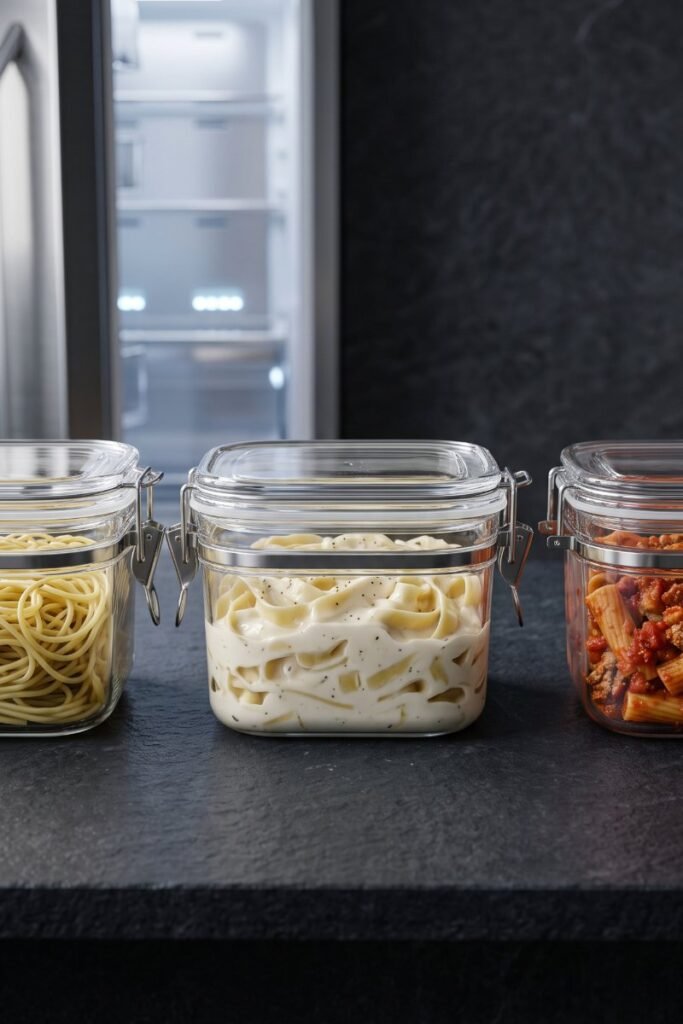
When I pack away a mountain of leftovers after a massive dinner feast, figuring out exactly how long can fresh cooked pasta last in the fridge drawers is the ultimate key to keeping your family safe from foodborne illness. Over my years of organizing storage networks inside my home kitchen, I have treated food cold-holding boundaries and starch stability timelines as strict scientific safety windows rather than simple guessing games.
Whenever I see casual home cooks keep a plastic bin of noodles sitting in their refrigerator for over a week, planning to eat it whenever they get around to it, I notice how a lack of safety knowledge risks severe bacterial cross-contamination. For me, keeping your meals elite and perfectly healthy requires respecting an absolute maximum storage cap based entirely on the specific perishable fats and liquids you mix into the container.
Why Stale Starch Cavities Become Breeding Grounds for Bacteria
To understand why a simple cooked noodle degrades so rapidly inside your cooling drawer, you have to analyze how moisture pools inside plant structures over time. When you boil wheat, the tightly wound gluten proteins absorb massive amounts of liquid, ballooning the cellular matrix into a soft, highly hydrated frame.
The moment that warm wheat drops below 140°F and sits on a refrigerator shelf, it enters the critical danger zone where microscopic spores like Bacillus cereus can germinate and multiply. Because cooked wheat releases loose starch sugars as it cools, the damp surface of each noodle acts like an open invitation for rapid bacterial colony growth.
Even if you store the container in the coldest zone of your fridge, these invisible microbes will steadily break down the wheat fibers, producing dangerous heat-stable toxins that cannot be destroyed by a secondary session on a hot stove.
I track these refrigeration timelines and bacterial growth thresholds carefully across my entire meal prep routine, maintaining these strict cold-holding parameters whenever I store raw fillings or assemble a pre-made Tuna Ciabatta Sandwich.
The Hard Storage Scale Across Varying Sauce Foundations
The most important law for managing your refrigerator shelves is recognizing that your single most perishable ingredient dictates the entire countdown clock for the container. I follow the official, open-access food preservation criteria, storage temperature thresholds, and spoilage timelines managed inside the official Healthline Food Safety Database to audit my leftover safety scales.
If you store plain, un-sauced noodles, tossing them with a tablespoon of olive oil preserves their flexibility for up to five days, though the quality and texture drop around day three. Once you combine that wheat with an egg-thickened carbonara or a heavy heavy cream reduction, the high protein and dairy moisture accelerate spoilage, forcing you to discard the batch by day three.
The window shrinks to an absolute 48-hour limit if you are packing up ocean proteins like mussels, shrimp, or cod. Seafood fats oxidize incredibly fast under cold temperatures, turning rancid and releasing harsh, sour odors long before the wheat itself begins to show visible green mold.
Simple Signs to Spot Bad Batches Instantly
The final rule for auditing your leftovers requires ignoring the calendar completely if the food displays any clear physical red flags on the plate. Before you ever think about turning on your stove to reheat a container, give the noodles an aggressive visual and scent evaluation under good lighting.
If the plain strands look unusually glossy or carry a slimy, slippery coating that leaves thick strings on your fingers, bacteria have already dissolved the plant walls. Freshly preserved pasta should smell completely neutral; if you open the lid and get hit with a sharp, sour, yeast-like aroma or a strange natural gas scent, discard the entire container immediately.
Never attempt to taste a strand to verify if it is safe, as spoiled starch toxins can trigger intense stomach pains and food poisoning without tasting bad. I know my storage process is successful when the saved portions maintain a clean, matte texture that responds beautifully to hot pan sauté techniques.
For me, taking five seconds to run through this safety checklist is the ultimate secret to keeping your family safe while keeping your kitchen efficient.