
When I open my refrigerator the day after a big Italian dinner and pull out a cold container of noodles clumping together, learning the correct way to reheat leftover pasta is the ultimate key to restoring its silky, restaurant-quality texture. Over my years of managing starch behaviors in the kitchen, I have treated the separation of congealed fats and the over-hydration of wheat as strict physical problems with easy solutions.
Whenever I see casual home cooks drop a sauced pasta bowl straight into a high-powered microwave, I notice how it splits the sauce into a greasy, oily puddle while leaving the interior core of the noodles cold and rubbery. For me, breathing fresh life into yesterday’s harvest requires low, gentle skillet heat combined with controlled moisture injection to re-emulsify the sauce smoothly.
Why Microwave Radiation Splits Emulsified Fats
To understand why a microwave oven acts as the absolute enemy of a smooth, uniform red or white glaze, you have to look closely at how electromagnetic waves vibrate water molecules. Microwave radiation heats foods unevenly, exciting water particles instantly while leaving complex fat structures sluggish and cold.
This rapid, localized spike in temperature causes the bound starches in the sauce to break open, dropping their hold on the olive oils or butter solids. As a result, the emulsion completely collapses, leaving you with a watery layer of tomato mush drowning under a separate slick of clear, greasy oil.
Furthermore, this direct heat exposure cooks the exterior wheat fibers for a second time, robbing them of their structural bite and turning them unpleasantly soft. Leaving a pasta container inside this harsh radiative chamber texturally ruins the integrity of your noodles, making them spongy and completely incapable of clinging onto your sauce components evenly on the plate.
The Mechanical Power of the Stovetop Sauté Method
My absolute baseline technique for restoring a congealed container of noodles relies on using a wide skillet to re-introduce heat, moisture, and pan agitation concurrently. I follow the detailed temperature boundaries, hydration scales, and fat re-emulsification rules documented inside the official Serious Eats Pasta Reheating Guide to safely revive my leftovers.
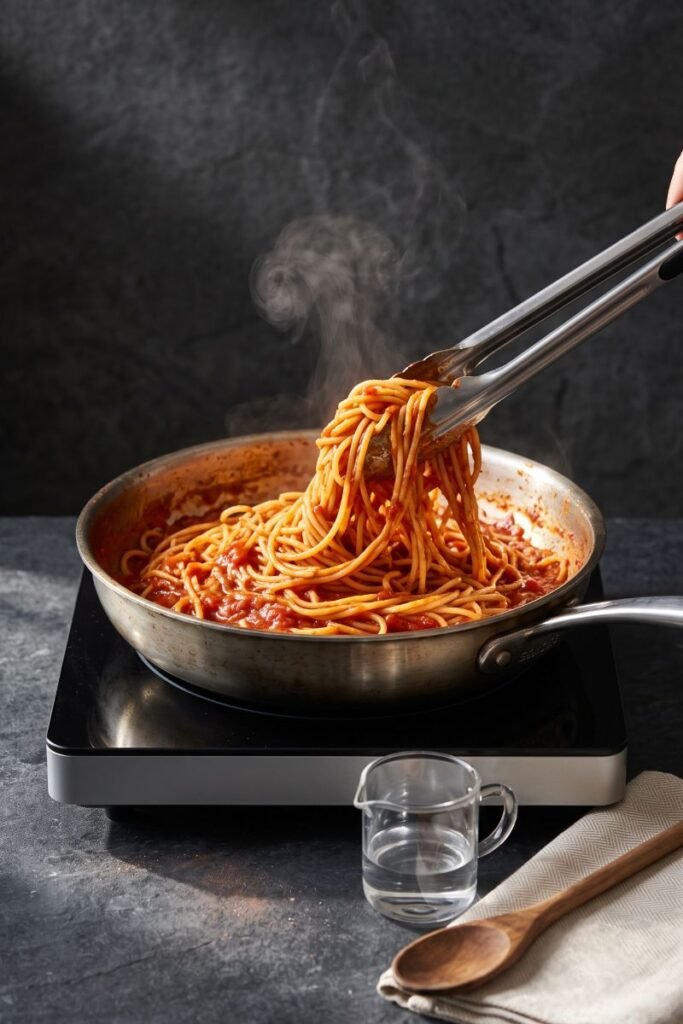
I drop the cold pasta mass into a room-temperature skillet and splash two tablespoons of water or fresh liquid directly over the noodles to create an instant steam pocket. As the burner warms the metal to a steady medium-low setting, that water turns into a gentle steam cloud, softening the stiff, cold starches without forcing them to absorb more raw liquid volume.
I use a pair of tongs to continuously toss the strands over themselves, forcing the melted fats and loosened starches to physically recombine into a glossy glaze. This brief two-minute session brings the dish right back to its original state, keeping the interior wheat core firm and pleasant to chew.
Protecting the Delicate Gluten Matrix from Mushy Collapse
The ultimate secret to keeping your reheated pasta from collapsing into a mushy slurry is ensuring you only attempt this process if the noodles carried a proper bite from the start. If you overcooked your noodles during their initial boiling session on night one, no amount of careful skillet handling or gentle steaming can repair those broken, bloated gluten chains.
However, if your noodles were pulled out of the pot when they still held an authentic, slightly resistant center, they will withstand the secondary reheating phase effortlessly without losing their structural frame. I build this structural resistance straight into my meals by studying the underlying science of wheat thresholds, a timing framework I break down inside my comprehensive guide on What Does Al Dente Actually Mean.
Once your skillet reduction achieves a uniform crimson sheen that covers the wheat completely, pull the pan off the burner immediately. This timing stops the starches from weeping out extra liquid, ensuring every noodle remains beautifully intact all the way to your dinner plate.