
When I lift a fresh sheet of stuffed wheat from my counter and watch it split open inside a boiling pot, releasing my savory cheese filling into a watery soup, learning how to prevent homemade ravioli from bursting becomes my immediate kitchen challenge. Over my years of stretching fresh egg dough, I have treated the seal integrity and air volume of filled cases as a precise pressure-management problem rather than a matter of luck.
Whenever I see casual home cooks pack their dough skins with giant mounds of watery ricotta and plunge them into an aggressive, rolling boil, I notice how steam expansion destroys the structural borders within seconds. For me, delivering intact, beautifully plump parcels requires controlling your filling moisture, eliminating interior air pockets, and dropping the pot temperature down to a gentle simmer.
How Trapped Air Pockets Expand Violently Under High Heat
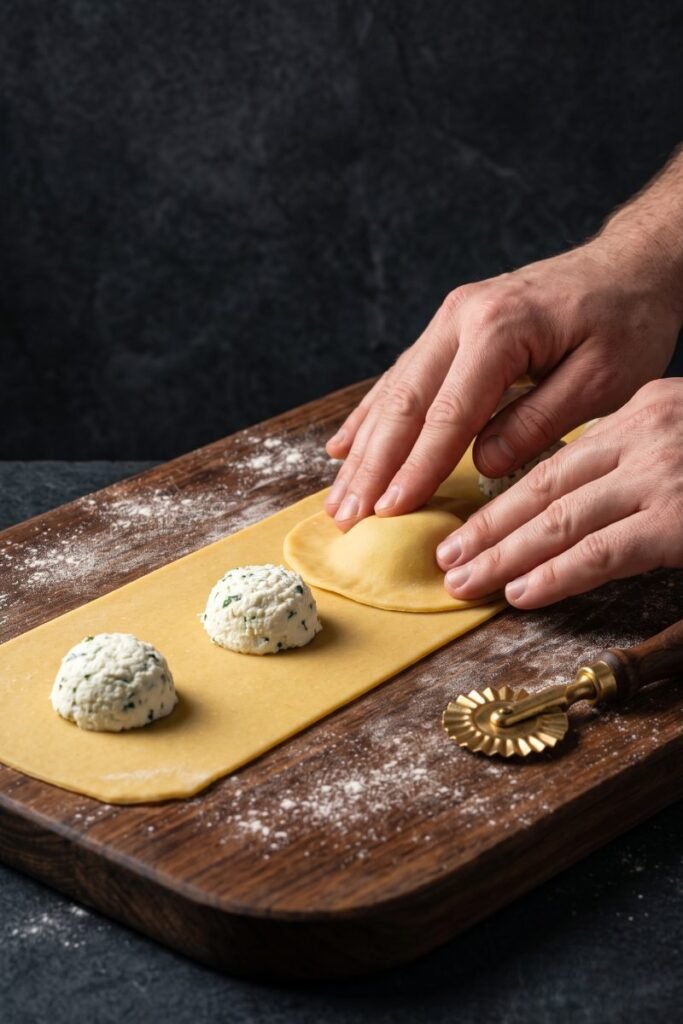
To understand why a perfectly sealed square of dough tears open the second it contacts hot liquid, you have to analyze basic physics and steam expansion. When I lay a top layer of egg sheet over mounds of filling, tiny pockets of atmospheric air naturally get trapped in the tight valleys surrounding the stuffing.
If I simply press the outer edges closed without pushing that internal air out first, those micro-bubbles become sealed inside a pressurized chamber. When the pasta drops into the pot, the intense heat causes the trapped air and the moisture in the cheese to expand into steam, bloating the square like a balloon until the stretching seams rupture completely.
I have watched this internal gas expansion ruin beautiful batches, a pressure-control detail I monitor closely when rolling out highly responsive, elastic wheat structures for my Homemade Pasta Dough Is Too Elastic? My Easy Fixes troubleshooting index. To stop this stretching before it starts, I use the outer edges of my thumbs to cup each filling mound, smoothing the top sheet from the center outward to clear the air lines.
Draining Ricotta Fillings to Prevent Structural Weeping
The next major variable that triggers a blowout stems from using wet, un-drained dairy ingredients inside your pasta pockets. Standard grocery store ricotta packs a massive volume of loose whey water that seeps out of the dairy proteins when exposed to continuous stovetop temperatures.
I follow the dough hydration metrics, filling weights, and structural moisture balancing laws documented inside the official Serious Eats Guide to Stuffed Pasta Mechanics to safely manage my liquid phases. If you scoop wet cheese straight from the plastic tub onto your dough, that loose whey will weep outward, soaking into the flour border and turning the dry seam into a sticky, slippery mush that cannot hold under pressure.
To secure your borders, suspend your ricotta inside a fine-mesh strainer lined with cheesecloth for a minimum of two hours inside your refrigerator to bleed away the excess moisture. This extra step yields a dense, concentrated cheese paste that stays firmly in place, giving you a strong adhesive zone when you press your cutter wheel down.
Switching from a Roaring Boil to a Gentle Simmer
The final law for protecting your stuffed pasta creations requires changing how you physically manage your stove burner settings during the drop. Many home cooks make the mistake of leaving their pot at a raging, aggressive boil, thinking high heat cooks the wheat faster.
Aggressive, turbulent water currents toss the delicate ravioli around like a washing machine, forcing the heavy parcels to crash into the metal walls and slam against each other until the sealed edges rip apart. Instead, bring your seasoned pot to a boil, then immediately turn the dial down until the surface displays a lazy, gentle shimmer with tiny bubbles rising slowly to the top.
Slide your squares into this calm environment in small batches, allowing the eggs inside the dough to coagulate and firm up gently without facing structural blunt-force trauma from the water. I know my simmering process is fully successful when the plump parcels float lazily to the top of the pot with perfectly intact borders that lock the savory fillings inside. For me, taking the extra time to clear out air lines and calm your boiling water is the ultimate secret to delivering an elite meal to your family table.