
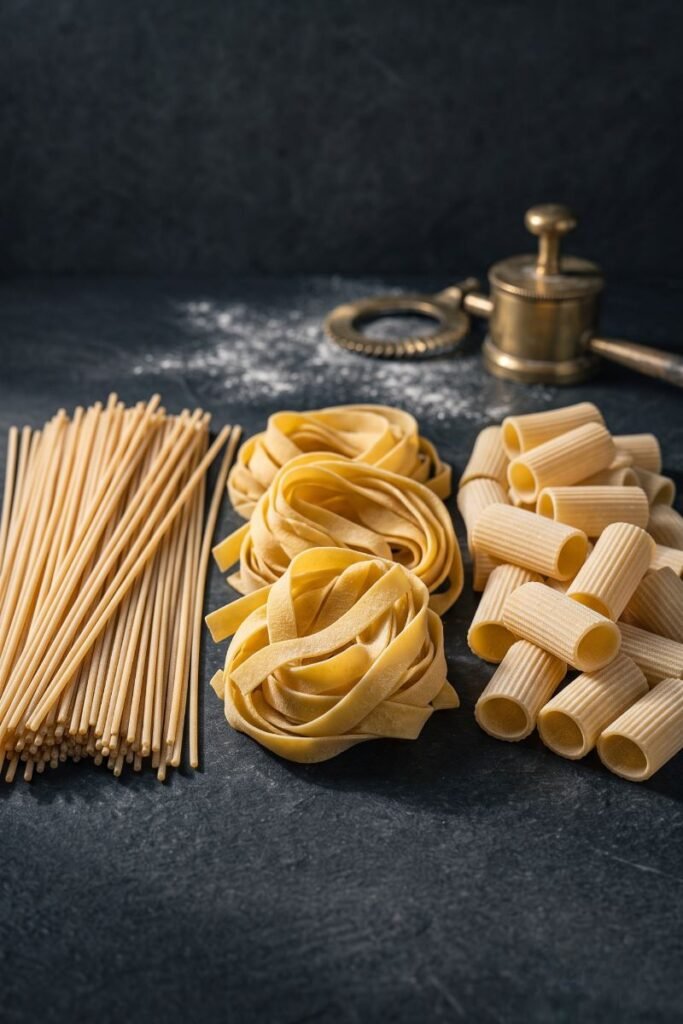
When I look at a pantry shelf filled with varied boxes of flour geometries, learning how to correctly match the right pasta shape to your simmering skillet base is the absolute foundation of regional Italian kitchen physics. Over my years of tossing copper-die wheat through hot cooking emulsions, I have treated the curves, ridges, and hollow tunnels of different cuts as deliberate structural tools rather than simple decorative designs.
Whenever I see untrained home cooks dump a heavy, chunky meat ragù over a thin strand of slippery angel hair and wonder why the meat slides to the bottom of the bowl, I notice how incorrect structural pairings ruin dinner. For me, delivering a perfect plate requires evaluating the weight, viscosity, and fat content of your sauce so the noodles can grab and carry every single drop of flavor smoothly.
How Surface Texture and Die Cuts Create a Mechanical Grip
To understand why specific flour geometries react so differently to hot kitchen emulsions, you have to look closely at how the factory machinery shapes the raw dough. Premium wheat cuts are extruded through traditional bronze dies, a mechanical process that leaves behind a rough, powdery, sand-like surface texture known as a matte finish.
When you drop these textured cuts into a boiling pot, those microscopic surface ridges release high amounts of natural starches straight into your cooking liquid. This rough exterior acts like microscopic Velcro inside your skillet, grabbing onto loose cooking fats and locking them onto the wheat walls without needing heavy flour thickeners.
Mass-market commercial options use cheap, smooth plastic dies that leave the pasta looking slick and glassy, which causes smooth oil glazes to slip right off the noodle into a puddle. I watch these surface texture dynamics constantly when checking production parameters, an evaluation rule I utilize when selecting a premium, low-slip High-Quality Dried Pasta brand for my pantry folder.
Pairing Long Thin Strands with Delicate Seafood Emulsions
When my workflow shifts toward preparing a fast, elegant dinner centered around fresh seafood or light garlic infusions, my baseline rule is to look exclusively for long, thin cylinders. Delicate strands like spaghetti or linguine feature smooth, continuous outer walls that are designed to glide through lightweight liquid environments with minimal friction.
I follow the foundational shape definitions and regional pairing rules preserved inside the official De Cecco Digital Magazine Traditional Pasta Shapes guide my structural geometry combinations cleanly. When you toss long strands through a shimmering layer of extra virgin olive oil, the fluid wraps around the thin wires, building a thin, glossy sheen that seasons every single bite uniformly without weighing down the wheat
If you try to dump a heavy, thick meat sauce over these delicate strands, the heavy chunks cannot find a flat surface to grip onto, leaving you with naked noodles and a bowl of loose meat. Save the long, elegant wires for clean, fluid reductions where the focus sits on bright garden aromatics and smooth ocean juices.
Matching Chunky Tubes with Heavy Sausage and Vegetable Bases
When my stove is simmering a rustic, heavy reduction packed with torn sausage meat, softened vegetables, or thick legumes, my strategy flips entirely toward deep, hollow tubes. Rigid shapes like rigatoni or paccheri feature massive interior cavities and strong exterior ridges (rigate) designed specifically to capture large solid particles.
As you toss the heavy tubes inside a wide skillet, the physical movement forces the loose meat bits, sliced garlic, and melted cheeses straight into the open tunnels of the wheat. When you lift a forkful to your mouth, the pasta acts like a miniature edible spoon, delivering a perfect mix of tender dough and chunky sauce filling in a single cohesive bite.
Simple Stovetop Rules to Test Your Friction Cohesion
The final law for mastering your shape pairings requires checking the exact visual cohesion of your glaze right before it leaves the hot flame. When you transfer your undercooked pasta straight into your simmering sauce base, always bring along a half-cup of your cloudy, starch-heavy boiling water to act as a binding agent.
Vigorously shake the skillet handle over high heat while folding the noodles over themselves to force the starches, cooking oils, and water phases to rapidly whip together into a uniform cream. If your sauce is perfectly matched to the shape, it will wrap around the wheat like a tight, glistening jacket, leaving the bottom of the metal pan clean and free of loose fluid lines.
If you see separate streams of watery juice bleeding away from the noodles as they sit on the plate, your shape lacks the proper surface area or cavity size to hold that specific liquid volume. For me, taking the time to match your noodle geometries to the viscosity of your ingredients is the ultimate secret to delivering an elite meal to your family table.