
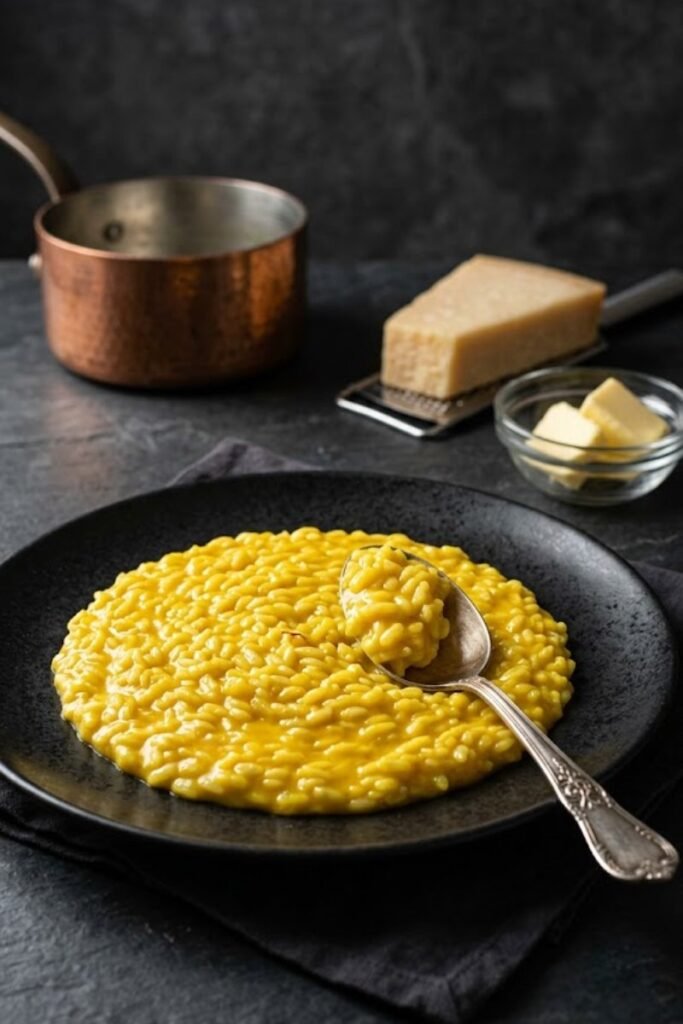
When I draw a wooden spoon across a skillet, understanding why is my risotto gummy is the ultimate structural step required to transform grains into a fluid emulsion rather than a stiff mush. Over my years of monitoring starch swells, I have treated amylose structures and kernel friction curves as exact scientific formulas.
Whenever I see amateur home cooks stand over a pot beating their grains into a frantic, non-stop whipping cycle, it completely ruins the texture. Watching the mixture expand into a heavy, gluey mass that clings to the spoon shows how aggressive mechanical handling breaks down the grain profile.
For me, delivering an elite restaurant-quality plate simply requires managing your surface starches with gentle friction and precise resting intervals over a regulated flame. This continuous cellular protection ensures every bite maintains a clean snap, a material standard I maintain inside my guide on The Best Store-Bought Dried Pasta Brands Recommended by Chefs.
The Cellular Split Between Creamy Amylose and Gluey Amylopectin
To understand why a short-grain grain transforms into either a velvety liquid or a sticky porridge mass, you must look closely at starch chemistry and botanical anatomy. Authentic regional cooking relies exclusively on high-starch superfino varieties like Arborio, Carnaroli, or Vialone Nano.
These Italian grains contain two distinct configurations of organic starch molecules: amylose and amylopectin. Amylose sits densely across the outer perimeter of the kernel and dissolves cleanly into warm liquids, providing the primary thickening power that yields a smooth, flowing sauce.
Amylopectin, by contrast, sits locked deep inside the internal structural walls of the rice grain. This molecule configuration is highly branched, sticky, and behaves exactly like a industrial binding glue when exposed to mechanical friction.
When you beat the cooking rice aggressively, your spoon fractures the soft, swollen core of the kernels. This structural rupture spills the sticky amylopectin networks into your pan wells, locking the separate grains into a dense, pasty mush.
The Serious Eats Guideline for Pan Selection and Controlled Agitation
The operational secret to generating a flawless, fluid wave without creating arm fatigue comes down to adjusting your tool selections and stirring rhythms. I follow the strict grain-washing techniques, pan surface calculations, and undisturbed simmering boundaries documented inside the official Serious Eats No-Stir Risotto Technical Blueprint to keep my starch suspensions pristine.
First, completely banish deep, narrow saucepans from your cooking station. A high-sided pot piles the heavy weight of the wet grains directly on top of each other, trapping intense thermal heat at the bottom while crushing the fragile kernels underneath.
Instead, select a wide, shallow 12-inch sauté pan to distribute the short-grain kernels across a level heating plain. This wide layout allows the independent grains to slide past each other smoothly without undergoing intense mechanical crushing forces.
Pour your hot, simmering broth across the toasted grains gradually, maintaining a low, steady bubbling action across the pan floor. Rather than moving your wooden paddle non-stop, stir the mixture gently for just 15 seconds after each liquid addition to distribute the heat evenly.
Cover the wide skillet and let the grains simmer completely undisturbed for a few minutes between splashes. This passive thermal window allows the outer amylose cells to hydrate and shed naturally into the fat pool without shearing the structural core.
Mastering the Mantecatura Phase to emulsify Your Pan Fats
The final law for successfully sealing your rice assets requires executing a traditional kitchen step known across northern Italy as the mantecatura. This critical finishing sequence occurs the exact second your skillet floor leaves the hot stove flame, transforming loose pan water into a glossy jacket.
When your rice kernels are tender but still carry a distinct al dente snap, pull the skillet completely off the active fire. Let the hot pan rest undisturbed for 60 seconds to drop the surface temperature away from a boiling state.
Drop a generous pat of ice-cold, unsalted butter and a handful of freshly grated Parmigiano-Reggiano directly into the center of the warm mass. Grab the pan handle firmly and shake it back and forth aggressively while using a rubber spatula to fold the dairy fats into the grain columns.
This sudden, non-boiling mechanical motion drives the cold butter lipids into a stable, velvety emulsion with the released amylose starches. I know my structural starch extraction is completely successful when the rice flows across the plate in a fluid, moving wave, a presentation style known traditionally as all’onda.
If you notice your finished rice stalling on the porcelain, fold in a single tablespoon of warm broth to loosen the starches. Taking the extra minutes to separate your molecular structures and regulate your pan movements is the ultimate kitchen secret to keeping your cooking elite.