
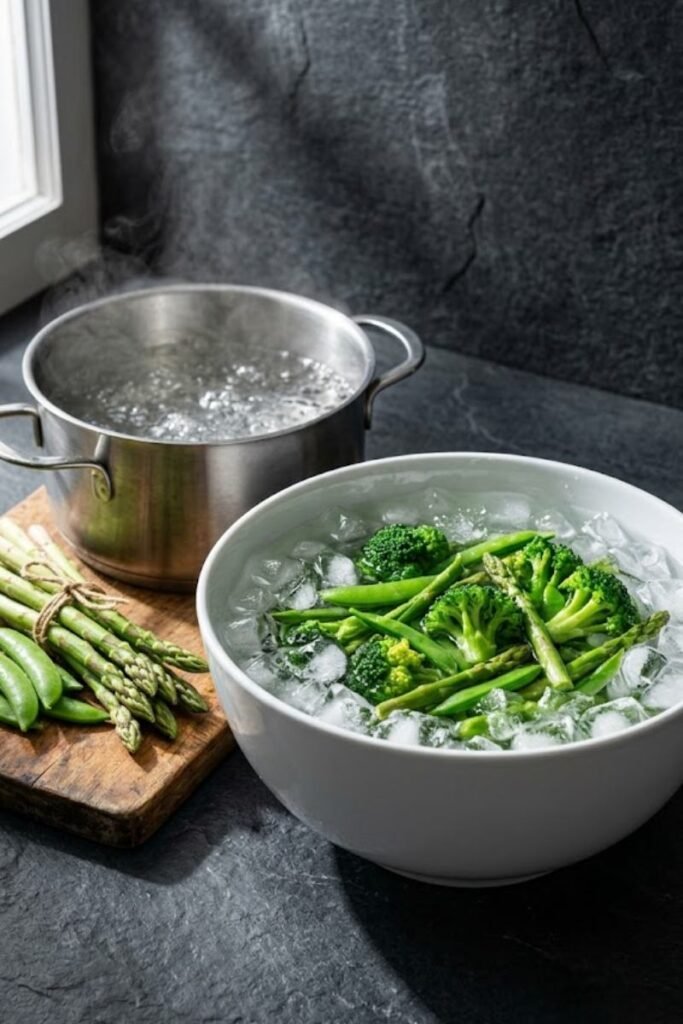
If you are wondering how to blanch and shock green vegetables, learning how to use a rapid ice bath is the absolute ultimate step required to rescue your summer pasta salads. When you drop fresh garden greens into a pot, the raw stems need a fast burst of heat to soften their tough fibers while keeping their snap.
If you let the vegetables sit inside a warm colander or boil them over a low flame for too long, you risk turning them into a dull, mushy gray mess. Watching your expensive ingredients turn limp, dark, and stringy shows how easily a simple cooling error compromises your hard kitchen work.
For me, saving a delicate picnic platter simply requires using a heavy salt boiling method, tracking your water times closely, and setting up an ice shock station early. This continuous color defense ensures your garden mix remains crisp and sweet, a preparation rule I prioritize when building fresh vegetable plates for my family table.
The Hidden Enzyme Trap of Slow Air Cooling
To understand why a fresh green vegetable transforms into a dull, stringy disappointment so quickly, you have to look closely at internal plant chemistry and heat retention. Raw green crops like broccoli florets, asparagus, and snap peas contain a natural gas layer trapped inside their microscopic cellular walls.
When you first drop these pieces into a hot pot, the steam forces those tiny gas bubbles to expand and clear out, making the green color look incredibly bright. However, if you lift the hot stalks out of the water and let them sit inside a warm colander on your counter, the internal heat remains trapped deep inside the core.
This trapped residual heat continues to cook the vegetable cells slowly from the inside out, causing the sturdy cell walls to collapse entirely. At the same time, natural enzymes begin to break down the vibrant chlorophyll colors, turning your beautiful salad greens a muddy, unappealing brown.
To block this chemical decay completely, you must use a rapid cold shock to seal the cell walls before they can sag. I manage these exact clean hydration lines and vibrant green balances carefully whenever I prepare fresh summer bowls, a tracking focus I maintain closely inside my cold kitchen tutorial explaining the Traditional Sicilian Orange Salad with Fennel.
The Serious Eats Two-Minute Saline Submersion Rule
The kitchen rule for unlocking a loud, clean crunch relies on using high thermal energy combined with an immediate ice-cold temperature drop. I follow the strict water salinity metrics, boiling durations, and ice-water cooling steps documented inside the official Serious Eats Vegetable Blanching Directory to keep my summer salad ingredients pristine.
Banish low-temperature steaming entirely. Never try to prep fresh garden greens by letting them steam slowly inside a covered plastic basket over a weak stove flame. Slow steaming lacks the rapid thermal power needed to deactivate internal aging enzymes quickly, leaving your greens stringy and faded.
Utilize an aggressive saline boil. Fill a large pot with water, bring it to a rolling boil over high heat, and drop in two generous tablespoons of coarse sea salt. This high-density salt environment seasons the vegetable cells instantly, helping to preserve their natural sugars through the heat cycle.
Maintain complete time discipline. Tumble your trimmed greens into the bubbling water and watch the clock closely, letting them cook for exactly 90 seconds to 2 minutes. The stems should turn bright green and bend slightly while still holding onto their firm, structural snap.
Use a mesh skimmer to lift the hot greens out of the pot, and drop them straight into a massive bowl filled with water and ice cubes. Leave the vegetables submerged inside the freezing bath for exactly two minutes to draw out all the internal core heat completely before draining.
Drying and Dressing Your Crisp Greens for the Bowl
The final law for successfully building your dinner requires removing every drop of surface moisture before tossing your ingredients with your vinaigrette. Once your vegetables are fully shocked and cold, lift them out of the ice bath and layout the pieces across clean kitchen towels.
- Wring Out Trapped Pockets: Press down gently on the florets with a dry cloth to expel any hidden water droplets trapped inside the tight green clusters.
- Avoid Wet Dressing Slides: If you drop wet vegetables into an oil-based dressing, the water film will slide the fats away, leaving your salad tasting flat.
- Toss at Room Temperature: Ensure your dried greens and pasta ribbons settle to a uniform room temperature before mixing them with your fresh herbs.
Tumble your dry, crunchy greens into your cooked pasta bowl, folding the mixture gently with a splash of extra virgin olive oil and a squeeze of lemon. This thorough drying step allows your seasonings to coat every single spiky edge uniformly, preventing loose water pools from collecting at the bottom of your presentation platter.
I know my cold-shocking strategy is fully successful when each vegetable bite delivers a loud, satisfying snap that shows zero mushy drag. The bright green juices blend with your light pasta dressings beautifully, delivering a perfect restaurant-grade salad that stays vibrant, crisp, and fresh for days. Taking an extra minute to salt your boiling water and trust your ice bath keeps your summer cooking simple, delicious, and elite.