
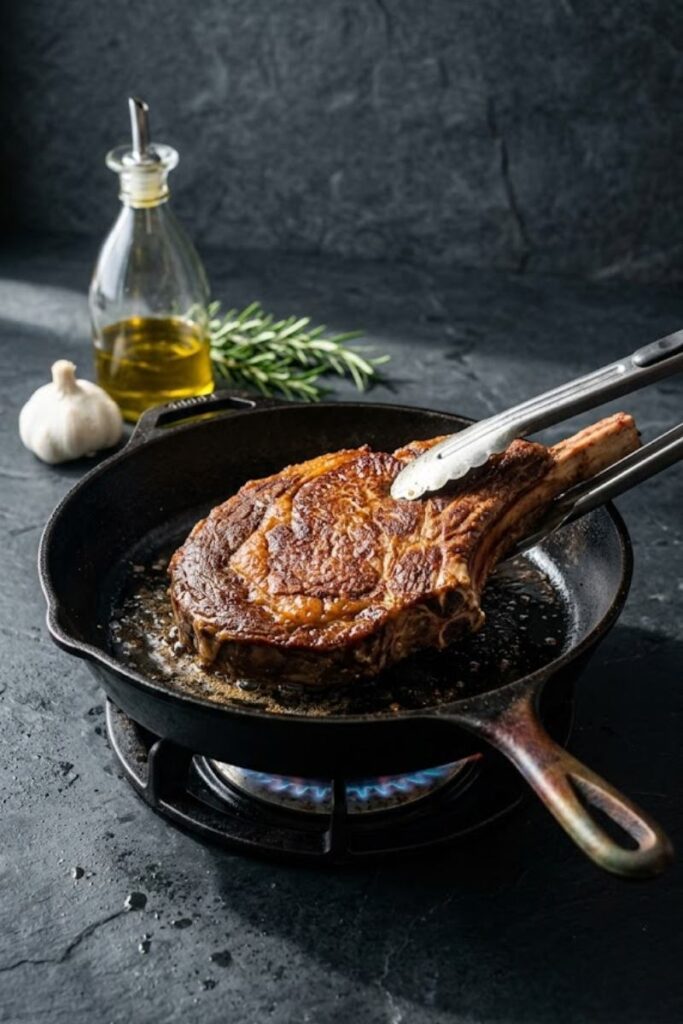
If you are wondering about the best method for searing meat with olive oil, learning how to manage pan temperatures is the absolute ultimate step required to lock in deep, savory flavors safely. When you drop a fresh steak or pork chop into a hot skillet, the surface lipids need a fast burst of heat to brown the proteins beautifully without burning the oil.
If you let the pan overheat until the fats break down into bitter carbon columns, you risk ruining the entire flavor profile of your dinner. Watching your premium ingredients smoke aggressively, turn black, and acquire a harsh chemical taste shows how easily a simple temperature control error compromises your hard kitchen work.
For me, delivering an elite restaurant-quality crust simply requires combining cold skillet starts with heavy pans and precise manual browning windows. This continuous temperature defense ensures your cooking fats remain clean, sweet, and perfectly stable, creating a beautiful golden foundation that showcases your primary herbs.
The Thermal Breakdown of Free Fatty Fruit Acids
To understand why an unrefined fruit fat transforms into a harsh, acrid smoke cloud so quickly, you have to look closely at lipid chemistry and acid breakdown. Extra virgin olive oil is cold-pressed directly from whole olives, leaving a massive volume of natural fruit solids, plant pigments, and free fatty acids floating raw inside the bottle.
These unrefined organic particles are responsible for delivering the beautiful, peppery flavor and green color of premium Italian estate oils. However, these exact same raw solids possess zero structural resistance to intense, high-temperature frying environments over an open gas stove flame.
When you heat a shallow pool of extra virgin oil inside an empty pan past 350°F, those delicate fruit solids begin to break down and burn into pure carbon rapidly. This carbonization destroys the fruit flavors completely, releasing a harsh chemical compound called acrolein that smells like burnt plastic and tastes intensely bitter.
Once this acrid compound binds with your hot pan fats, it coats the interior muscle fibers of your protein completely, turning a beautiful dinner into a ruined dish. I manage these exact fragile lipid protections and deglazing thresholds constantly when building rich, velvety finishes for my table, a temperature standard I monitor closely inside my master Marsala Wine Cooking Guide: Sweet vs. Dry Savory Finishes.
To bypass this thermal breakdown entirely, you must shift your fat selection toward regular or refined bottles for high-heat steps while saving the delicate estate bottles for cold finishing. The separate liquids collapse into an unappealing, greasy pool that ruins the visual look of your entire dish.
The Serious Eats Direct-Protein Coating Technique
The kitchen rule for unlocking a deep, sweet caramel crust without triggering a smoking pan relies on altering how you apply your lipids to the skillet grid. I follow the strict pan preheating times, direct-meat oiling methods, and heat regulation steps documented inside the official Serious Eats Searing Guide to keep my cooking fats completely pristine.
Banish open pan pools entirely. Never pour a heavy quarter-cup of raw olive oil into a cold skillet and let the fat sit over a roaring flame while you season your meat. Leaving the delicate fruit liquid in direct contact with hot metal blocks will scorch the acids instantly, ruining your base before the protein ever touches the pan.
Utilize the direct-meat massage method. Pat your protein bone-dry with thick paper towels to remove all surface water film, and brush a thin layer of olive oil directly onto the meat skin instead. This targeted application uses the cold temperature of the meat cells to buffer the oil, shielding the lipids from scorching forces.
Maintain a dry pan preheat. Place your heavy cast iron or stainless steel skillet over a medium-high flame completely dry, letting the metal absorb thermal energy uniformly for three minutes. Drop the oiled protein directly onto the hot metal floor, watching the fat sizzle gently only where the meat makes contact.
The moment the meat lands, the natural surface moisture creates a protective steam cushion that regulates local heat blocks, keeping the oil safely below its breakdown threshold. This passive temperature defense allows the amino acids to cross-link smoothly, building a uniform golden crust without releasing any bitter carbon vapors into your kitchen space.
Managing Skillet Lipids for Flawless Sauce Foundations
The final law for successfully executing your dinner assets requires managing your remaining pan fats carefully right after your proteins finish searing. Once your meat cutlets develop a beautiful golden armor, slide them out of the skillet to rest safely on a warm plate.
- Check the Glaze Color: Look closely at the caramelized food bits stuck to the pan floor, ensuring they look like deep amber crystals rather than black ash.
- Cool the Pan Fast: Drop the stove flame down to medium-low immediately and toss in a handful of minced shallots or a pat of unsalted butter to absorb excess heat.
- Deglaze with Kitchen Acids: Pour a heavy splash of dry wine or broth across the hot metal, using a wooden spoon to dissolve the flavorful crust into a glossy glaze.
This quick cooling sequence keeps your remaining olive oil lipids stable through the entire assembly process, preventing leftover solids from scorching during the simmer. The sweet meat juices blend with your light pan reductions beautifully, turning separate liquids into a thick, uniform glaze that wraps smoothly around your dinner.
I know my temperature management strategy is fully successful when the rich pan sauce displays a smooth, glossy surface with zero dark carbon spots or separation lines. Taking an extra three minutes to oil your meat directly and preheat your skillet dry keeps your home cooking simple, delicious, and elite for everyone at the table.