
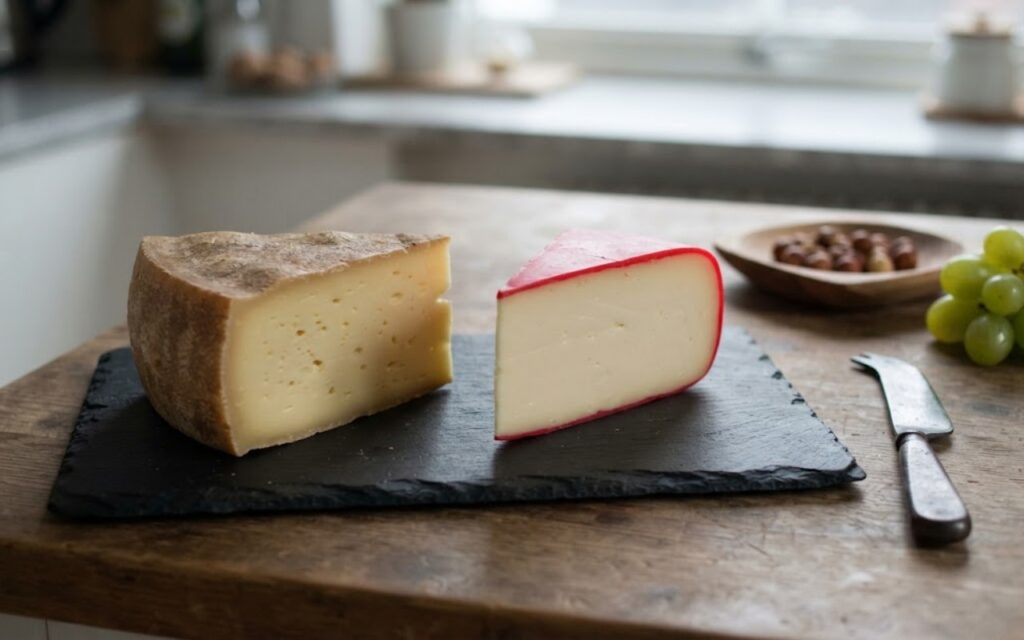
Settling the debate between Fontina Val d’Aosta vs. Swedish Fontina comes down to whether your recipe demands deep Alpine funk or a neutral, elastic melt. Many grocery shoppers grab a wedge labeled simply as fontina and end up with completely unexpected textures in the skillet.
While both styles share a root name, they behave like entirely different cheeses once heat hits the pan. Knowing the moisture, rind, and milk profiles will prevent greasy separations and ruined dinners.
Quick-Glance Kitchen Summary
Fontina Val d’Aosta is a pungent, raw-milk Alpine cheese built for velvety fonduta, while Swedish Fontina is a mild, pasteurized cheese crafted for clean, stretchy melting. Match the Alpine original with low-heat sauces and choose the Swedish variety for high-heat browning like pizza or grilled sandwiches.
- Fontina Val d’Aosta: Raw cow’s milk, washed rind, aged 90 days or longer, earthy and barnyard notes, melts silky below 150°F.
- Swedish Fontina: Pasteurized cow’s milk, red wax or plastic rind, aged 30 to 60 days, buttery and mild, stretches like low-moisture mozzarella.
- Core melting target: Keep pan temperatures between 135°F and 145°F to prevent butterfat separation in raw milk wedges.
- Gear selection: Use a curved-bottom enameled cast iron or stainless saucier to keep whisked cheese moving freely away from scorching pan corners.
Why Two Cheeses Share the Same Name on Store Shelves
The original Fontina comes strictly from the Aosta Valley in northwest Italy, protected under European Union Protected Designation of Origin regulations since 1996. Italian cooperatives make it exclusively using raw whole milk from local Valdostana cattle grazed on high mountain pastures. The resulting wheels cure inside damp rock caves, developing an earthy aroma, tiny irregular eyes, and complex savory amino acids.
Outside Europe, international trademark enforcement weakens considerably, allowing manufacturers across Sweden, Denmark, and the United States to market completely different recipes as fontina.
Swedish dairies modeled their version on mild, washed-curd table cheeses to achieve a soft, crowd-pleasing profile. This creates regular confusion for home cooks who expect a pungent Italian melting block and unpack a bland, rubbery wedge instead.
How to Spot the Physical Differences Before You Buy
| Feature | Fontina Val d’Aosta DOP | Swedish Fontina |
|---|---|---|
| Milk Base | Raw, unpasteurized whole cow’s milk. | Pasteurized cow’s milk with washed curd. |
| Aging Time | Minimum 80 to 90 days in damp rock cellars. | Typically aged 30 to 60 days in climate-controlled rooms. |
| Outer Coating | Thin, tacky, brownish-orange natural washed rind. | Bright red paraffin wax or smooth, clear plastic packaging. |
| Raw Aroma | Earthy, fungal, grassy, and barnyard-forward. | Sweet, milky, and faintly lactic with no pungency. |
| Heat Performance | Liquefies into a velvety sauce; breaks under high broilers. | Stretches into long, chewy strings without releasing excess grease. |
Spotting the true Italian original requires checking the outer packaging for the official round green Consorzio seal stamped into the rind. Authentic wheels display a stylized mountain silhouette with the word Fontina running through it.
Commercial Swedish styles almost always arrive encased in bright red paraffin wax or vacuum-sealed clear plastic pouches. Supermarkets often place domestic knockoffs right next to imports, so reading the country of origin tag on the distributor label remains your best defense.
How to Keep Your Cheese From Separating into Oil
Fontina Val d’Aosta contains roughly 45 percent butterfat in dry matter combined with an unpasteurized, delicate protein matrix. When exposed to direct, aggressive heat above 150°F, the casein network collapses abruptly and squeezes out free butterfat. You end up with a tough, rubbery curd floating in a pool of clear yellow grease.
Swedish Fontina handles heat abuse much better because its pasteurized, washed-curd processing yields a resilient, elastic protein matrix. It flows smoothly over pizzas or inside panini presses without leaking oil, behaving similarly to a young Gouda.
To melt Italian Fontina without breaking it, grate the cheese coarsely and toss it with a small pinch of cornstarch or potato starch. Warm your base liquid over low heat in a saucier with curved interior walls, then whisk the cheese in off the direct flame until fully emulsified.
Choosing the Right Wedge for Your Specific Recipe
Traditional Italian fonduta demands genuine Fontina Val d’Aosta, milk, butter, and egg yolks whisked gently over a double boiler. Substituting Swedish Fontina here ruins the dish, turning a rich and earthy regional specialty into a bland cheese dip. Italian Fontina also elevates polenta, risotto, and rustic potato gratins where its mushroom aromas cut through heavy starches.
Swedish Fontina shines brightest in casual comfort dishes that require reliable stretch and mild richness. It acts as an elite melting cheese for smash burgers, breakfast egg sandwiches, and classic stove-top macaroni.
If you need a middle ground for French onion soup or flatbreads, try blending both varieties fifty-fifty. You capture the complex nuttiness of the Val d’Aosta while the Swedish version guarantees a luscious, stretchy pull across the surface.
Rinds, Storage, and Quick Kitchen Fixes for Leftovers
Never attempt to eat the outer coating of Swedish Fontina, which is inedible paraffin wax that will choke up your cheese grater. The brownish, tacky rind on Fontina Val d’Aosta is technically edible since it forms through natural brine washings, but it is often gritty and overly bitter. Trim a millimeter off the Italian rind for cooking, but save the firm edge to simmer inside vegetable broths or minestrone.
Leftover wedges dry out quickly and absorb stray refrigerator smells if wrapped in standard plastic wrap. Store both cheeses by wrapping them snugly in parchment paper first, then placing them inside a loose zip-top plastic bag in the vegetable crisper.
If an Italian Fontina sauce separates on the stove, pull the pan off the burner immediately. Vigorously whisk in a tablespoon of near-boiling water or warm cream to re-establish the emulsion before serving.