
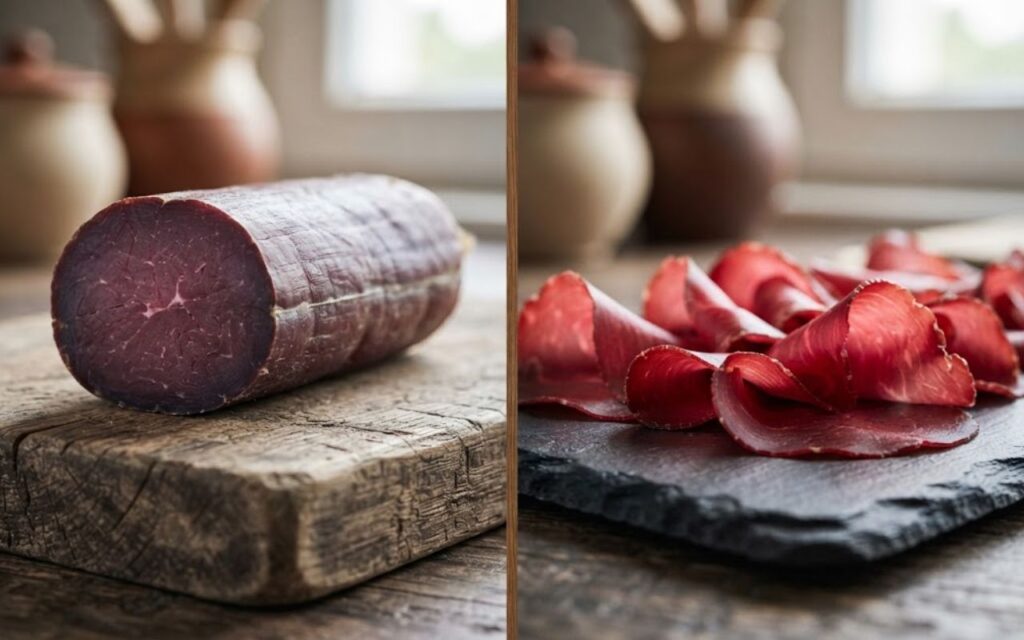
Home cooks wondering what is bresaola will find a ruby-red, air-dried Italian charcuterie made from lean whole-muscle beef rather than cured pork. Originating in the alpine Valtellina valley of Lombardy, this cured beef offers an earthy, lightly spiced flavor profile shaped by red wine, juniper berries, and local mountain air. It delivers a tender, melt-in-the-mouth texture when sliced paper-thin.
Unlike fatty salumi, this beef cut undergoes strict trimming to remove all exterior fat before salting and dry curing. The finished product functions as both a quick antipasto component and a high-protein centerpiece for minimalist plates. It offers home cooks a clean, savory bite that avoids the heavy grease of pork-based charcuterie.
Quick-Glance Kitchen Summary
Bresaola is an Italian air-dried beef charcuterie made from trimmed top round that cures in salt, wine, and warm spices before hanging to dry. It requires paper-thin slicing across the grain to keep its lean, dense muscle fibers tender on the palate.
- Cut Selection: Beef top round (punta d’anca) or eye of round (magatello) trimmed clean of all exterior fat and connective tissue.
- Cure Aromatics: Coarse sea salt, cracked black pepper, crushed juniper berries, cinnamon, clove, and dry red wine.
- Target Moisture Loss: 35 to 40 percent total weight reduction across a 60 to 90 day drying timeline.
- Slice Thickness: Shaved between 0.5 mm and 1.0 mm to prevent the lean meat from chewing like jerky.
- Serving Temperature: Room temperature between 18°C and 20°C (64°F to 68°F) to activate volatile spice compounds.
Where Bresaola Comes From and How It Is Made
Authentic Italian bresaola holds Protected Geographical Indication (PGI) status in the Valtellina valley, located in northern Lombardy near the Swiss border. The unique microclimate of this alpine valley provides dry, cool mountain breezes that allow salted beef to dehydrate slowly without spoiling. While commercial producers throughout the world cure lean beef, the Valtellina method remains the global benchmark for balanced texture and flavor.
The production process relies exclusively on premium lean cuts of beef, most notably the top round, known in Italy as punta d’anca. Butchers completely remove all visible fat, silverskin, and connective tissue from the raw muscle before starting the dry cure. This complete lack of fat sets bresaola apart from nearly every other major cured meat in European butchery.
Once trimmed, the beef rests in a dry brine of sea salt, black pepper, garlic, crushed juniper berries, and warm baking spices such as cinnamon and nutmeg. Producers frequently add a bath of local red wine to deepen the color and introduce mild acidity. The meat rests in this brine for roughly ten to fifteen days while workers regularly massage the muscle to ensure deep salt penetration.
After brining, the beef is stuffed into natural or synthetic casings and transferred to humidity-controlled drying rooms. Over the course of two to three months, the beef loses roughly 35 to 40 percent of its original green weight through steady dehydration. This moisture loss concentrates the natural beef sugars, glutamates, and spice compounds into a dense, mahogany-colored cylinder.
How Bresaola Differs From Other Cured Meats
Home cooks often confuse bresaola with other air-dried whole-muscle meats found on traditional charcuterie boards. While it shares some curing mechanics with cured pork and alpine beef variants, its preparation, fat ratio, and flavor profile remain completely distinct.
| Cured Meat | Base Material | Fat Profile | Primary Cure Notes | Texture Style |
|---|---|---|---|---|
| Bresaola della Valtellina | Trimmed beef top round | Nearly zero visible fat | Juniper, wine, and clove | Silky and yielding |
| Prosciutto di Parma | Bone-in pork hind leg | Thick exterior fat cap | Sea salt exclusively | Velvety and buttery |
| Bündnerfleisch | Swiss alpine beef | Very lean whole muscle | Salt, alpine herbs, and onion | Firm, pressed, and dense |
| Cecina de León | Spanish beef hindquarter | Light to moderate marbling | Oak smoke and salt | Chewy and smoky |
Prosciutto di Parma relies heavily on its exterior fat cap and high moisture levels to deliver a rich, melt-in-the-mouth sensation. Bresaola contains almost no fat, deriving its suppleness purely from slow, uniform moisture evaporation and thin slicing. Pork charcuterie also relies on neutral salt cures, whereas bresaola embraces aromatic botanicals like juniper and clove.
Swiss Bündnerfleisch shares a similar alpine heritage but undergoes repeated mechanical pressing between flat wooden boards during curing. This pressing forces remaining moisture to the surface and creates a rectangular shape with a much denser, firmer texture. Spanish Cecina uses similar primal beef cuts but introduces light oak cold-smoking, giving it a campfire aroma completely absent in Italian bresaola.
How to Slice Lean Cured Beef Without Tearing It
The absence of fat makes bresaola particularly difficult to slice cleanly with standard kitchen tools. Because the muscle fibers dry into a dense bundle, a blunt knife will catch on the grain, causing the meat to rip into thick, rubbery shards. To enjoy bresaola properly, you must shave it into translucent sheets that fold effortlessly over a fork.
Home cooks working without a commercial gravity-feed deli slicer should follow a specific knife routine to get paper-thin ribbons:
- Place the whole bresaola log into the freezer for twenty minutes prior to slicing to firm up the muscle fibers without freezing the core solid.
- Select a long, non-serrated slicing knife with a granton edge or a Japanese sujihiki to minimize surface drag against the lean meat.
- Hone the blade on a ceramic rod to establish a razor-sharp apex capable of gliding through dense fibers without downward crushing pressure.
- Anchor the meat securely against an end-grain cutting board using a clean kitchen towel to maintain complete cutting stability.
- Pull the blade across the grain in a single, smooth drawing motion from heel to tip rather than sawing back and forth.
Slice only what you plan to eat immediately, as lean beef begins to dry out and oxidize rapidly once exposed to air. If you must slice ahead of time, lay the slices flat between sheets of butcher paper or deli film. Avoid piling shaved slices directly on top of each other, or the lean surfaces will compress and fuse together.
Common Mistakes When Serving Bresaola at Home
The most frequent kitchen mistake is drowning sliced bresaola in fresh lemon juice hours before guests arrive at the table. Citric acid acts as a chemical cooking agent, denaturing delicate surface proteins and turning the vibrant ruby meat into a drab, chalky gray. Lemon juice should only be squeezed over the meat seconds before eating, or served as fresh wedges alongside the plate.
Another common error involves smothering the meat in pungent, high-polyphenol extra virgin olive oil. Robust, peppery finishing oils completely overpower the subtle clove, juniper, and cured beef notes developed during months of aging. Always choose a light, buttery, low-intensity olive oil from northern Italy, such as a Ligurian oil, to coat the meat gently without masking its flavor.
Finally, never serve bresaola straight out of a cold refrigerator. Cold temperatures cause the lean proteins to seize up, deadening the palate and muting the aromatic spices locked within the muscle fibers. Lay the slices on your serving board and let them temper on the kitchen counter for roughly fifteen minutes before serving.
The classic Italian presentation balances the meat with bitter and salty components rather than heavy sauces:
- Arrange the shaved beef slices in a single, slightly overlapping layer across a wide ceramic platter.
- Scatter crisp, peppery wild arugula leaves across the center to contrast the dense, savory profile of the beef.
- Shave paper-thin curls of aged Parmigiano-Reggiano over the greens using a sharp vegetable peeler.
- Drizzle a few drops of mild extra virgin olive oil and crack whole black peppercorns directly over the platter.
How to Store and Keep Leftovers Fresh
Because bresaola has virtually zero protective fat, cut surfaces dry out and turn leathery faster than cured pork salami. Air exposure also triggers rapid oxidation, transforming the bright red color into an unappealing dark brown. Managing humidity and airflow is the key to preserving leftover charcuterie at home.
For whole, uncut chunks of bresaola, vacuum sealing offers the most reliable long-term preservation method. A vacuum-sealed piece kept inside a refrigerator drawer at 2°C to 4°C (36°F to 39°F) maintains peak quality for up to six months. If you lack a vacuum sealer, wrap the log tightly in parchment paper followed by two layers of cling film to prevent dehydration.
Pre-sliced bresaola requires far more delicate handling to prevent spoilage and texture degradation:
- Consume freshly shaved bresaola within twenty-four to forty-eight hours of slicing for optimal flavor and texture.
- Press a layer of wax paper or parchment directly against the exposed meat slices to eliminate trapped air pockets.
- Seal the wrapped slices inside an airtight glass container or zip-top bag with the air fully pressed out.
- Avoid freezing pre-sliced bresaola, as ice crystals will puncture the delicate cell walls and turn the lean meat mushy upon thawing.
If the cut end of a whole log develops a hardened, dark crust during storage, simply slice away and discard the first three millimeters before carving your serving slices. The interior remains completely protected, tender, and ready for the table.