
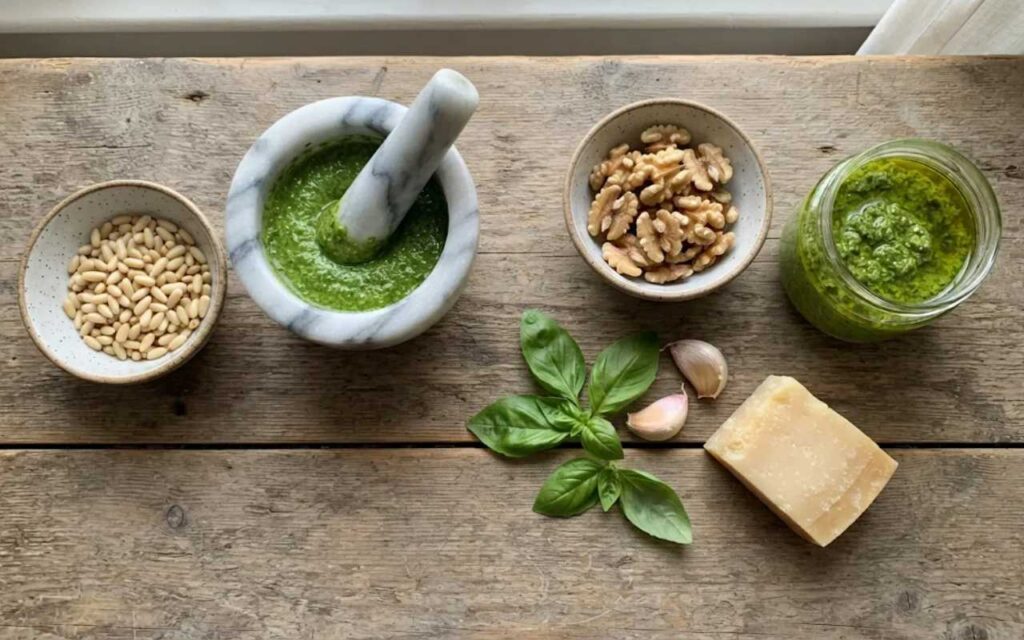
Comparing pine nuts vs. walnuts comes down to balancing traditional sweet, creamy richness against pantry-friendly crunch and earthiness. While authentic Ligurian Pesto alla Genovese relies on resinous European pine nuts (pinoli) to create a velvety emulsion with sweet basil and aged hard cheese, raw English walnuts offer a deeper, slightly tannic flavor at a fraction of the cost.
You can swap walnuts for pine nuts in almost any pesto recipe using a simple 1:1 volume substitution—or even better, match them by weight (135 to 140 grams) for identical sauce thickness. Adjusting your toasting time and adding a splash of warm pasta water keeps a walnut pesto just as smooth and vibrant as the classic Ligurian original.
Quick-Glance Kitchen Summary
Both nuts bring high natural oil content to bind fresh basil, garlic, extra-virgin olive oil, and aged cheese into a cohesive sauce. Knowing how their density, cultivar differences, and fat profiles behave in a mortar or food processor ensures a balanced result every time.
- Substitution Ratio: Swap 1 cup of chopped walnuts for 1 cup of pine nuts casually, or weigh 4.8 to 5 ounces (135–140g) of walnuts to match the true density of 1 cup of pine nuts (loose walnut halves are bulkier and weigh less per cup).
- Flavor Profile: Pine nuts taste buttery, mildly sweet, and subtly resinous; English walnuts taste earthy, robust, and slightly tannic from their papery brown skins.
- Best Walnut Cultivar: Choose light-colored Chandler walnuts for milder, less astringent skins, and avoid wild black walnuts (which overwhelm sweet basil).
- Texture Differences: Pine nuts grind into a silky, creamy paste; walnuts produce a slightly coarser, heartier emulsion.
- Relative Cost: Imported Mediterranean pinoli are an expensive specialty luxury item, whereas English walnuts are an affordable everyday baking staple.
How Pine Nuts and Walnuts Differ in Flavor and Texture
Pine nuts and walnuts differ primarily in their fat composition, skin tannins, and final mouthfeel when crushed with fresh basil. European Pinus pinea seeds lack an astringent outer skin, allowing their delicate oils to blend into a pale, sweet cream that lets Genovese basil shine.
English walnuts contain high levels of polyunsaturated alpha-linolenic acid (ALA) omega-3 fats alongside dark papery skins rich in polyphenols and tannins.
When ground raw, those skins impart a pleasant, savory astringency that stands up well to bold greens like kale or arugula, though darker walnut varieties can taste overly sharp with delicate sweet basil unless lightly toasted or blanched.
Pine Nuts vs. Walnuts Comparison
| Culinary Feature | European Pine Nuts (Pinoli) | Raw English Walnuts |
|---|---|---|
| Flavor Profile | Sweet, buttery, mildly resinous | Earthy, nutty, slightly tannic |
| Sauce Texture | Silky, velvety, ultra-smooth | Hearty, slightly rustic grain |
| 1-Cup Weight Equivalent | ~4.8–5 oz (135–140g) | ~3.5–4 oz halves (weigh 135g for 1:1 match) |
| Relative Cost | High-priced imported specialty item | Budget-friendly everyday pantry staple |
| Prep Requirement | Use raw or lightly toasted | Lightly toast or blanch skins |
| Best Pesto Pairing | Classic sweet basil & delicate pasta | Hearty greens, roasted veggies & spreads |
How to Swap Walnuts into Traditional Pesto Without Bitterness
You can swap walnuts into a traditional pesto recipe seamlessly by weighing your portion accurately, lightly toasting or blanching the skins, processing the nuts before adding basil, and emulsifying with warm cooking water. Taking two extra minutes to tame the walnut skins prevents your sauce from turning brown or tasting overly astringent.
- Measure by Weight for True Thickness: Because pine nuts pack tighter into a measuring cup than bulky walnut halves, weigh 135–140 grams (4.8–5 oz) of chopped walnuts per cup of pine nuts called for in your recipe so your pesto isn’t watery.
- Blanch to Remove Skins (Optional): Boil raw walnut halves in water for 60 seconds, drain, and rub them gently in a clean kitchen towel to slip off the bitter brown skins for an ultra-creamy, pale-green pesto.
- Toast Gently on Low Heat: Warm walnuts in a dry skillet over medium-low heat for 3 to 4 minutes until fragrant, pulling them off the burner before the skins darken and turn acrid.
- Grind Nuts and Garlic First: Pulse your cooled walnuts, garlic, and kosher salt into a fine paste before adding basil leaves so you do not over-process and bruise the herbs.
- Emulsify with Pasta Water: Whisk 2 to 3 tablespoons of warm, starchy pasta cooking water into the finished walnut pesto to loosen the thicker nut meal into a glossy sauce that clings to noodles.
Storage and Oxidation: Keeping Walnut Pesto Fresh
Walnut pesto oxidizes and turns dark faster than pine nut pesto because polyunsaturated omega-3 oils react quickly with air and light. Always store raw walnuts in the freezer before cooking so they never start off stale or rancid.
- Seal the Surface with Olive Oil: Transfer leftover walnut pesto into a small glass jar, press plastic wrap directly onto the surface—or pour a 1/4-inch layer of extra-virgin olive oil over the top—and refrigerate for up to 3 to 4 days.
- Freeze in Individual Portions: Spoon fresh walnut pesto into silicone ice cube trays, freeze until solid, and transfer the cubes to an airtight freezer bag for up to 3 months without losing bright herbal flavor.
When to Splurge on Pine Nuts vs. When to Use Walnuts
Save expensive Mediterranean pine nuts for raw, no-cook applications where pure basil aroma is the centerpiece, and reach for walnuts whenever you are making large batches or pairing pesto with robust ingredients.
- Choose Pine Nuts For: Authentic Pesto alla Genovese served over fresh trofie or potato gnocchi, Caprese salads, delicate white fish, and simple bruschetta.
- Choose Walnuts For: Weekly meal-prep batches, freezer storage, hearty winter greens (kale, spinach, or broccoli rabe pesto), grilled chicken marinades, and crusty panini spreads.
- Try a 50/50 Blend: Combine half toasted pine nuts and half blanched Chandler walnuts to capture classic buttery sweetness while keeping your grocery bill low.
Bringing Your Homemade Pesto Together
Whether you stick with traditional Italian pine nuts or reach for pantry-staple English walnuts, grinding fresh nuts with cold-pressed extra-virgin olive oil and aged hard cheese always beats store-bought jars.
Start with a 135-gram Chandler walnut swap on your next weeknight pasta batch, adjust the olive oil and pasta water for your preferred consistency, and freeze any extra cubes for quick meals.