
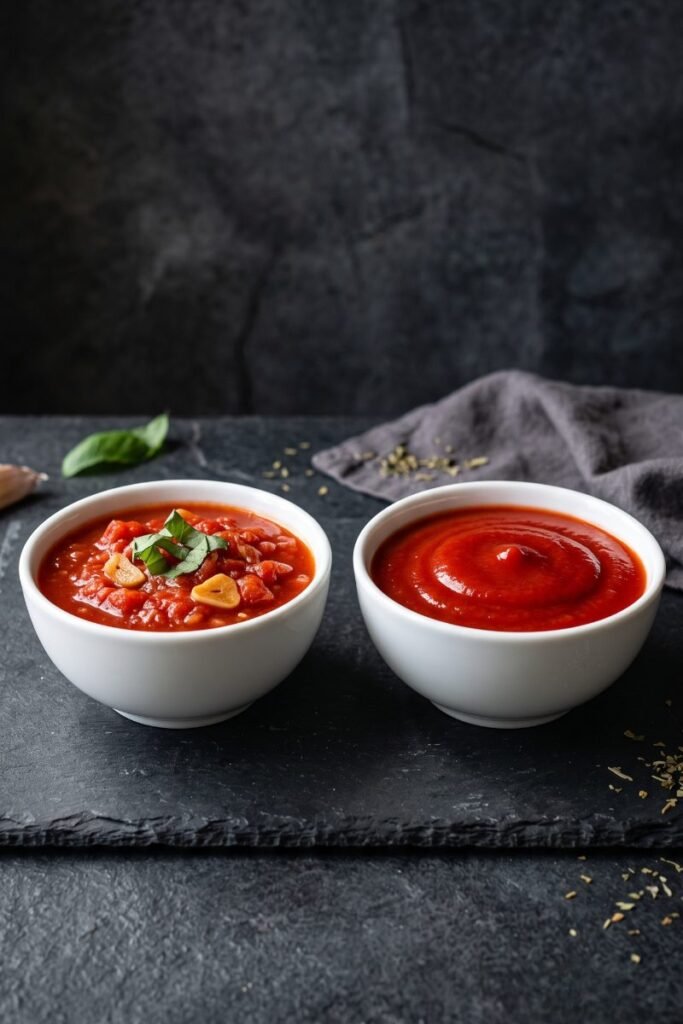
When I prepare a quick weeknight red sauce for my family table, understanding the exact difference between marinara sauce and pomodoro dictates my entire stovetop methodology. Over my years of exploring regional Italian techniques, I have treated these two vibrant bases as entirely separate culinary components rather than identical purees.
Whenever I see untrained home cooks use these terms interchangeably on their menus, I notice how it creates a fundamental misunderstanding of traditional sauce textures. For me, executing a flawless Italian meal requires respecting how simmer times and mechanical breakdown alter the physical behavior of the tomato fruit.
How Simmer Times and Liquid Reduction Affect Thickness
To understand why I manage these pots with completely different techniques, I always look closely at the physical state of the tomato solids under heat. The thickness and moisture content of my reduction determine exactly how the finished coating interacts with a hot noodle.
When I construct a loose marinara, I purposefully preserve chunks of tomato flesh so they release sporadic bursts of bright, volatile acidity on the palate. I keep the cook time minimal to prevent the delicate fruit cells from collapsing completely, leaving a light, fluid base that moves easily across the plate.
When I pivot to a true pomodoro, my goal shifts entirely toward maximizing density and uniform surface area extraction. I let the liquid simmer down slowly until the water content evaporates completely, which concentrates the natural sugars and thickens the gravy into a rich glaze.
This extended reduction time allows the natural fruit pectins to bond with my cooking fats, changing the physical weight of the sauce. I find that a properly reduced pomodoro completely coats my wooden spoon without dropping a single separate stream of water.
Secrets to Keeping a Quick Marinara Bright and Chunky
Because my marinara relies heavily on bright freshness and aromatics, I never introduce heavy vegetable purees or blended bases into the skillet. I strictly reach for this preparation when I want a rustic, highly texturized topping that lets individual garlic slices and torn basil leaves shine through.
I make sure to use a wide, shallow pan to maximize evaporation speed, forcing the tomatoes to flash-cook without losing their vibrant red hue. This fast, chunky style is an incredible contrast to the heavy, multi-hour meat reductions I use when simmering my traditional Pasta Bolognese Recipe.
For me, a perfect marinara should look loose and slightly uneven in the bowl, carrying a fresh-from-the-vine energy that wakes up the tongue instantly. I always finish it with a raw drizzle of premium olive oil right after turning off the flame to seal in those volatile aromatics cleanly.
Leaving the fruit pieces whole allows the pasta water starches to bind specifically to the rough outer edges of the pulp. This architectural link is what keeps a loose sauce cohesive without requiring heavy chemical thickening agents or tomato paste.
The Method for Developing a Silk Smooth Pomodoro Base
When I set out to create a classic sugo di pomodoro, my workflow shifts toward a highly structured, smooth consolidation process. I rely on the formal culinary definitions tracked by the official Italian Academy of Cuisine to guide my regional base reductions, ensuring I respect traditional density balances.
I start with a foundation of finely minced sweet onions and carrots (soffritto) to gently temper the natural acidity of my tomatoes over a slow, 45-minute simmer. Once the fruits are fully softened and sweet, I run the entire mixture through a food mill or immersion blender to create a completely uniform, velvet cream matrix.
This dense, silky purée provides a massive concentration of pure tomato flavor that contains absolute zero lumps or seeds. I love using this clean, concentrated sweetness whenever I need to highlight fresh garden profiles, mirroring the vibrant fruit notes I showcase inside my Easy Caprese Salad Recipe.
The blending process breaks down the cellular structures, unlocking a thick, luxurious mouthfeel that feels rich without adding a drop of heavy cream. I make sure to let it rest for ten minutes off the heat to let the textures settle before serving.
Matching Your Sauce Texture to the Right Pasta Shape
Once my respective sauce choices are ready, I let the material density of the liquid dictate exactly which shape I pull from my pantry shelves. I follow a strict personal guideline: my loose, chunky marinara belongs with thick, sturdy strands or short tubes that can physically catch the irregular pieces of tomato pulp.
Conversely, my smooth, velvety pomodoro is engineered to completely coat long, flat ribbons or thin noodles that require an even, unbroken glaze across their entire surface. If you use a chunky sauce on a fine noodle, the heavy pieces will slide straight to the bottom of your bowl, leaving the top bare and dry.
This separation totally ruins the balance of the dish, leaving your guests with dry wheat at the top and a soggy soup at the bottom. Matching the visual and physical weights of your sauce to your noodle shape is my golden law for achieving complete harmony.
Watching my smooth pomodoro cling to a twisting nest of pasta without a single drop separating into water or oil is my ultimate visual indicator of success. For me, respecting these distinct boundaries of texture is the true secret to mastering my family kitchen.