
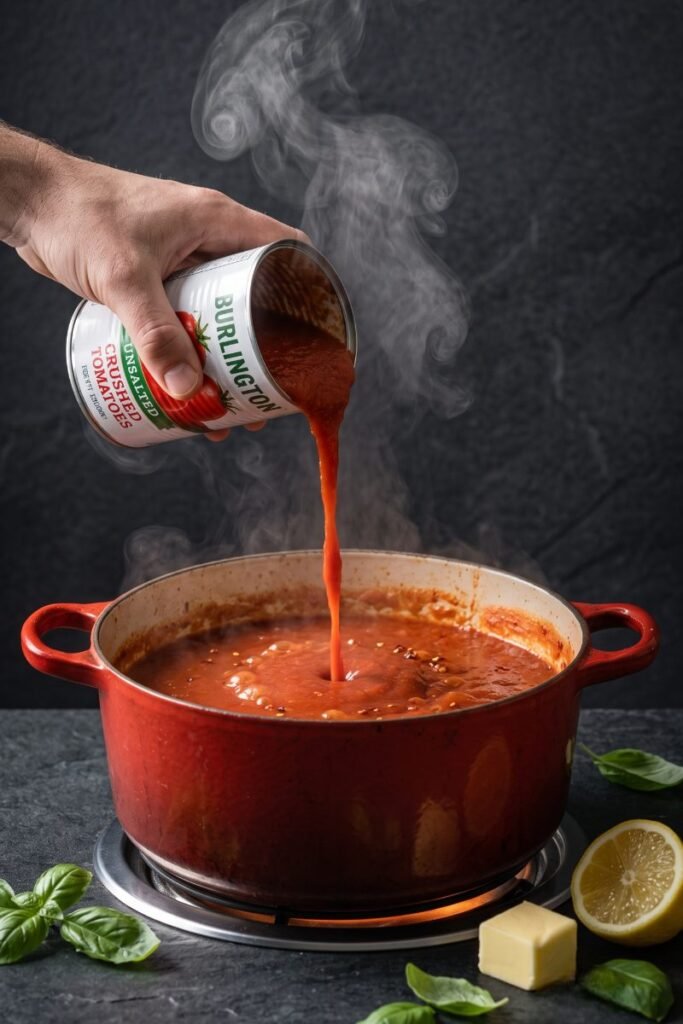
When I tip my tasting spoon to my mouth and realize a heavy hand has slipped too much sodium into my simmering pot, learning how to safely fix over-salted pasta sauce becomes my immediate stovetop mission. Over my years of executing regional Italian meals, I have treated salt balances as a dynamic scaling problem rather than a permanent disaster that forces you to throw away your ingredients.
Whenever I see casual cooks panic and dump cups of plain white sugar or industrial tap water into their pots to drown out the brine, I notice how it completely deadens the bright flavor profiles of the dish. For me, rescuing a salty pot without losing its culinary soul requires using strategic material expansions, fat coatings, and targeted acids to neutralize the sharp crystals smoothly.
How Sodium Excess Affects Your Palate and Sauces
To understand why an overly salted reduction tastes so incredibly aggressive, you have to look closely at how dissolved salt crystals interact with your taste buds. Sodium chloride completely isolates itself in liquid environments, binding directly to your mouth’s flavor receptors and blocking out the delicate sugars and volatile aromas of the tomato fruit.
If you leave a heavy pot simmering for too long on the burner, the water content will continue to escape as steam, leaving behind a hyper-concentrated sodium puddle. I have watched this moisture loss amplify a minor over-salting mistake into a major disaster, a concentration hazard I watch closely when balancing reduction times for my Homemade Tomato Sauce Too Watery guide.
To fix the issue without creating a runny mess, you must expand the overall volume of your solids rather than simply flooding the pan with flavorless liquids. This structural expansion stretches the salt particles across a larger surface area, instantly dropping the overall percentage of sodium in every single forkful.
Diluting the Brine by Expanding Your Material Volume
My absolute primary method for rescuing a ruined pot is to stir in an extra batch of completely unsalted tomato pulp or paste to absorb the excess sodium naturally. I follow the beginner-friendly culinary boundaries and flavor recovery parameters outlined inside the Epicurious Guide on How to Save Over-Salted Food to safely guide my ingredient proportions.
Adding a half-can of unseasoned crushed tomatoes introduces massive networks of fresh, un-salted sugars and fiber matrices into the pan. These fresh fruit walls grab onto the loose salt ions, pulling the entire mixture back into a perfectly balanced flavor window within ten minutes of simmering.
If expanding your sauce volume leaves you with far too much liquid for your dinner layout, you can easily pivot and use that extra red base to coat a separate batch of fresh, un-salted dough. This volume expansion is an incredible pairing shortcut to use right before folding your reductions into a light, airy mound of my Ricotta Gnocchi with Sausage.
Using Rich Fats and Dairy to Coat Your Taste Buds
If your cooking pot is already filled to the absolute brim and you cannot physically add more tomato volume, your next best move is to use rich, silky fats to shield your palate from the bite. Swirling a generous pat of unsalted butter or a heavy splash of heavy cream into the bubbling red liquid does wonders for the texture.
These heavy dairy fats do not actually delete the salt particles; instead, they create a physical, oily barrier that wraps around the sodium crystals. When you take a bite, this fat jacket slows down how fast the salt hit can bind to your tongue, smoothing out the aggressive edges beautifully.
I prefer to save this dairy intervention specifically for robust, heavy meat gravies or smooth vodka purees that can naturally handle the added richness. The fats melt into the acid cleanly, delivering a luxurious mouthfeel that makes the initial mistake completely unnoticeable to your dinner guests.
Balancing Sharp Flavors with a Splash of Kitchen Acid
The final trick in my survival kit relies on using bright, contrasting acids to confuse your taste buds and distract them from the underlying saltiness. Squeezing a few drops of fresh lemon juice or adding a small splash of red wine vinegar into the pan triggers a powerful sensory distraction.
The sharp citric or acetic acids wake up the sides of your tongue, tricking your brain into focusing on the bright, mouth-watering sour notes instead of the heavy sodium weight. You must add these acidic elements slowly, using just a half-teaspoon at a time while stirring constantly over a gentle medium flame.
If you rush this step and dump too much acid in at once, your sauce will curdle or turn unpleasantly sour, completely ruining the natural sweetness of the fruit. For me, taking a calm, step-by-step approach to adjusting your volumes, fats, and acids is the ultimate kitchen secret to saving your family table.