
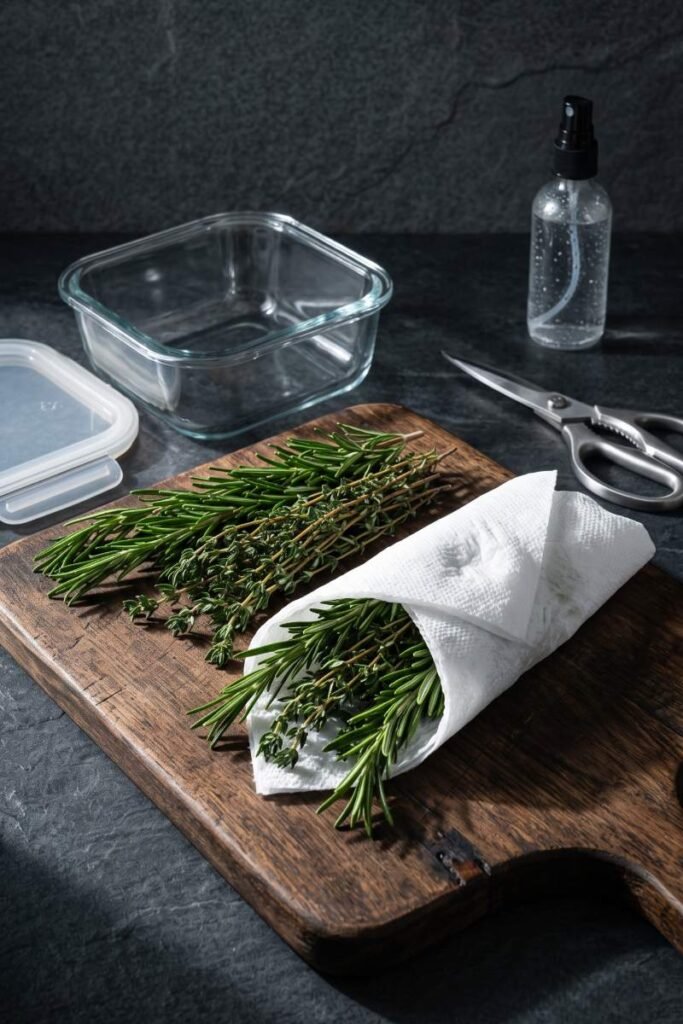
When I snip a woody sprig from a bundle to slow-roast inside a heavy pan of meat, learning how to store fresh rosemary and thyme is the absolute ultimate rule required to prevent your woody herbs from drying out into brittle pine needles or rotting into a gray sheet of mold. Over my years of managing dense Mediterranean evergreens and resinous essential oils, I have treated the tough, fibrous cell structures of hardy perennials as a serious environmental hydration problem rather than a matter of lucky timing.
Whenever I see amateur home cooks toss an uncovered bundle of woody stalks directly onto a wet refrigerator shelf or drop them into an open glass jar of water like soft basil, watching the leaves waterlog and turn into a black, slimy mess within days, I notice how incorrect storage geometry ruins the harvest. For me, delivering a true garden-fresh pine aroma requires keeping your needles properly chilled, wrapping the stalks inside a damp breathable microclimate, and locking out moving air currents inside an airtight seal.
Why Mediterranean Stem Cells Reject Open Water Jars
To understand why a treatment that preserves delicate green bouquets so beautifully causes a hardy evergreen branch to decay so rapidly, you have to look closely at the plant’s native climate origins. Rosemary and thyme are structurally engineered to thrive in arid, rocky soils across the sun-drenched Mediterranean coast, building dense, needle-like leaves covered in a thick, waxy cuticle layer designed to trap moisture and repel external water droplets.
When you stand these woody stems upright inside an open jar of tap water on your counter space, the vascular tracks pump a massive, unneeded volume of fluid straight into a leaf matrix that is built to survive droughts. This severe fluid overload swells the internal plant cells beyond their intended structural elastic limits, causing the cell walls to rupture and leak their internal sap directly onto the surface of the sprigs.
This trapped, pooling liquid instantly breaks down the protective waxy shield, providing an open invitation for opportunistic cold-tolerant molds and spoilage bacteria to consume the plant sugars. I manage these exact moisture-containment failures constantly when adjusting raw environmental microclimates on my station, a structural fluid balance rule I track closely whenever I want to preserve firm, high-bite structures inside my guide explaining What Does Al Dente Actually Mean?.
Without these waxy defensive walls working effectively inside your cold storage vaults, the aromatic evergreens quickly lose their piney terpenes, turning into a slick, damp slurry that leaves an unappealing, sour trace across your cutting board.
The Damp Swaddle Method for Total Ambient Climate Equilibrium
My absolute baseline technical rule for extending the lifespan of your resinous herb bundles relies on constructing a custom, insulated paper envelope that maintains total moisture balance throughout the cooling cycle. I follow the strict hydration boundaries, respiration profiles, and herb-handling guidelines documented inside the official The Kitchn Herb Storage Manual to keep my green bundles pristine.
When you bring your fresh sprigs home from the market, do not wash them under cold running tap water, as introducing unneeded surface moisture before storage guarantees rapid microbial decay. Lay a clean, dry sheet of heavy-duty paper towel across your counter space, and mist it lightly with a spray bottle until it feels barely damp to the touch, ensuring it is never soaking wet or dripping fluid.
Arrange the raw rosemary and thyme sprigs in a single, neat layer across the paper, then roll the sheet up loosely to create a breathable, insulated swaddle around the vegetation. Slide the paper bundle into a heavy-duty plastic storage bag and press the sides gently to expel the excess air before zipping the track shut.
The damp paper towel acts as a self-regulating moisture reservoir, providing just enough humidity to stop the needles from drying out into woody sticks while the sealed plastic canopy blocks moving refrigerator air currents from sap-draining evaporation.
Simple Crisper Drawer Mapping to Prevent Cellular Freezing
The final law for extending the lifespan of your hardy herb investments requires mapping your sealed storage containers into the exact correct thermal zone inside your refrigeration appliance. Never place your delicate plastic herb pouches on the top shelf near the main cold air intake blower or at the absolute back of the bottom shelf space.
The area directly beneath the primary cooling elements runs dangerously close to the freezing mark, a harsh microclimate that forms microscopic ice crystals inside the plant tissue that tear through the dense cell walls and leave the piney needles black and limp upon thawing. Conversely, storing your herbs inside the thin plastic shelves of the appliance door exposes the waxy sprigs to massive thermal spikes every single time you swing the door open to grab ingredients.
Slide your swaddled herb containers directly into the center of the dedicated vegetable crisper drawer, and adjust the manual ventilation slider toggle to the “closed” or high-humidity setting. This insulated pocket maintains a rock-solid, stable forty-degree cold zone that slows down the natural decomposition clock without endangering the delicate structure of the plant cells.
I know my asset management is fully successful when I open a two-week-old pouch and pull out crisp, rigid sprigs that release a vibrant, piney, and woodsy punch the exact second my chef’s knife slices through the stems. Taking the extra three minutes to wrap your evergreens inside a damp paper swaddle and balance your crisper drawer heights is the ultimate kitchen secret to delivering an elite meal to your family table.