
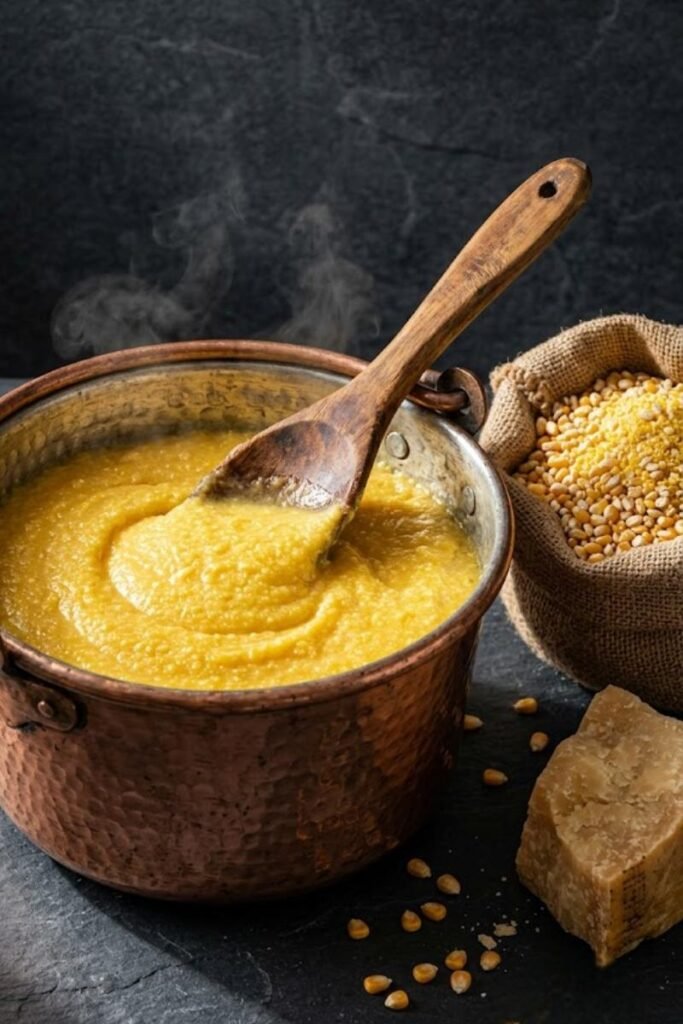
When I rain a steady stream of golden cornmeal into a copper pot of boiling water, understanding what is polenta is the ultimate step required to transform basic flint corn into a velvety masterpiece. Over my years of stirring simmering starches and managing hot grain porridge, I have treated endosperm hydration curves and starch cell bursts as strict material rules.
Whenever I see untrained home cooks dump a cup of dry meal straight into a pot of cold water and boil it without constant whisking, it completely hurts the dish. Watching the mixture seize up into dense, gritty, and under-cooked lumps shows how poor hydration habits ruin the grain.
For me, delivering an elite restaurant-quality tableside finish requires understanding how flint corn starch expands under wet heat. This continuous quality control ensures your corn meal absorbs maximum moisture, a structural standard I maintain across my entire kitchen layout when sorting grain selections inside my guide on The Best Store-Bought Dried Pasta Brands Recommended by Chefs.
How Milling Methods and Flint Corn Endosperms Shape the Porridge
To understand why this rustic northern Italian specialty behaves so uniquely inside a heavy saucepan, you have to look closely at grain anatomy and milling styles. True Italian polenta is milled specifically from yellow flint corn, an ancient variety featuring an incredibly dense, glassy starch core that resists shattering under milling stones.
This dense endosperm structure yields coarse, angular grains that retain a distinct toothsome bite even after prolonged boiling sessions. Standard American cornmeal, by contrast, is typically ground from soft dent corn, which dissolves into a smooth, floury mush that lacks the necessary physical integrity.
When coarse flint corn grains hit a boiling liquid, the internal starch networks absorb water at a highly measured pace, expanding gradually over an extended thermal window. This slow hydration forces the grain cells to release a steady stream of natural amylose starches into the cooking water, binding the independent grains into a thick, glossy emulsion.
Without this careful granular swelling, the broken cells cannot build a cohesive matrix, leaving your porridge watery on top and rough on the bottom. Respecting the milling dynamics of flint corn prevents this structural separation, ensuring your corn bits suspend perfectly within the liquid emulsion for a clean finish.
The Chemistry Behind 45-Minute Raw Starch Gelatinization
The single greatest difference separating an authentic, slow-cooked masterpiece from a fast weekday shortcut lies in factory processing. I follow the strict hydration ratios, starch swelling limits, and cornmeal testing benchmarks documented inside the official Serious Eats Smooth and Creamy Polenta Guide to keep my pan environments clean.
Traditional raw cornmeal requires a full forty-five minutes of steady, low-heat bubbling to crack open the tough outer cellulose walls of the coarse flint grains. As you turn your wooden spoon through the thick mass, the constant mechanical shearing encourages the emerging amylose molecules to cross-link with the water, creating a rich, spreadable gel.
Instant, or quick-cooking, alternatives completely bypass this extended stovetop labor by subjecting the raw cornmeal to an industrial steam-cooking and dehydration process before packaging. When you drop these pre-gelatinized grains into hot water, the pre-shattered starch cells re-hydrate instantly within five minutes, absorbing water like an edible sponge.
While this rapid swelling saves massive amounts of time on a busy evening, it completely prevents the gradual development of complex, nutty corn sugars, yielding a flatter flavor profile and a looser texture. The short preparation window fails to break down the natural grains into a velvety suspension, often leaving behind a flat porridge that sags on the plate.
Splitting Liquid Ratios to Achieve a Creamy Tableside Pour
The final law for successfully executing your cornmeal assets requires selecting the exact correct liquid ratio to achieve total starch equilibrium during the boiling cycle. For a traditional pourable porridge that spreads smoothly across a rustic wooden serving board, implement a strict 4-to-1 liquid-to-cornmeal volume ratio.
Completely banish plain tap water from your pot wells, as a lean water base fails to introduce any savory glutamates to enrich the unrefined corn starches. Instead, split your liquid base evenly between high-clarity vegetable broth and rich whole milk to build a smooth, savory foundation that honors the grain.
Bring the seasoned broth and dairy liquid to a rolling boil over a medium flame, then rain the dry cornmeal into the pot in a slow, steady stream while whisking the water aggressively. This gradual introduction ensures every independent grain is fully coated in hot liquid before it can clump together into a dry mass.
Once the porridge thickens and starts releasing lazy steam bubbles, swap your wire whisk for a heavy wooden paddle spoon to scrape the pan floor cleanly. I know my thermal hydration strategy is fully successful when the cooked mass pulls away from the copper walls in a single, glossy wave, leaving behind a thin, toasted crust.
Stir in a generous pat of cold butter and a handful of freshly grated Parmigiano-Reggiano right before pouring the mixture onto your serving plates. Taking the extra time to separate your milling styles and respect the starch gelatinization windows is the ultimate kitchen secret to keeping your Italian dinner line elite.