
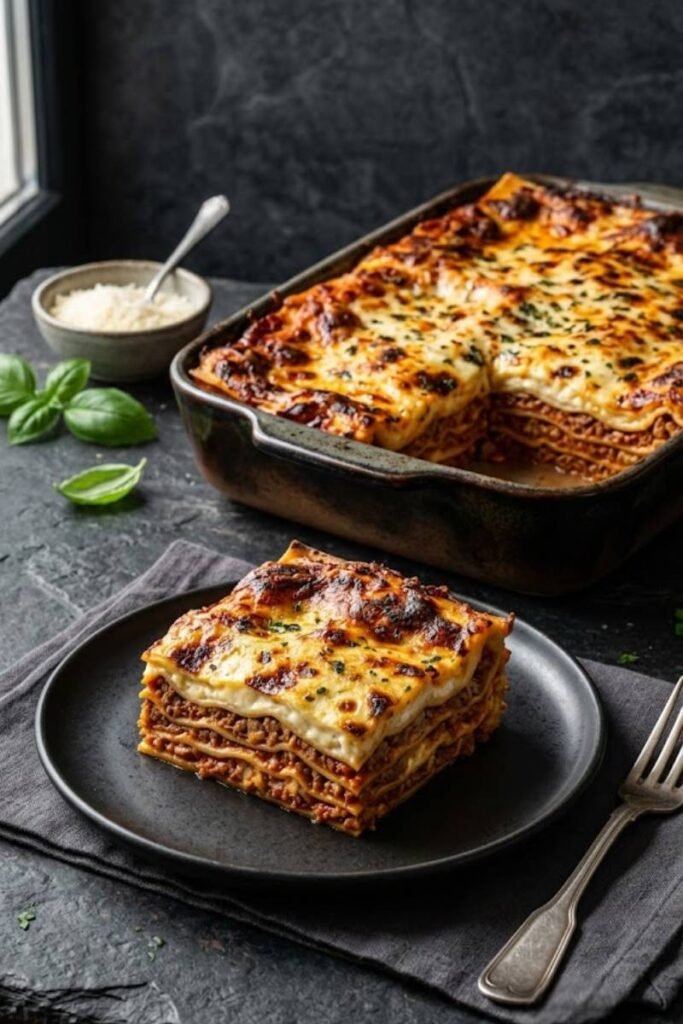
When I lift a heavy ceramic baking dish out of a roaring oven, mastering how to fix watery lasagna is the ultimate structural recovery step required to keep layered elements from collapsing into a soup puddle on the plate. Over my years of managing busy service stations, I have treated moisture evaporation and cheese whey drainage as serious thermodynamic variables.
Whenever I see amateur home cooks slice into a bubbling pan straight out of the fire, watching the layers instantly slide apart while a muddy pool of liquid fills the dish channel breaks my heart. Watching expensive meat and dairy fillings slosh into a soupy mess shows how poor ingredient preparation instantly compromises your work.
For me, delivering an elite restaurant-quality slice simply requires binding your raw fillings with precise moisture traps before the layers hit the heat. This continuous structural protection guarantees your pasta sheets absorb excess fluids smoothly, an engineering standard I maintain inside my guide analyzing Ricotta Cheese vs. Cottage Cheese for Lasagna.
Three Early Structural Moisture Traps to Check Before Assembly
To understand why this layered architectural classic fails so aggressively inside a hot baking dish, you have to look closely at raw ingredient hydration and vegetable cell wall collapse under heat. The single most common culprit behind a loose, floating pasta pan is utilizing a wet, watery red sauce that hasn’t been properly reduced on the stove.
When you stack un-boiled or no-boil noodles with a standard, fluid marinara sauce, the high thermal heat drives off the water content from the crushed tomatoes, turning your structural boundaries into loose channels. You must simmer your meat or tomato reduction down until it takes on a thick, spreadable paste-like integrity that holds its shape against the side of your wooden spoon.
The second massive moisture trap hides directly inside your white dairy layers, particularly if you rely on low-cost grocery tubs of commercial whole-milk ricotta cheese. Mass-produced cheeses are packed with loose liquid whey that separates aggressively the exact second the proteins reach a boiling heat inside the oven.
To block this liquid release completely, dump your raw ricotta into a fine wire mesh strainer lined with cheesecloth, placing a heavy bowl on top to force out the excess fluids overnight. This simple extraction process leaves behind a dense, creamy curd that binds with your grated eggs and melted cheese smoothly without sweating into the pasta grids.
Finally, if your custom family recipe includes popular garden fillings like sautéed spinach, mushrooms, or fresh zucchini ribbons, you are introducing an immense volume of hidden cellular water. Raw vegetables act like literal edible sponges, holding massive reservoirs of moisture that dump straight into your dish as the heat ruptures their outer cellulose walls.
Always sauté your garden fillings separately over a high flame to char the skins and evaporate their internal moisture completely before stacking them. Dump the cooked vegetables onto a sheet of thick paper towels and wring the mass out aggressively to remove any remaining liquid droplets before assembly.
The Serious Eats Blueprint for Boiling and Venting Starch Layers
The operational secret to ensuring your pasta ribbons absorb excess cooking moisture instead of swimming in it relies on selecting your dough boiling methods carefully. I follow the strict noodle hydration curves, pan venting schedules, and structural starch insulation parameters documented inside the official Serious Eats Lasagna Assembly Guide to keep my layered casserole settings completely pristine.
- Avoid Over-Boiling Wavy Noodles: If you use traditional ruffled curly edge box noodles, boil them until they are just short of al dente. If you cook them completely soft, they lose their ability to absorb the natural fats bleeding from your pork and beef.
- Dry Your Noodle Strands Completely: Never lift wet, dripping pasta ribbons straight from the boiling water channel into your ceramic pan floor. Lay the cooked sheets out flat across clean linen kitchen towels to absorb the surface water film before layering your cheese.
- Implement an Open-Vent Foil Schedule: Bake your assembled pan covered tightly with aluminum foil for the first forty minutes to trap the hot steam and soften the wheat grids evenly. Remove the foil completely for the final fifteen minutes of the baking cycle to let the surface moisture evaporate into the oven air.
Leaving the foil cover on for the entire duration of the heating cycle creates an enclosed pressure cooker environment that keeps your sauce watery. Exposing the bubbling top layer to direct oven heat dries out the surface fluids, transforming the top cheese layer into a beautiful, crispy golden-brown shield.
Slicing Strategies to Save a Soupy Casserole After the Bake
The final law for successfully salvaging your layered creation requires mastering the physics of cooling thresholds right after you turn off the oven timer. When your pan emerges from the oven wells, the internal cheeses are completely liquid, the sauce fats are melted into a loose broth, and the pasta starches are hot and unstable.
If you make the mistake of driving a sharp steel knife into the hot mass within the first ten minutes, the structural walls will instantly collapse, turning your dinner into a messy puddle. You must allow the hot pan to sit uncovered on a wire cooling rack at room temperature for a minimum of 25 to 30 minutes before slicing.
As the internal temperature drops slightly, the hot starch cells inside your pasta sheets expand, acting like miniature pumps that reabsorb the loose tomato liquids and meat fats. At the same time, the melted mozzarella and drained ricotta tighten up into a firm matrix, locking the independent meat and pasta layers securely together.
If your lasagna still looks completely flooded with liquid after sitting for twenty minutes, use a small metal turkey baster or the edge of a ladle to carefully suction the surface fats away from the corner crusts. Use a long, serrated bread knife instead of a smooth chef’s knife to slice the set mass, cutting cleanly through the pasta sheets without squeezing the cheese layers out the sides.
I know my moisture management strategy is fully successful when each square lift slides onto the dinner plate as a firm, vertical block that showcases its independent layers perfectly. Taking the extra time to drain your dairy bases and respect the starch setting windows is the ultimate kitchen secret to keeping your Italian family bakes elite.