
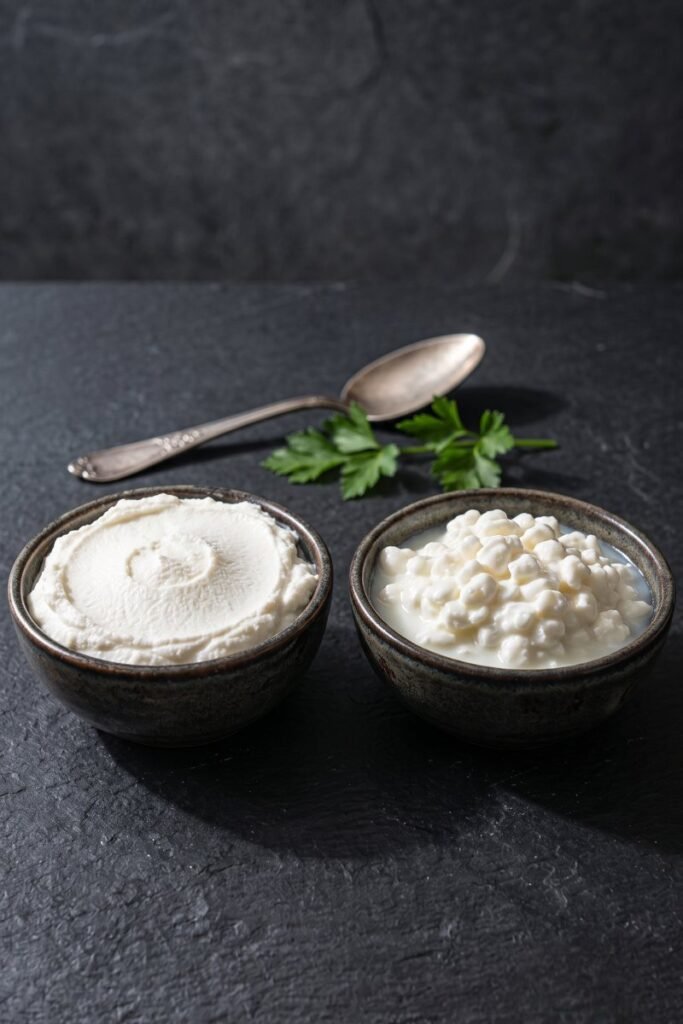
When I line up my structural layers inside a deep baking dish on a Sunday morning, understanding the exact chemistry of Ricotta Cheese vs. Cottage Cheese is the absolute foundation required to hold your pasta sheets together under intense heat. Over my years of building regional Italian bakes, I have treated the internal fat boundaries, curd sizes, and moisture weeping tendencies of different dairy tubs as serious material engineering variables rather than simple taste options.
Whenever I see casual home cooks swap these two white tubs interchangeably because they look similar in the supermarket dairy aisle and wonder why their dinner slides into a loose, soupy mess, I notice how a lack of composition knowledge limits the meal. For me, delivering a pristine, non-sagging restaurant-quality square requires analyzing how the heat of your oven forces different proteins to coagulate so your layers remain perfectly defined.
How Whey Processing and Acid Curds Change Your Baked Layers
To understand why these two dairy staples perform so differently inside a hot oven, you have to look closely at their raw production methods. Real Italian ricotta is produced by reheating the leftover sweet liquid whey left behind during primary cheese production, a process that cooks the delicate albumin proteins until they knit together into ultra-fine, feather-light curd sheets.
This processing method yields a uniform, spreadable paste that locks its structural fat pockets tightly inside the protein web, keeping the moisture fully bound even when exposed to high stovetop temperatures. Cottage cheese is produced using fresh pasteurized skim milk that is coagulated with food acids or live enzymes to form distinct, rubbery pockets of casein curd floating in a pool of loose liquid cream.
Because these lumpy curds are separate, individual elements rather than a bound mass, they carry a high volume of un-bonded surface water that separates instantly when the container hits the heat of a baking dish. This loose liquid migrates outward, dissolving your surrounding structural starches and leaving your casserole sheets floating in a wet, slippery mush that cannot carry its own weight on a serving spatula.
Managing these structural protein boundaries perfectly prevents loose, sliding layers, a structural rule I rely on when assembling deep, non-sagging pasta rows inside my guide to High-Quality Dried Pasta.
The Structural Danger of Whey Weeping Under Intense Oven Heat
The single greatest threat to a beautiful, clean slice of lasagna happens when loose casein moisture leaks into your baking layers faster than your pasta dough sheets can absorb the steam. I follow the technical dairy guidelines, macro-nutrient density tables, and legal composition standards managed inside the official Bon Appétit Food Science Index to monitor my kitchen ingredient variables.
When you spread a tub of cottage cheese between noodle layers and bake the dish at 375 degrees, the heat breaks down the loose skim milk casein boundaries within fifteen minutes. Because cottage cheese possesses a low melting threshold, the individual lumps melt down and release their entire liquid whey volume straight into the center of the pan.
This fluid flood instantly mixes with your ragù, turning a slow-cooked sauce into a thin, watery broth that washes away your shredded mozzarella seasoning. Instead of setting into a firm, sliceable framework, the interior of the lasagna remains loose, soupy, and completely incapable of holding its border clean when cut with a knife.
Mastering Ricotta Blends for Cohesive Pasta Foundations
When my goal for the evening is to assemble a robust, multi-layered classic bake that cuts into perfect geometric squares, premium whole-milk ricotta is my non-negotiable choice. The dense whey protein structure allows you to build a thick, spreadable dairy layer that acts like an edible mortar between your starch sheets.
To maximize the structural strength of this whey curd, always stir a raw whole egg and a half-cup of grated hard cheese directly into the bowl right before you begin building your layers. The heat of the oven causes the egg whites to coagulate, trapping the fine ricotta grains inside a firm, fluffy matrix that holds its shape perfectly under the weight of heavy meat sauces.
This firm, egg-bound dairy sheet stays exactly where you spread it, guaranteeing every single slice carries an elite mouthfeel from the top crust down to the pan. The dense protein matrix forms a tight seal against moisture migration, holding the heavy layers beautifully in line without sagging onto the serving plate.
Simple Stovetop Rules to Save a High-Moisture Batch
The final law for managing your dairy profiles requires implementing an aggressive straining session if you ever find yourself forced to work with a wet grocery store tub. If you crack open a tub of ricotta and find a layer of clear water pooling on the surface, never scoop that wet curd directly onto your pasta sheets without treating it first.
Line a large fine-mesh kitchen strainer with a double layer of cheesecloth, dump the white paste into the center, and let it drain over a deep bowl inside your refrigerator for at least two hours before assembly. This easy compression step forces the loose, unbound water to bleed away completely, concentrating the rich milk solids and dropping the hydration down to a safe level.
I know my dairy preparation is completely successful when the drained cheese holds a stiff, matte peak on my wooden spoon without weeping a single drop of loose liquid onto the cutting board. For me, taking the extra time to separate your whey and manage your protein density is the ultimate secret to delivering an elite meal to your family table.