
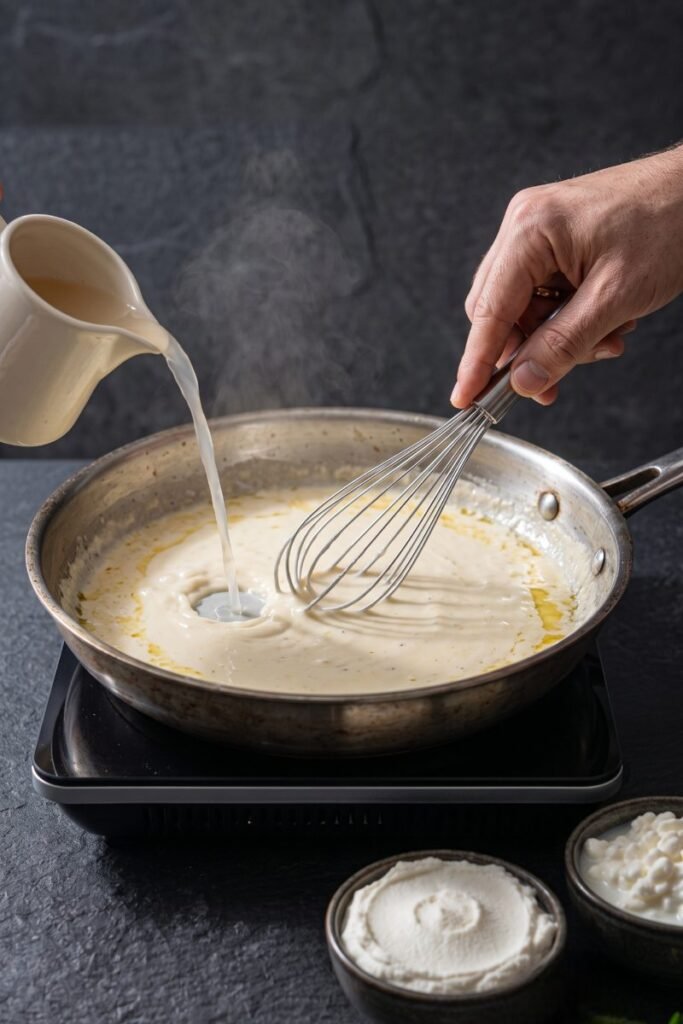
When I run a heavy wooden spoon across the bottom of a skillet and watch a smooth reduction dissolve into a grainy, curdled mess, learning how to safely fix gritty, separated cheese sauces is the ultimate rescue skill every home cook needs to save dinner. Over my years of melting down high-end dairy coatings, I have treated texture breaks and oil separation as precise thermodynamic balance problems with simple chemical solutions.
Whenever I see amateur cooks panic when an Alfredo emulsion breaks, cranking up the burner dials or throwing raw flour blocks into the grease to soak it up, I notice how aggressive habits ruin the pan. For me, breathing smooth life back into a broken skillet coating requires lowering your cooking temperature immediately, introducing starchy binders, and applying vigorous mechanical agitation to bind the fats.
Why Excessive Thermal Energy Triggers Grainy Emulsion Collapses
To understand why a luxurious dairy reduction can split into an unappealing pool of clear grease and rubbery lumps within seconds, you have to look closely at protein physics. A proper Italian emulsion is a delicate molecular balance where natural milk fats remain suspended inside a protective wet web of water and dairy proteins.
When you expose a delicate cheese layer to intense, direct stovetop heat over a high flame, that thermal shock forces the tightly wound proteins to rapidly tighten and squeeze inward. This aggressive tightening action causes the proteins to bind tightly to one another, forming hard, rubbery micro-curds that register across your palate as an unpleasantly gritty texture.
As the protein web collapses, it completely drops its hold on the suspended lipids, allowing the clear oil droplets to rise to the surface and float away as a slick film. I manage these exact fat-suspension dynamics constantly when balancing rich pan coatings, a texture-separation issue I detail inside my guide on troubleshooting a Homemade Tomato Sauce Too Watery base.
The Mechanical Power of Adding Starchy Water and Cream Buffers
My absolute baseline technical rule for pulling a separated pan layer back from the brink of disaster relies on introducing immediate hydration and binding starches. I follow the technical pan-emulsification parameters, protein-to-fat stabilization metrics, and temperature thresholds documented inside the official Serious Eats Cheese Sauce Science Guide to safely execute my kitchen rescues.
The exact second you notice clear fat streams bleeding away from the main sauce body, slide the pan onto a cool counter surface to halt the overheating cycle. Splash two tablespoons of cloudy, starch-heavy pasta water or a stream of fresh heavy cream directly into the broken matrix to serve as a liquid buffer.
The loose starches and fresh lecithin proteins inside these liquids act as molecular anchors, latching onto the loose grease droplets on one side and the water phases on the other. Take a firm metal wire whisk and beat the mixture in rapid circular paths, using high-speed mechanical force to whip the separated elements into a uniform cream.
Selecting Un-Adulterated Aged Wheels for Smooth Skillet Melting
The ultimate secret to keeping your hot dairy reductions from breaking into a grainy paste in the first place requires selecting your primary ingredients with absolute purity in mind. Never attempt to build a luxurious Alfredo or white cream reduction using pre-shredded cheese packages from the commercial supermarket aisle.
Those convenience bags are heavily treated with dry anti-caking additives like microcrystalline cellulose and potato starch powders, which absorb moisture and physically prevent the proteins from joining together smoothly in the pan. Instead, purchase solid wedges of real aged cheese and grate them by hand using a sharp microplane right over your workspace before cooking.
Finely microplaned flakes feature a high surface-area-to-mass ratio, allowing the hard dairy fats to dissolve evenly the exact millisecond they contact gentle pan steam. I rely on this hand-grating rule to guarantee total pan fluid control, a material standard I focus on inside my guide on Why You Should Never Buy Pre-Shredded Parmesan Cheese (The Cellulose Problem).
Simple Stovetop Rules to Maintain Perfect Sauce Density
The final law for mastering your cheese reductions requires keeping your stove temperatures locked firmly within a low, gentle simmer window throughout the assembly process. Once your pasta noodles are transferred into the skillet, turn your burner dial down to medium-low, ensuring the sauce bubbles lazily but never breaks into a rolling boil.
Continuously lift and fold the noodles using long kitchen tongs, forcing the starches sloughing off the wheat walls to blend into the warming dairy fats. If the reduction begins to look tight or pasty before serving, slide a small ladle of cooking water into the metal to loosen the glaze safely without splitting the emulsion.
I know my stovetop process is completely successful when the cheese reduction achieves a uniform, glossy sheen that wraps around the noodles like a tight jacket without leaving grease trails on the plate. Taking the extra time to manage your pan temperatures and incorporate starch buffers is the ultimate kitchen secret to delivering an elite meal to your family table.