When setting up my table for guests, understanding the difference between an antipasto and an aperitivo is the ultimate step required to structure a traditional regional meal.
Over my years of laying out charcuterie spreads and pouring dry vermouth, I have treated hospitality pathways, menu progressions, and digestive timelines as exact cultural guidelines rather than loose choices.
Whenever I see untrained hosts serve heavy cheese wedges alongside syrupy sweet cocktails right before sit-down pasta courses, it hurts the appetite. Watching diners fill up on dense fats before their main dinner plates even clear the stove shows how poor menu architecture ruins the flow.
For me, executing an elite Italian hospitality layout simply requires managing your social staging areas perfectly. You must balance bitter alcohol markers against cured, unsmoked pork slices so each independent phase primes your guests’ palates for the warm courses to follow.
The Bitter Chemical Prelude of the Pre-Dinner Drink
To understand why a true Italian evening separates its liquid arrival drinks from its initial sit-down food platters, you have to look closely at gastric biology and appetite stimulation. The word aperitivo originates directly from the Latin verb aperire, a term translating to “to open,” which perfectly describes the ritual’s core physical purpose.
When guests stand in your kitchen or lounge areas before dinner, serving a dry, bubbly beverage like prosecco, a bitter Negroni, or a crisp Spritz triggers an immediate biological reaction. The complex bitter botanical profiles found in Italian amari and vermouths signal your stomach to release digestive enzymes and gastric acids immediately.
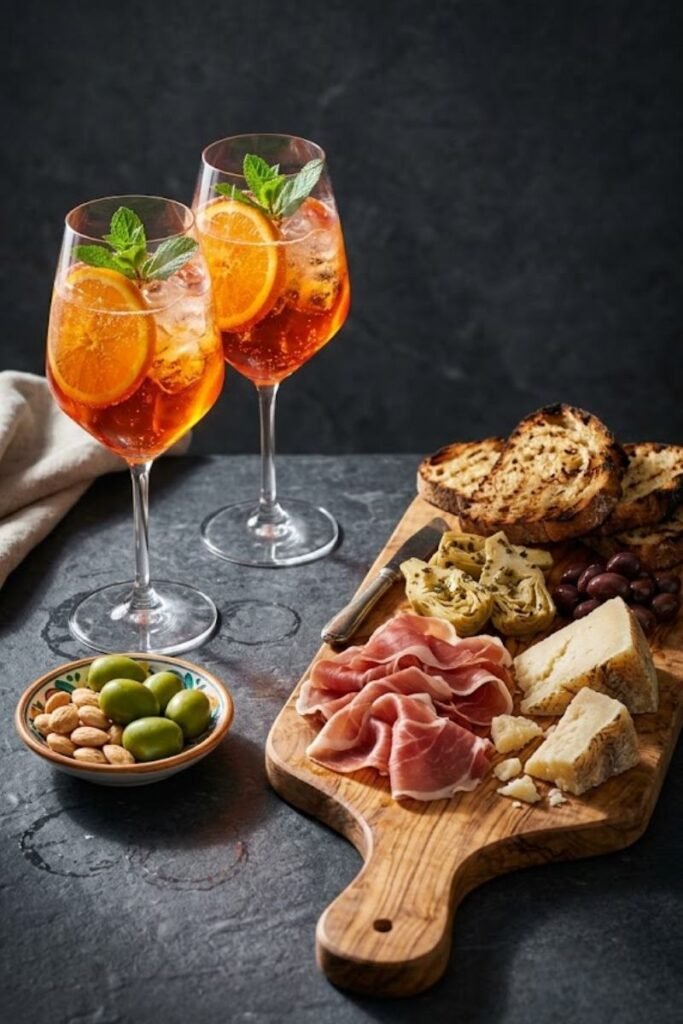
To complement this chemical acid spike without deadening the palate, pair these drinks exclusively with small, high-sodium snacks like green Cerignola olives, roasted almonds, or simple potato chips. The light salt coating cuts through the sharp alcohol heat, waking up your guests’ energy zones without introducing heavy, filling fats that slow down digestion.
This targeted biological priming sets a clean metabolic standard across your evening floor, ensuring your guests build a genuine, deep-seated physical hunger without feeling weighted down by excessive early snacking.
The First Table Course for Opening Your Taste Buds
The exact second your guests move away from the lounge space and take their seats at your set dining table, the pre-dinner drinking clock ends, and the antipasto phase officially begins. The term literally translates to “before the paste” or “before the meal,” serving as the structured entry point for all multi-course menu layouts.
I follow the strict menu progression scales, traditional course mappings, and serving size boundaries documented inside the official Food Network Component Index to manage my table layouts cleanly. Unlike the generic snack bowls used during arrival drinks, an authentic sit-down platter features raw, high-quality pantry preserves that require minimal stove interaction.
Arrange premium slices of unsmoked pork belly, aged sheep’s milk wheels, and marinated artichoke hearts across large wooden boards. These dense, savory elements introduce structural protein blocks that anchor your guests’ palates, paving the way for the carb-heavy first course that follows.
By anchoring your sit-down board with these unheated, intensely savory elements, you effectively bridge the gap between liquid refreshment and cooked food. The raw acidity of marinated vegetables and the salty depth of the charcuterie stimulate the salivary glands, ensuring every mouthfeel remains balanced and fully responsive.
Balancing Your Fat Cures to Protect the Hot Pasta Phase
The final law for managing your dinner timeline requires keeping a firm hand over your portion weights so you never over-saturate your guests before the hot starches arrive. When building your sit-down platters, completely banish heavy, pre-packaged snack crackers or dense, garlic-heavy bread baskets that can quickly bloat a diner’s stomach.
Instead, layout thin ribbons of premium dry-cured pork alongside raw vegetable strips or light grissini sticks to provide a clean, satisfying snap that keeps the palate light. This portion discipline ensures your guests keep a sharp, eager appetite for your hot courses, a tracking focus I maintain across my entire kitchen station.
I prioritize these exact structural sequence rules whenever I map out multi-tiered Italian dinner structures, a fluid timeline I balance carefully inside my product breakdown on selecting the What is Pancetta? (And How It Differs From Regular American Bacon) for my hot pan reductions.
I know my service sequence is completely successful when the empty charcuterie boards are cleared away to reveal a table of guests who feel energized, clear-palated, and fully primed to dive into a streaming bowl of al dente pasta. Taking the extra five minutes to separate your social drinking circles from your sit-down platters is the ultimate kitchen secret to delivering a flawless, regional dining experience to your family table.
Maintaining this rigorous structural segregation across your menu timeline preserves the chemical progression of the meal, preventing palate fatigue and ensuring your main hot entrees shine as the true centerpiece of the evening.