
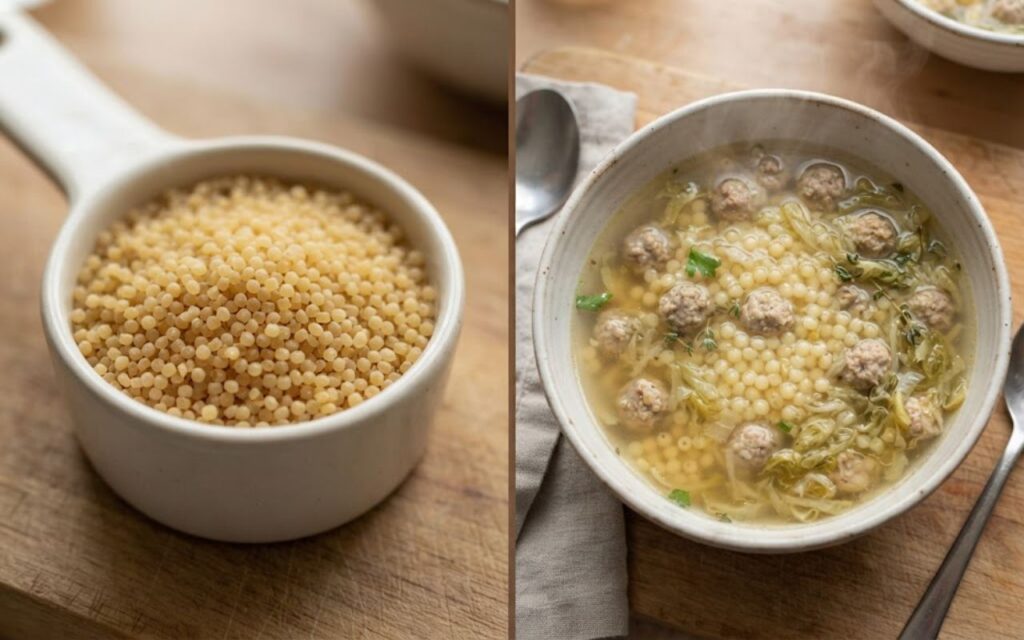
If you are wondering what is acini de pepe, it translates literally to “peppercorn seeds,” representing one of the smallest forms of pastina. While modern American grocery aisles stock these diminutive spheres for cold salads, their historic home is simmered gently in rich meat broth. This unique shape delivers a subtle, velvety texture that balances every single mouthful of soup perfectly.
Home cooks frequently turn to online forums like r/Cooking seeking remedies for cloudy stocks and spongy, bloated pasta pearls. Mastering this micro-pasta requires an understanding of starch gelatinization, fluid absorption, and how miniature extruded shapes interact with simmering soup. Boiling the pastina separately guarantees a clear, structurally flawless dining experience every time.
Quick-Glance Kitchen Summary
Acini de pepe is an extruded durum semolina micro-pasta engineered to retain structural integrity in brothy soups without dissolving into mush. Par-cooking the pasta separately in well-salted water prevents broth cloudiness and keeps the delicate spheres perfectly al dente.
- Base Flour: 100% coarse durum wheat semolina with minimum 12.5% protein content.
- Hydration Rate: Par-boil in 4 quarts of rolling water per 8 ounces of dry pasta.
- Water Salinity: 10 grams of fine sea salt per quart of boiling water.
- Par-Cook Window: 6 minutes in water, followed by a final 60 to 90 seconds of carryover simmering in the soup.
- Storage Protocol: Cool drained pasta on a sheet pan with a light film of olive oil; store separately from broth.
Pastina Mechanics and Semolina Extrusion Geometry
Pastina refers to an entire category of tiny pasta shapes designed primarily for broths, purées, and restorative soups. Manufacturers produce high-grade acini de pepe by blending coarse durum wheat semolina with pure water, working the mixture into a stiff dough with roughly 30% hydration. This low hydration level ensures tight gluten mesh development, which keeps the tiny grains intact throughout manufacturing and packaging.
The extrusion die geometry dictates how the pasta behaves in your stockpot. High-volume commercial brands like Ronzoni utilize smooth Teflon dies, which produce slick, mirror-like exterior surfaces that resist initial water absorption. In contrast, artisan producers such as De Cecco push dough through bronze dies, yielding a micro-pitted surface that traps fat and broth droplets effectively.
Bronze-cut pastina releases more surface starch into its cooking medium than Teflon-cut pasta. If you drop bronze-cut grains directly into a clear consommé, those microscopically rough edges shed loose amylose directly into the broth. That released starch turns a sparkling, golden chicken stock opaque and chalky within minutes.
| Pastina Shape | Geometric Structure | Broth Performance Profile | Traditional Culinary Use |
|---|---|---|---|
| Acini de Pepe | Tiny, dense cylinder beads that expand into smooth, plump spheres. | Elite; holds an al dente bite perfectly without clouding clear broths. | Italian Wedding Soup (Minestra Maritata) and cold Frog Eye sweet salads. |
| Orzo (Risoni) | Flat, tapered rice-shaped grains carved from durum wheat. | Moderate; adds substantial weight but can clump if overcooked. | Thick vegetable minestrones, pilafs, and baked pasta side casseroles. |
| Stelline (Stars) | Microscopic five-pointed star shapes with a hollow center hole. | Soft; dissolves rapidly to create a thick, starchy baby-food slurry. | Simple buttered childrens bowls and thin, clear medicinal broths. |
Acini de Pepe Starch Gelatinization vs Alternative Soup Pastas
When starch granules absorb hot water, they swell and burst in a process called gelatinization, which occurs between 140 and 160 degrees Fahrenheit. Because acini de pepe is a compact, uniform sphere, water migrates inward toward the core at an even, concentric rate. Flatter or hollow pastina shapes behave differently because their surface area to volume ratios vary widely.
| Pastina Variety | Extruded Geometry | Starch Shedding Risk | Ideal Broth Density |
|---|---|---|---|
| Acini de Pepe | Uniform solid micro-spheres | Moderate; requires high-volume water | Light to medium-bodied meat broths |
| Orzo (Risoni) | Tapered, flat rice-shaped grains | High; broad surface area leaches amylose | Rich, heavy broths and avgolemono |
| Ditalini | Short open cylindrical tubes | Moderate; interior tunnel traps liquid | Thick legume soups and minestrones |
| Stelline | Tiny star shapes with central holes | Low; very quick hydration threshold | Thin vegetable broths and light brodo |
Flat shapes like orzo shed substantial amounts of starch along their broad faces, making them better suited for thicker soups where natural body is desirable. Hollow tubes like ditalini trap liquid inside their cavities, expanding substantially and altering the mouthfeel of lighter soups.
Acini de pepe strikes a balance because its rounded profile lacks fragile thin edges that break off into the pot. However, because it is thick relative to its tiny diameter, improper timing leaves the core chalky while the outside turns unpleasantly soft.
The Bloated Broth Trap: Thermal Carryover and Separate Par-Boiling
The single most common complaint shared on home cooking forums is that the pasta “drank all the soup” overnight. As the soup sits off the heat, residual thermal energy keeps the starch expanding until the liquid volume drops precipitously. The result is not soup, but a thick, gelatinous pasta porridge.
To avoid this outcome, never boil raw acini de pepe directly inside your finished soup pot. Par-boiling the grains in a separate pot of salted water flushes the unbound surface starch down the drain instead of into your stock. This step preserves the clarity of your broth and gives you precise control over the final texture.
- Fill a stockpot with at least 4 quarts of water for every half-pound of pasta.
- Bring the water to a rolling boil and add salt to match light sea salinity.
- Boil the pasta for exactly 6 minutes, stirring continuously during the first 90 seconds to prevent clumping.
- Drain the pasta into a fine-mesh strainer; standard colander holes allow the tiny beads to slip through.
- Rinse briefly with warm water to stop surface starch from gumming up the spheres.
Transfer the par-cooked grains into individual serving bowls rather than the main soup pot. Ladle the boiling soup over the warm pasta just before serving at the table. This technique guarantees clear broth and keeps the pasta at a clean, resilient al dente.
Authentic Minestra Maritata Chemistry: Greens, Meatballs, and Fat Emulsification
What English speakers call Italian wedding soup is actually an American translation of minestra maritata, which translates to married soup. The name does not celebrate a wedding reception, but rather the harmonious culinary marriage of bitter leafy greens and rich, fatty meats. Traditional Neapolitan recipes rely on hearty winter greens, pork ribs, and cured sausages, while the modern version utilizes delicate miniature meatballs.
To build the meatball base, blend equal parts ground pork and ground beef with pecorino romano, garlic, and egg. Form the mixture into spheres no larger than a marble, matching the miniature scale of the acini de pepe. Searing the tiny meatballs in a high-sided Dutch oven creates a flavorful fond before you deglaze with cold stock.
- Combine bitter greens such as chopped escarole, curly endive, or baby spinach with the simmered broth.
- Simmer the greens for 8 to 10 minutes until their cell walls soften and release mild bitterness into the pot.
- Introduce the pre-cooked meatballs during the final 5 minutes of cooking to heat them through without drying out the meat.
The natural gelatin from homemade chicken bone broth acts as a natural emulsifier for the rendered pork fat. This emulsion coats every individual pearl of acini de pepe, lending a rich mouthfeel without requiring heavy dairy or flour thickeners.
Storage Hydrodynamics and Preventing Reheating Mush
Leftover soup containing pre-submerged acini de pepe undergoes starch retrogradation when chilled in the refrigerator. The expanded starch polymers align and crystallize, absorbing any remaining liquid and turning the pasta granules into fragile, waterlogged sponges. Upon reheating, these compromised starch walls collapse completely, turning the beads into mush.
If you plan to store leftovers, keep the par-cooked acini de pepe and the meat-and-greens broth in two distinct containers. Cool both elements rapidly to inhibit bacterial growth before sealing and refrigerating them.
- Spread drained, par-boiled pasta across a rimmed baking sheet in a single layer.
- Toss the warm beads with 1 teaspoon of neutral olive oil to prevent surface adhesion.
- Chill the pasta uncovered in the refrigerator for 20 minutes before packing it into an airtight container.
- Store the broth, meatballs, and greens together in a separate lidded container.
When preparing a meal from leftovers, heat your portion of broth to a rolling simmer on the stove. Place the cold, oiled acini de pepe into a warmed serving bowl and ladle the hot soup over the top. The boiling broth warms the pasta pearls in under 30 seconds, restoring optimal texture without diluting the stock.