
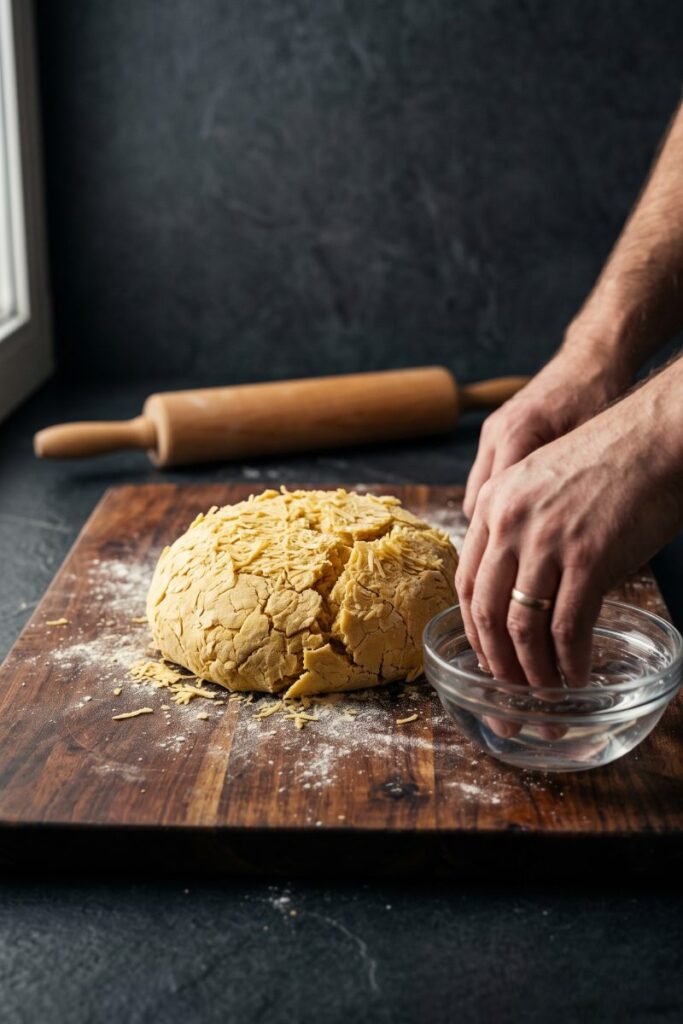
When I push the palms of my hands into a fresh mixture of wheat and watch it fracture into a pile of dusty, disconnected yellow sand, learning how to quickly fix dry crumbly homemade pasta dough becomes my top priority. Over my years of kneading handmade noodles, I have treated flour hydration thresholds as a dynamic fluid balance problem rather than a total kitchen disaster.
Whenever I see casual cooks panic over a loose, flaky pile and dump raw water straight from the tap into the center of their board, I notice how it creates a sticky, sludgy mess that ruins the gluten structure. For me, rescuing a parched mass without destroying its velvety body requires a controlled, drop-by-drop hydration process that rebuilds the starch bridges smoothly.
Why Flaky Wheat Textures Refuse to Hold Their Shape
To understand why a dough ball falls apart into sandy chunks on your workspace, you have to look closely at how starches react to minor shifts in climate and egg mass. Fine double-zero flour is highly sensitive to the humidity inside your kitchen, absorbing extra water from dry winter air before you even open the bag.
If you measure your flour strictly by volume using a measuring cup rather than a digital scale, you can easily scoop up to thirty extra grams of dry wheat without realizing it. I have watched this hidden flour excess completely overpower the liquid fat inside a standard egg, leaving the protein networks dry and incapable of knitting together.
Trying to roll out a dry sheet causes it to rip open into ragged, jagged edges that fall apart when dropped into a boiling pot of water. I watch these hydration levels closely when building dense protein frames, a texture balance I manage meticulously when forming casing sheets for my delicate Homemade Ricotta Ravioli.
Restoring Balance and Hydration Without Flooding the Board
My absolute baseline rule when treating a dusty, fractured slab of wheat is to introduce moisture using the surface area of my skin rather than pouring water directly onto the wood. I follow the technical fluid retention guidelines and starch absorption metrics documented inside the official King Arthur Baking Hydration Guide to balance my dough adjustments safely.
I run my hands under a warm tap, shake away the heavy drips, and immediately press my wet palms into the shaggy flakes to distribute the moisture evenly. This micro-layer addition prevents the starches from oversaturating all at once, allowing the proteins to absorb the water molecule by molecule.
If the mass remains slightly loose, I lightly mist the outside with a water spray bottle and lock it inside plastic wrap for a brief fifteen-minute rest. This enclosed environment forces the trapped humidity to migrate deep into the core of the flour, transforming a dry pile into a cohesive ball.
Using Rich Oils to Soften Rigid Protein Networks
If your dough continues to crack after a brief water misting session, the underlying issue might be a total lack of structural fat rather than plain liquid hydration. Adding a half-teaspoon of premium extra virgin olive oil into the center of a dry mass acts as a natural lubricant for the stiff gluten sheets.
The viscous oils wrap around the tight gliadin and glutenin protein chains, letting them slide past one another and stretch without fracturing. This oil addition does wonders for the final elasticity, yielding a supple, compliant body that can handle being rolled down to translucent thicknesses.
I prefer to save this fat adjustment specifically for sturdy semolina doughs that need an extra layer of pliability to withstand heavy rolling machinery. The fats melt into the grain cleanly, creating a sleek surface that stands up beautifully to intense cooking temperatures later on.
Protecting the Salt Ratios of Your Boiling Water
The final law for recovering a dry dough requires keeping a close eye on your ultimate seasoning environment to keep your flavors clean. Because dry dough requires extra kneading and moisture manipulation to become smooth, you must avoid adding any raw table salt directly into the raw flour mixture during the rescue phase.
Adding salt crystals to a dry dough pulls moisture out of the flour cells through osmosis, making the fracturing texture significantly worse. Instead, leave the dough ball completely unsalted on the board, relying on a deeply seasoned pot to flavor the wheat from the inside out while it cooks.
I scale my seasoning windows carefully during the boiling stage, keeping my mineral balances aligned with the criteria detailed inside my How Much Salt for Pasta Water framework. This division ensures your finished noodles achieve a uniform, tender bite that locks onto your family sauces flawlessly.