
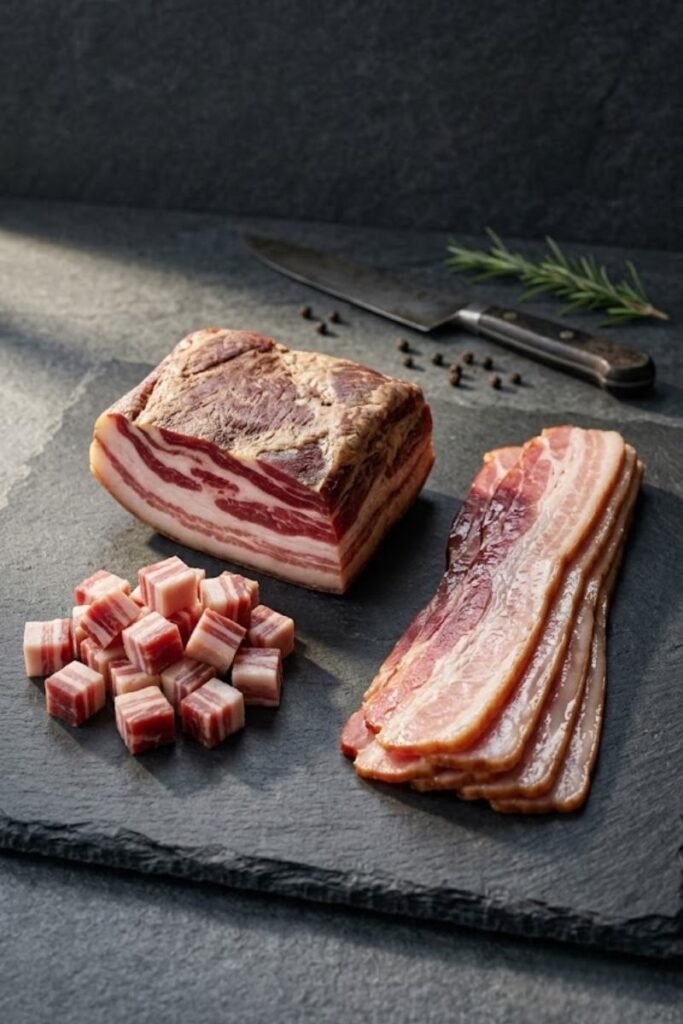
When I trim a thick slab of pork belly down to build a rich flavor foundation for a slow-simmered regional sauce, understanding exactly what is pancetta is the absolute ultimate rule required to prevent your traditional Italian dishes from tasting like an American backyard barbecue.
Over my years of rendering clean animal lipids and managing old-school salumi profiles, I have treated meat-curing windows, spice infusions, and smoke exposure thresholds as strict culinary variables rather than basic grocery store swaps.
Whenever I see untrained home cooks grab a package of cheap, wood-smoked breakfast strips to build a traditional Roman base, it hurts the dish. Watching the completed sauce taste aggressively of campfire soot and artificial sugar shows how poor ingredient pairings ruin the meal.
For me, delivering a true restaurant-quality Italian finish requires looking past basic anatomical cuts. Instead, separate the deep herbal nuances of dry-salted Mediterranean charcuterie from the heavy wood-smoke profiles of classic American skillet meats.
How Brine Injection and Hardwood Smoke Alter Pork Belly
To understand why these two identical muscle segments behave so differently inside a warm skillet well, you have to look closely at their raw manufacturing methods and structural moisture retention. Classic American breakfast bacon is built for fast industrial volume; the raw pork slabs are injected with a liquid chemical solution of water, salt, sodium nitrites, and liquid sugars to quickly cure the inner muscle fibers from the inside out.
Following this rapid brine bath, the blocks hang inside heavy commercial smokehouse chambers where they are blasted with dense hardwood smoke currents, a fast processing pipeline that leaves the sliced meat packed with loose water weight and deep woody aromas. Authentic Italian pancetta completely rejects any industrial fluid injections or smoke exposure throughout its extended aging path.
The raw belly meat is rubbed by hand with coarse sea salt and a traditional mix of crushed black peppercorns, juniper berries, garlic, and nutmeg. The belly cures flat or is rolled into a tight, dense log known as pancetta arrotolata before spending weeks hanging inside controlled, cool drying rooms. This long air-drying step systematically draws out the internal water weight, concentrating the clean pork fats while embedding complex savory tones deep into the fat layers.
The Flavor Danger of Smoking Compounds in Regional Pan Sauces
The single greatest threat to a delicate Italian sauce base happens when aggressive hardwood smoke phenols leach out of your frying pan lipids to overpower your primary regional seasonings. I follow the strict sensory panel data, fat-rendering guidelines, and smoke profile matrices documented inside the official Serious Eats Guide to Italian Charcuterie Dynamics to preserve my flavor profiles cleanly.
When you drop a handful of hickory-smoked bacon strips into a hot skillet, the intense heat breaks down the injected sugars and artificial smoke compounds rapidly. Because American styles contain high water volumes, the meat spits and pops as steam escapes, scorching the sugar molecules against the pan bottom and generating a dark, bitter residue.
This heavy smoke pollution instantly masks the delicate aromas of your minced garlic, fresh herbs, and bright tomatoes, turning a balanced dish into a heavy, sweet meal. Pancetta releases a crystal-clear, unrefined fat stream that melts smoothly across your skillet pan without caramelizing artificial sugars or releasing wood aromas, providing an ideal flavor vehicle.
I monitor these precise unsmoked fat rendering windows constantly when managing my rich pasta bases, a clean lipid control rule I prioritize when building a proper foundation inside my guide on selecting the Best Substitute for Guanciale: 3 Roman Carbonara Swaps.
Slicing Rounds vs. Cubing Slabs for Optimal Skillet Renderings
The final law for successfully utilizing your cured pork assets requires selecting the exact correct physical meat shape to match the structural requirements of your specific stovetop recipe. When you visit an Italian deli counter, you will typically find pancetta offered in two entirely distinct structural styles: paper-thin circular sheets or dense, thick-cut solid wedges.
The translucent paper-thin circular sheets are built to remain completely raw or undergo very light cooking, perfect for wrapping around lean bundles of asparagus, roasted chicken breasts, or medallions of veal before baking. For building hot pan reductions, soups, or rich risottos, completely bypass those fragile pre-packaged lunchmeat rounds and purchase a solid slab wedge.
Use a heavy kitchen knife to slice the solid block into uniform, quarter-inch square sticks known traditionally as lardons. Dropping these dense cubes into a cold skillet over a low flame height allows the concentrated fats to melt away gradually before the outer muscle meat hardens.
This slow thermal execution ensures the pork fats fully liquefy into a rich, golden cooking medium, leaving behind crunchy, deeply savory meat cushions that shatter beautifully against your teeth. Taking the extra time to separate your curing profiles and select hand-cubed blocks is the ultimate kitchen secret to keeping your family meals elite.