
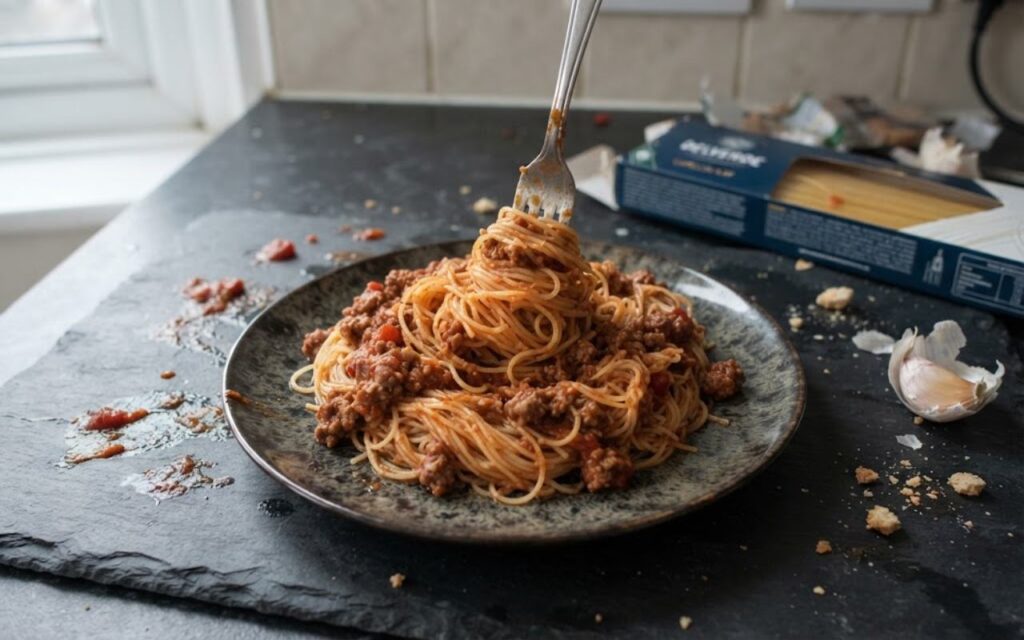
When cooked with precision, capellini pasta (angel hair) is one of the most elegant, quick-cooking dry pastas in Italian culinary tradition. Originating in Northern and Central Italy, these ultra-fine strands measure between 0.85 and 0.92 millimeters in diameter, requiring as little as two to three minutes in boiling water.
Across cooking communities and Italian kitchen forums, home cooks frequently report a recurring frustration: capellini turns into a gummy, unrecognizable bird’s nest when plated. The issue almost always stems from pairing this fragile pasta with heavy, particulate-dense meat sauces like traditional Bolognese or ragù.
Quick-Glance Kitchen Summary
Capellini is an ultra-fine strand pasta designed exclusively to suspend in clear broths or coat with low-viscosity, fat-based emulsified sauces. Applying heavy, particulate-dense sauces physically crushes the delicate gluten network, trapping steam and turning the dish into a dense starch paste.
- Strand Diameter: 0.85 mm to 0.92 mm (spaghetti measures 1.8 mm to 2.0 mm)
- Water-to-Pasta Boiling Ratio: 4 liters of rolling water per 450 grams of pasta
- Salt Concentration: 10 grams of kosher salt per 1 liter of boiling water
- Active Boil Window: 120 to 180 seconds maximum
- Optimal Pan Surface: 3-ply stainless steel or copper saucier with curved interior walls
- Recommended Sauce Profiles: Clear brodos, aglio e olio, clarified butter with sage, or light seafood broths
Strand Geometry and Gluten Matrix Fragility
The physical architecture of capellini dictates how it behaves in both water and sauce. Because standard spaghetti measures nearly double the thickness of capellini, capellini possesses a massive surface-area-to-mass ratio. This extreme geometry means heat and water penetrate to the core of the strand almost instantaneously.
During boiling, hydration and starch gelatinization happen within two to three minutes. The internal gluten network, formed by gliadin and glutenin proteins, is extraordinarily thin and delicate. Overcooking by even twenty seconds saturates the protein matrix, allowing amylose to leach aggressively onto the exterior surface.
When too much amylose coats the outside of the strands without a slick fat barrier, the strands adhere to one another immediately. If lifted or tossed roughly with kitchen tongs, the strands rupture rather than bend. Preserving the integrity of this fragile matrix requires precise timing and minimal mechanical agitation in the pan.
Hydraulic Shear and Why Heavy Ragù Crushes Delicate Strands
Culinary forums like r/Cooking regularly feature cooks asking why their Sunday meat sauce turned capellini into a mushy clump. The answer lies in fluid dynamics and mechanical weight. A slow-simmered meat ragù is packed with heavy solid particulates, such as minced beef, pork, and rendered vegetables.
When a cook ladles a heavy meat sauce over delicate capellini, the weight of the meat particulates exerts downward force directly onto the fine strands. The pasta cannot support this physical load, causing the strands to collapse, mat together, and trap localized steam. Furthermore, the thick sauce cannot slip between the micro-gaps separating each strand, preventing proper lubrication.
| Attribute | Capellini (Angel Hair) | Rigatoni / Tagliatelle |
|---|---|---|
| Strand Diameter / Thickness | 0.85 mm to 0.92 mm round strand | 1.1 mm to 1.5 mm thick flat ribbon or tube |
| Sauce Viscosity Compatibility | Very low viscosity; oil, butter, or broth | High viscosity; dense meat or cream emulsions |
| Particulate Handling | Zero particulate tolerance; solids tear strands | High particulate tolerance; ridges trap ground meats |
| Mechanical Resistance | Extremely low; tears easily under metal tongs | High; withstands aggressive pan tossing |
| Ideal Dispersion Method | Suspended in liquid or loose pan swirl | Vigorous mantecatura emulsification in skillet |
As the comparison demonstrates, wide ribbons like tagliatelle or extruded shapes like rigatoni possess the structural wall thickness needed to lift dense meat suspensions. Capellini requires sauces that act as liquid films rather than textured solids.
Emulsion Physics: Light Sauces and High-Starch Emulsification
To dress capellini successfully, the sauce must function as a uniform liquid glaze that lubricates every strand simultaneously. Classic preparations rely on warm fats such as extra virgin olive oil, sweet butter, or strained shellfish stock. These low-viscosity bases freely permeate the tight bundles of pasta without weighing them down.
The gold standard technique for capellini is a gentle aglio, olio e peperoncino or a quick toss in melted butter infused with fresh sage. In these preparations, the hot oil coats the exterior of the gluten sheath, forming an immediate moisture barrier that prevents individual strands from fusing together.
If you introduce starchy pasta water to build an emulsion, keep the volume minimal and swirl the pan gently rather than tossing aggressively. A curved saucier facilitates this motion because the rounded base keeps the strands moving smoothly through the fat. This gentle swirling suspends the starches without shredding the fine pasta threads.
Boiling Dynamics, Carryover Thermal Cook, and the 120-Second Window
Boiling capellini requires a massive thermal reservoir to avoid dropping the water temperature when the cold pasta enters the pot. Use at least four liters of rapidly boiling water per 450 grams of dry pasta. If the water drops below a rolling boil, the pasta sits in warm water, shedding starch without setting its exterior proteins.
Home cooks must factor in carryover cooking, which ruins capellini faster than any other pasta shape. Because the strands are under one millimeter thick, ambient heat in the colander or pan continues cooking the pasta core for up to two minutes after draining. To counter this, pull capellini from the water when the center still shows a faint white pinprick of uncooked starch.
- Drop dry pasta into violently boiling, salted water and immediately stir once to separate strands.
- Set a digital timer for exactly 90 to 120 seconds, ignoring package directions that suggest five minutes.
- Transfer the strands directly into your warm sauce using a silicone-coated spider skimmer rather than dumping them into a harsh colander.
- Swirl the pasta through the warm fat for no more than 30 seconds off direct heat before serving immediately.
This compressed cooking window prevents the interior protein structure from collapsing into mush. Direct skimmer transfers also carry over just enough surface water to balance the pan sauce without drowning it.
Practical Kitchen Troubleshooting and Proven Regional Pairings
In traditional Italian cooking, capelli d’angelo rarely appears on a plate coated in dense red sauce. Historically, its primary role is in brodo, served swimming in a clear, rich capon or beef broth during winter holidays. In broth, the strands float freely, entirely eliminating the friction that causes clumping on a dry plate.
If you prefer a dry presentation, look to southern coastal traditions that pair capellini with light, strained seafood reductions, such as clam liquor infused with garlic, white wine, and parsley. Another reliable option is a raw summer sauce: grated sweet tomatoes, cold-pressed olive oil, cracked pepper, and torn basil tossed with warm pasta. The residual heat gently warms the raw tomato water without cooking it down into a heavy paste.
Brand selection also matters when sourcing delicate strands. Commercial supermarket brands made with Teflon dies yield smooth, glassy surfaces that can turn slick and slimy if overcooked. Enthusiasts and artisan producers like Rustichella d’Abruzzo or De Cecco use slow-drying methods and precise dies that preserve the natural tensile strength of durum wheat semolina, giving you a wider margin of error at the stove.